Lightship / Electric travel trailers

A new product.
A whole company.

The road trip has always promised freedom. Lightship set out to bring that promise into an all-electric travel trailer—one that lowers for towing and opens into a room at camp.

Designing the trailer was one part of the job. We also had to give a young company its identity, introduce it to the world and imagine the experience beyond the first sale.

As Chief Creative Officer, I led creative work with Lightship’s teams and partners, from early product direction through brand, launch and the owner community.

Rob Williams / Chief Creative Officer

Lightship / Road Mode

Brand strategy & identity

People might arrive curious about the technology. We wanted them to picture the trip.

“Turning your miles into memories” gave the brand a human starting point: time with family and friends, unfamiliar places and stories to bring home. It guided the imagery, films and the way Lightship invited people to explore.
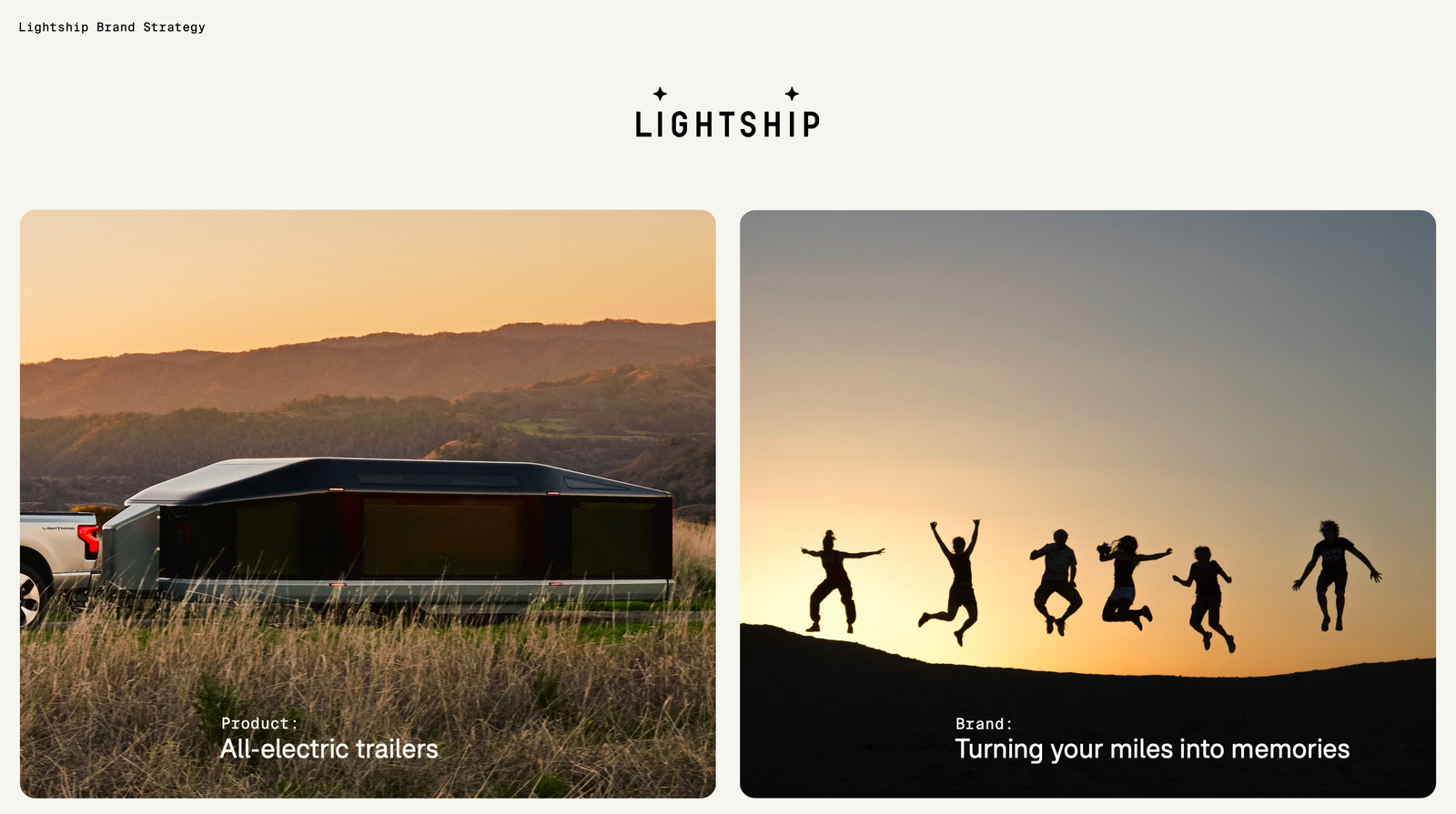
An all-electric Lightship trailer is paired with friends jumping at sunset to connect the product with the memories it enables.
Promise / Turning your miles into memories
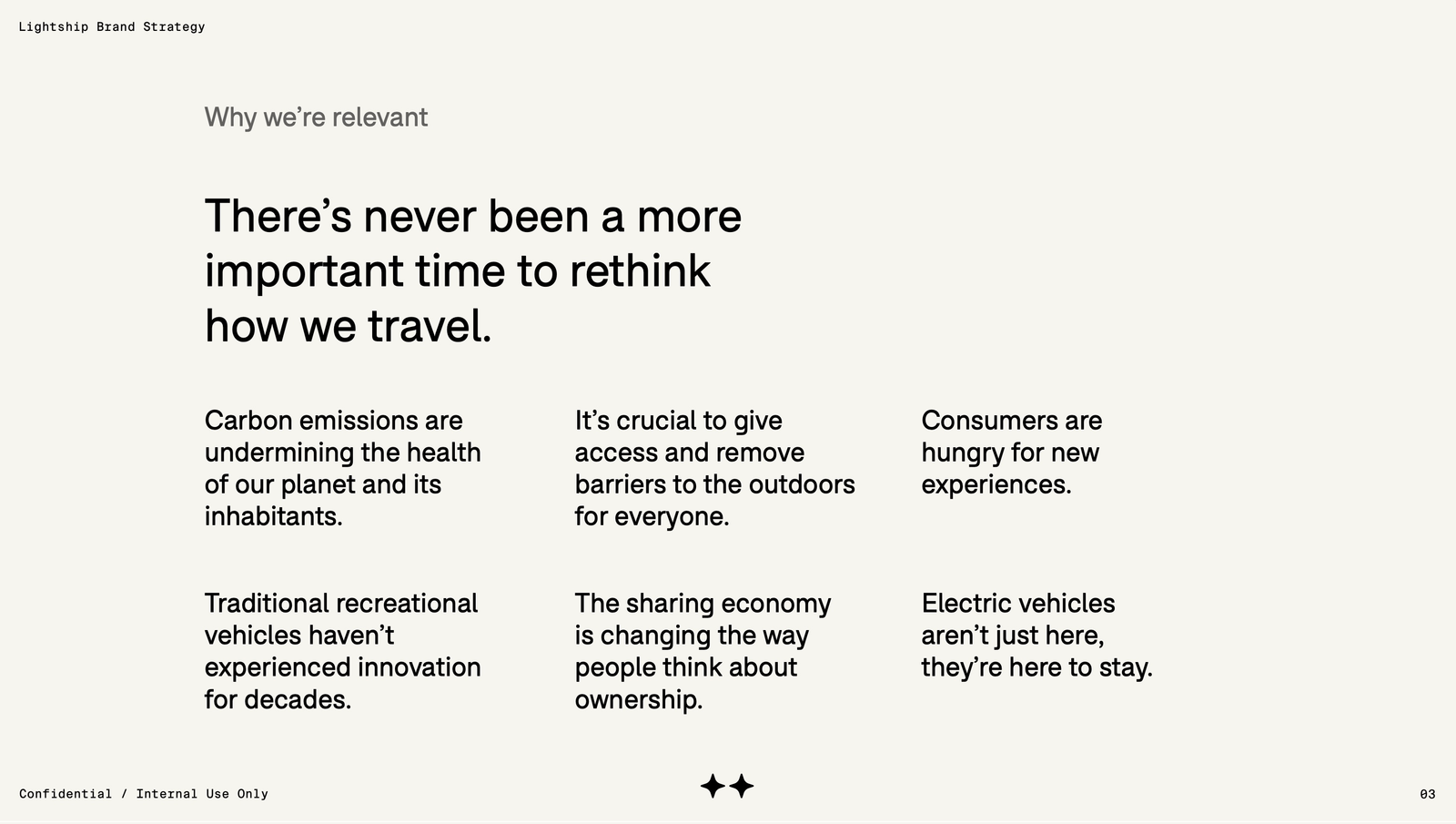
Lightship strategy outlining the opportunity for electric travel, access to the outdoors and new experiences.
Strategy / A reason to rethink travel
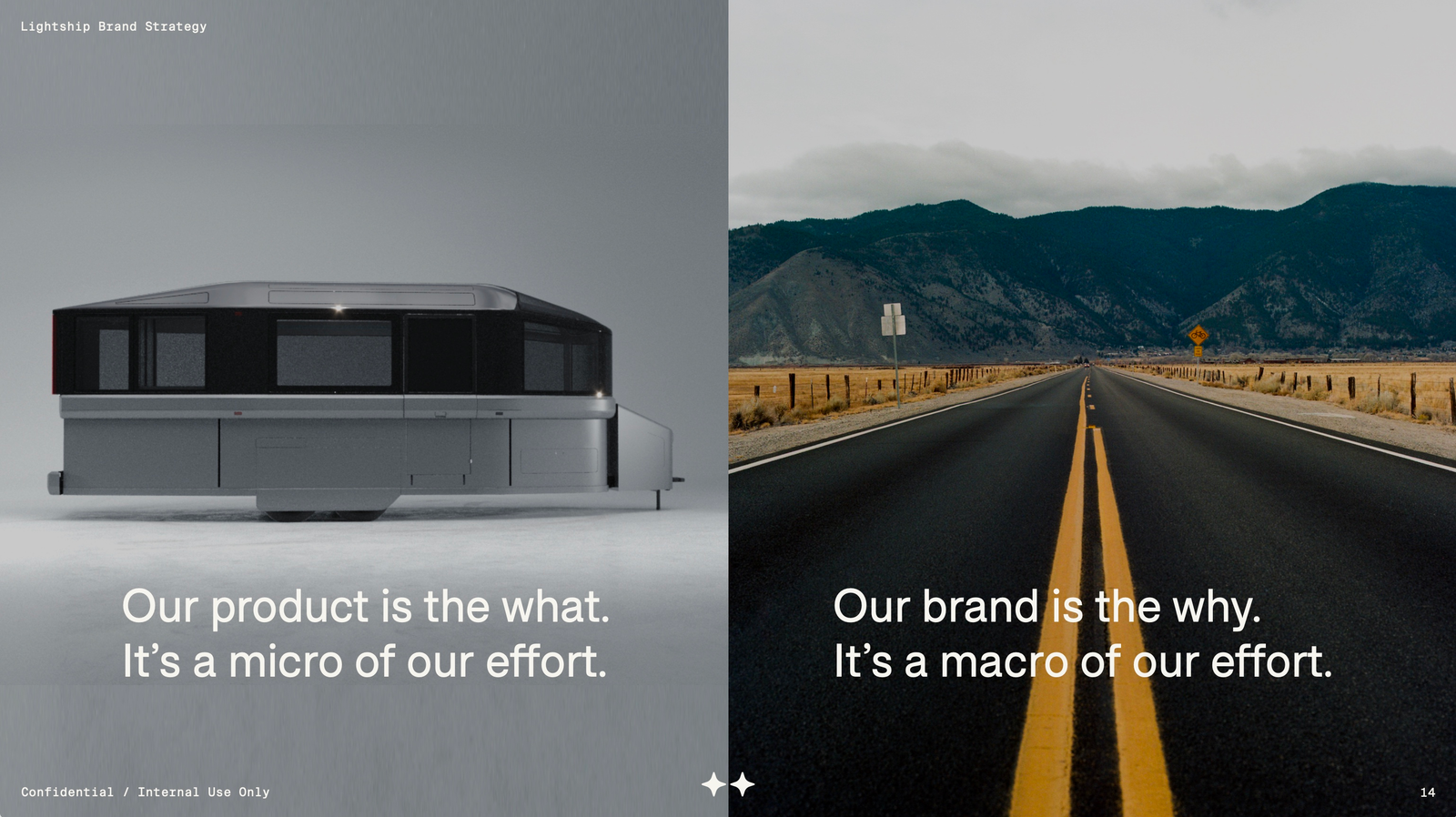
A Lightship trailer and an open road illustrate the relationship between what the company makes and why it matters.
Strategy / The product and the purpose
An all-electric Lightship trailer is paired with friends jumping at sunset to connect the product with the memories it enables.
Promise / Turning your miles into memories
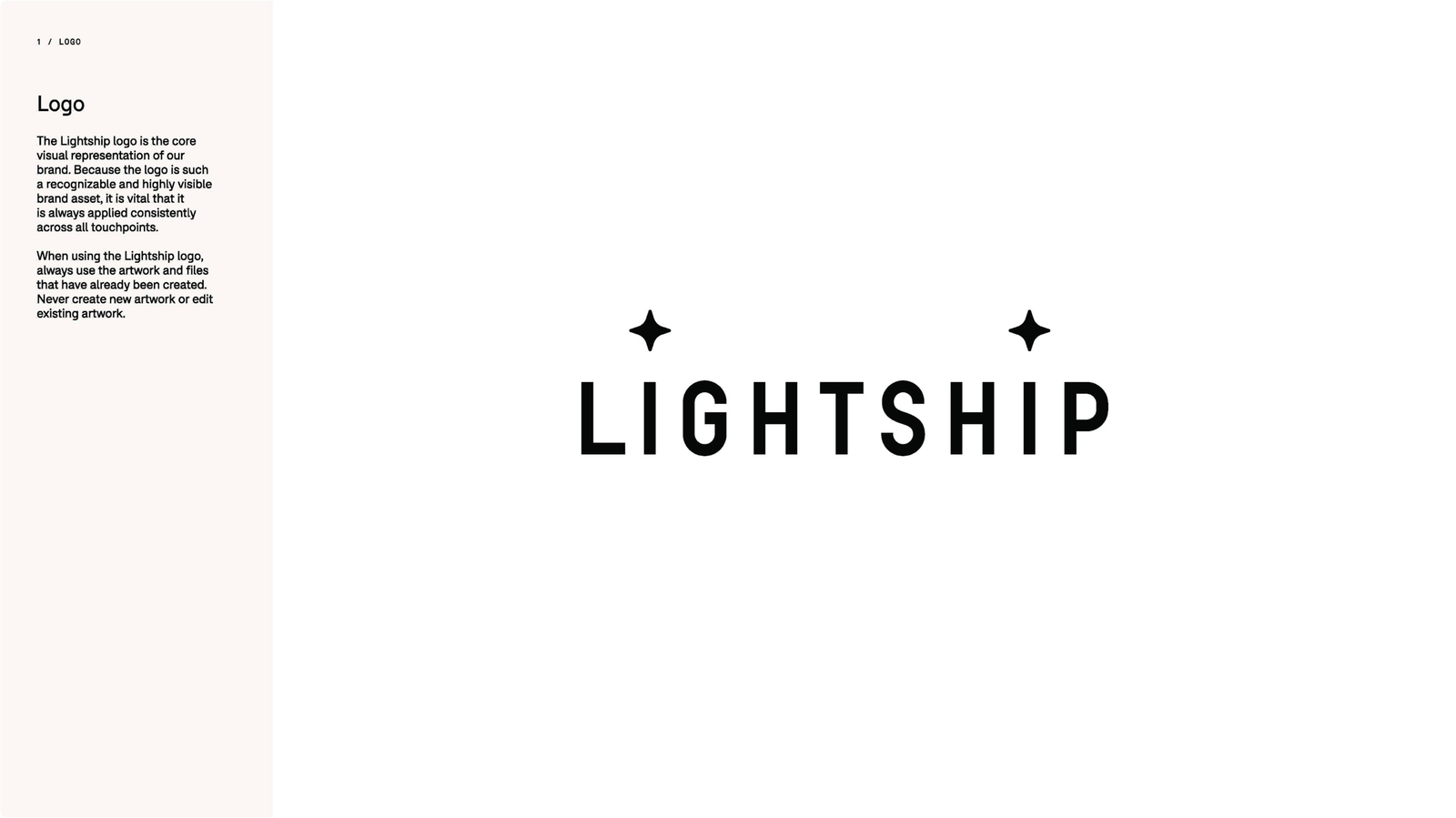
Lightship wordmark with a guiding star above each of the two I letters, shown in the original identity guidelines.
Identity / The Lightship wordmark
Two compass-like stars form the Lightship secondary symbol, shown in the original identity guidelines.
Identity / Two guiding lights
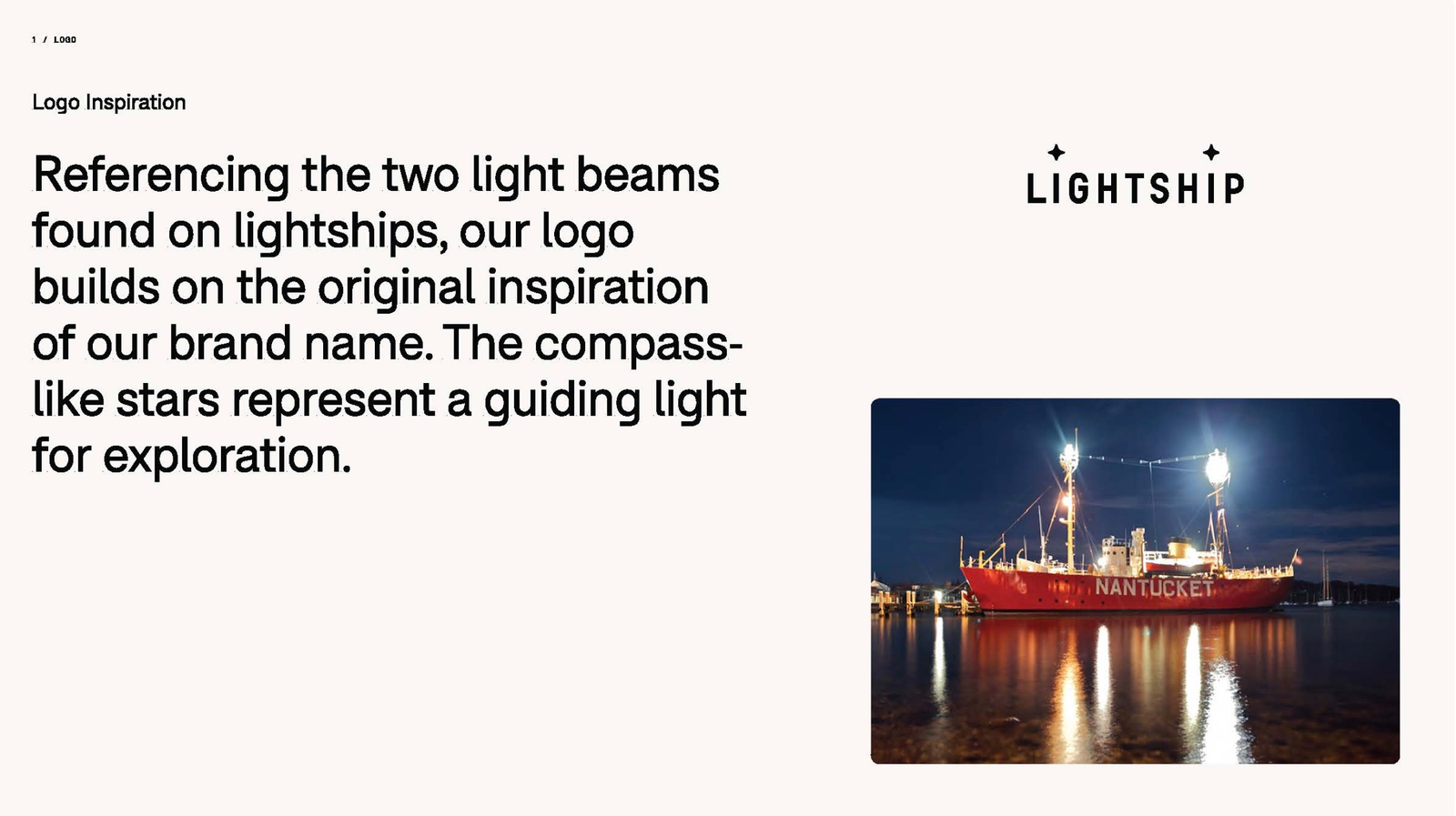
Lightship identity inspiration showing the wordmark and the two illuminated masts of the Nantucket lightship.
Origin / From floating lighthouse to guiding light
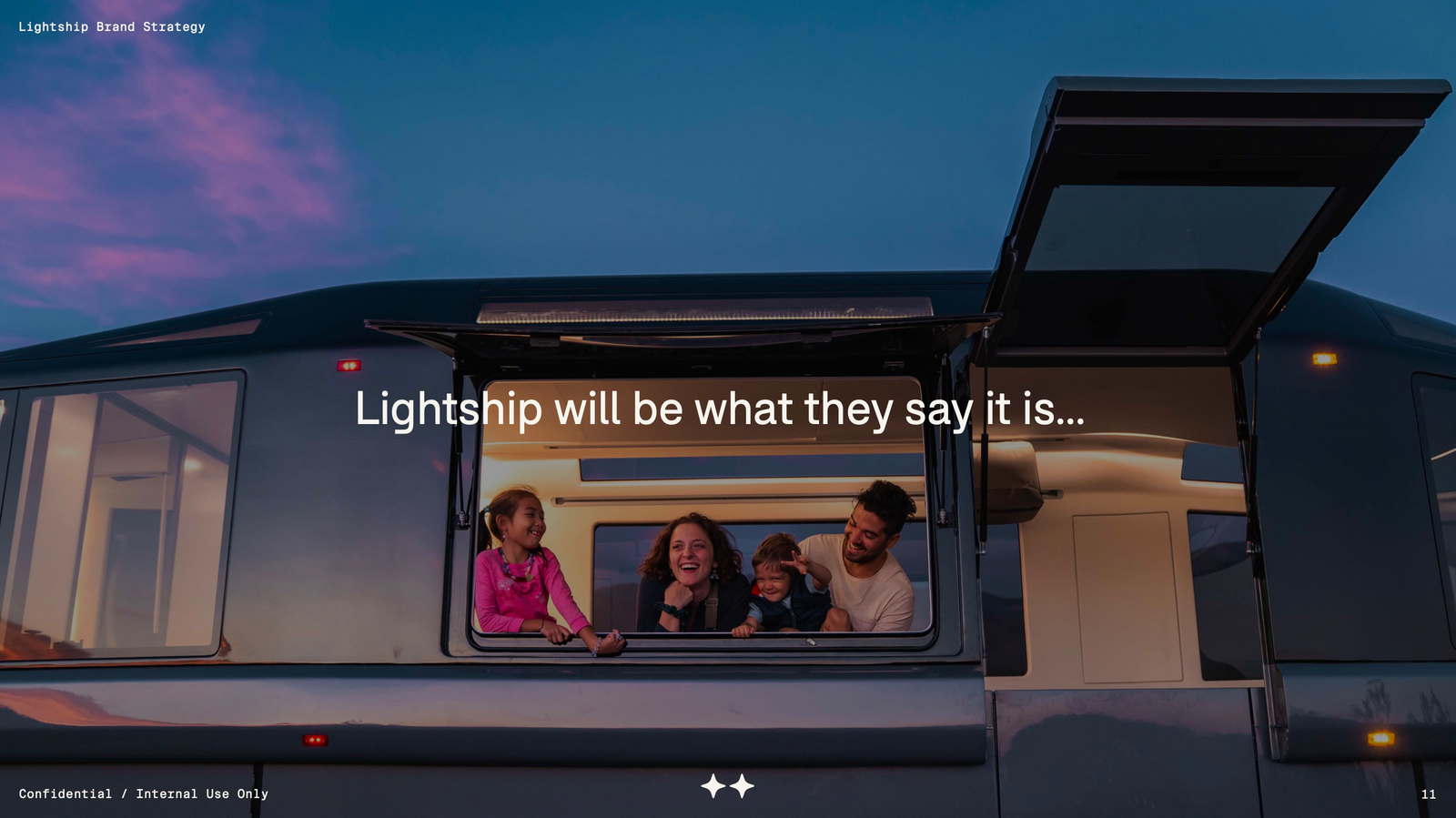
A family gathered in a Lightship trailer at dusk, with the strategy statement that Lightship will be what people say it is.
Belief / Defined by the experience
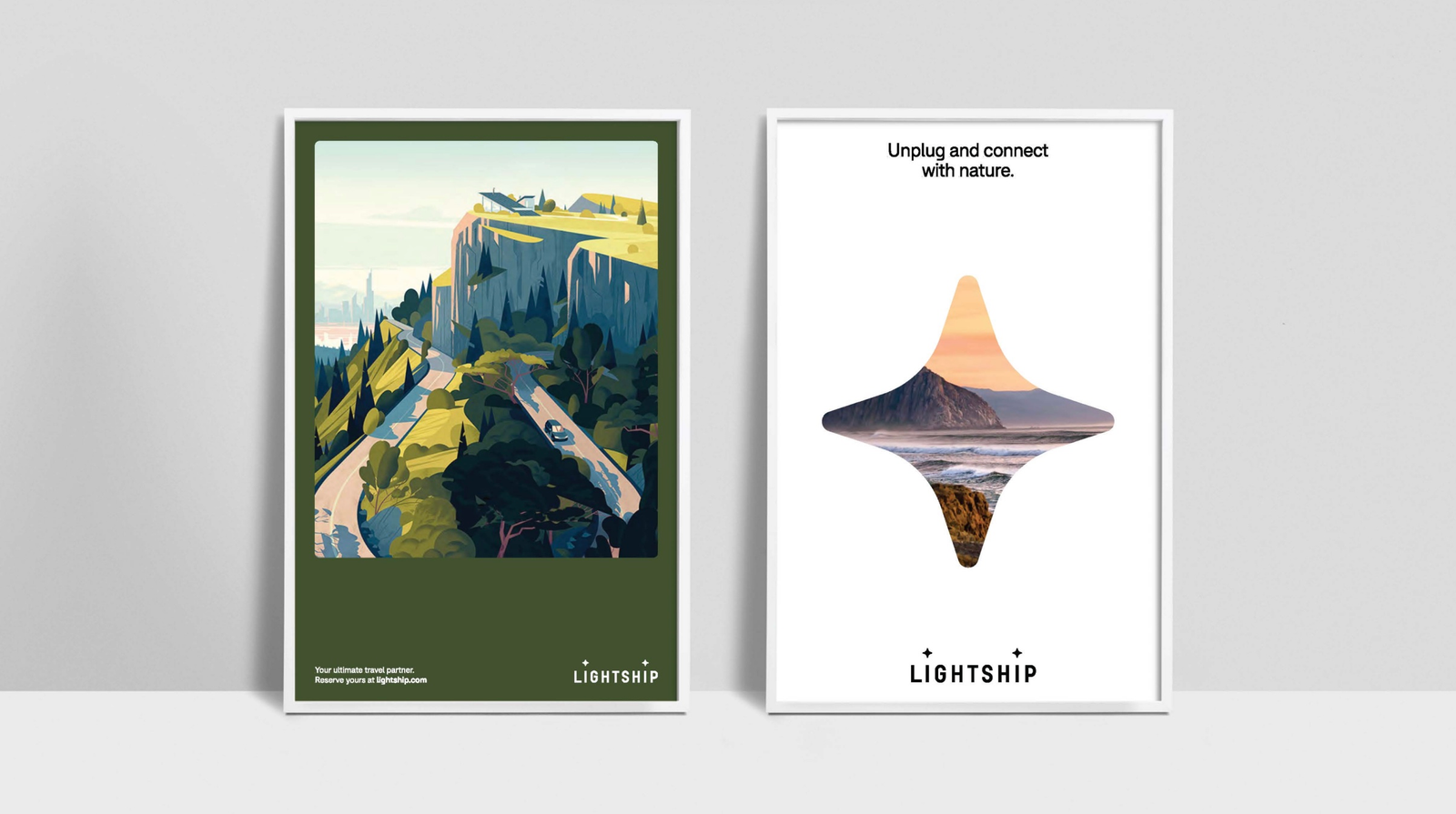
Two Lightship poster concepts: an illustrated road through a landscape and coastal photography framed by the star symbol.
Brand applications / Poster concepts
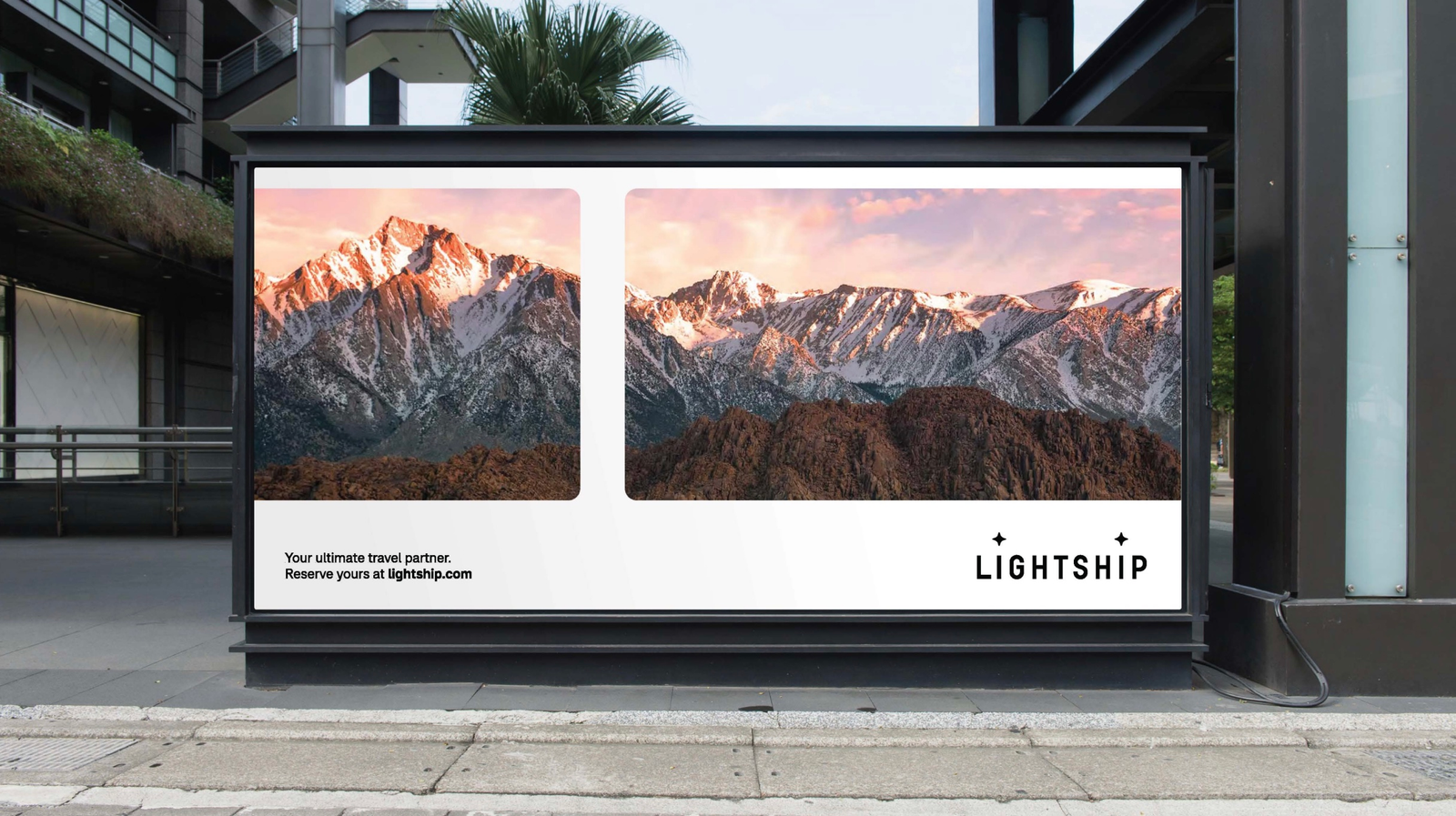
Lightship outdoor advertising concept with two mountain photographs, the wordmark and a travel message.
Outdoor / Landscape and identity
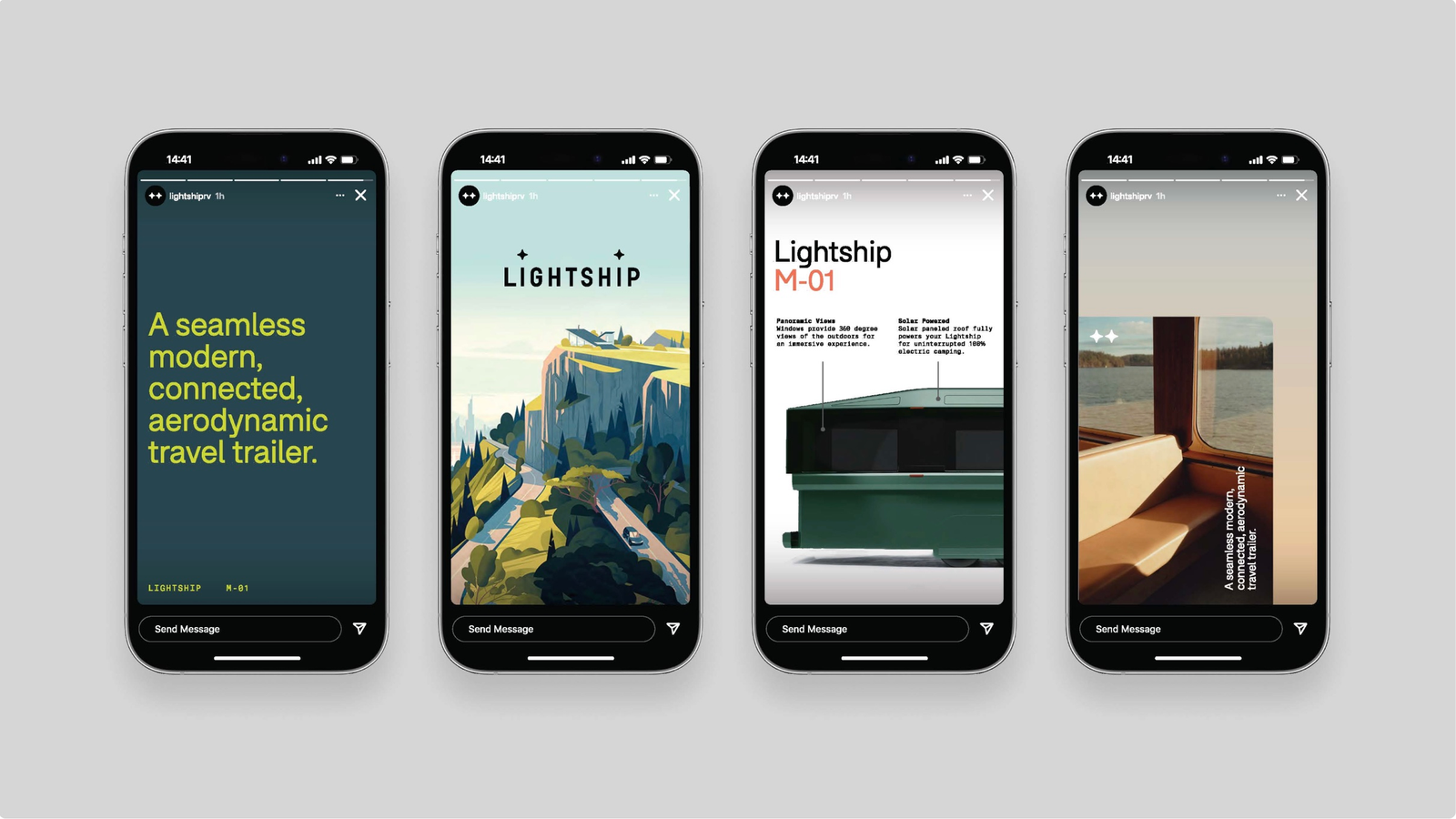
Four Lightship social story mockups combining the identity, landscape illustration, product details and interior photography.
Social concepts / Introducing the product
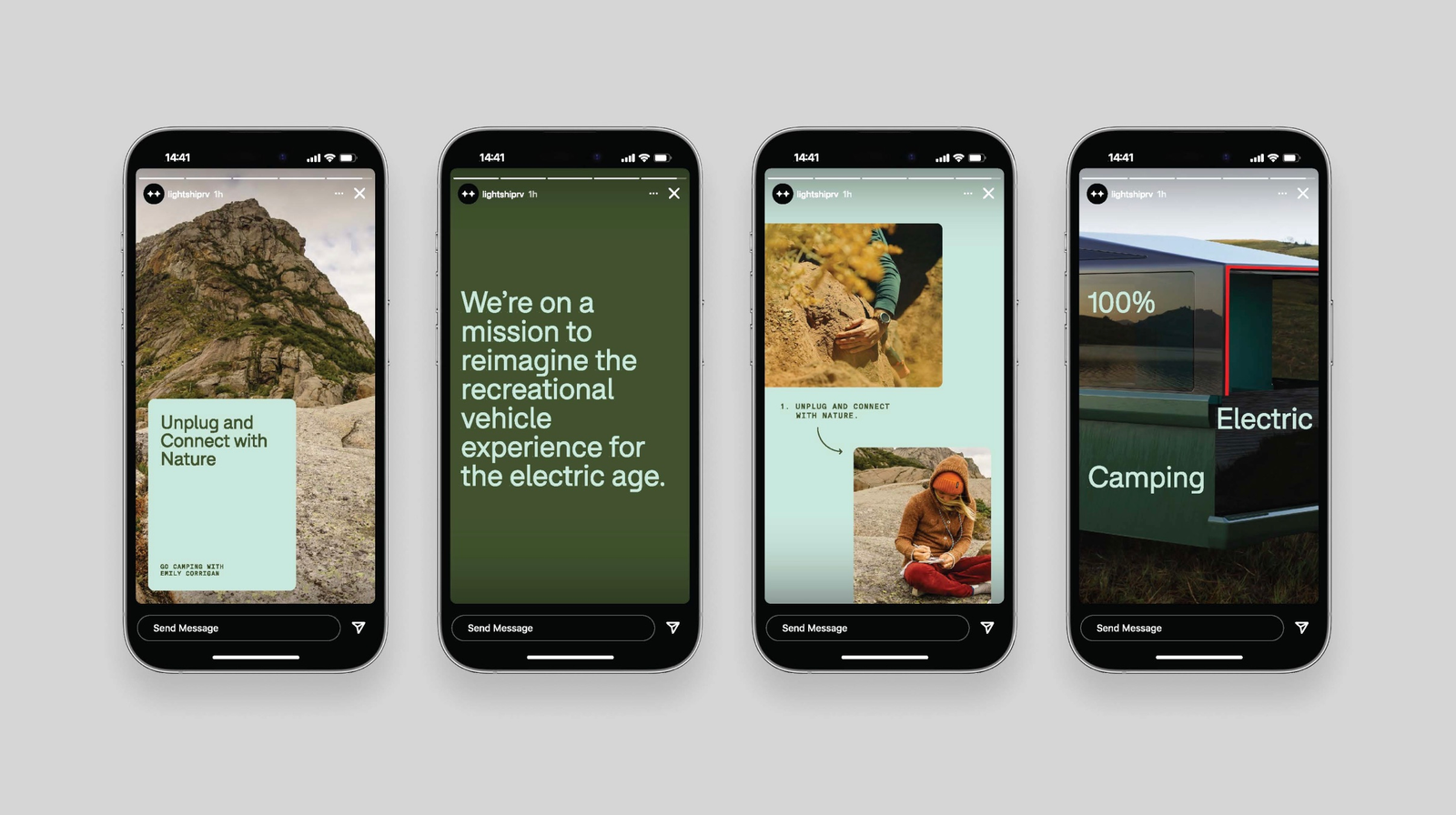
Four Lightship social story mockups connecting electric camping with nature, outdoor activity and the brand mission.
Social concepts / Connecting with nature
Four Lightship social story mockups exploring product information, destinations and the experience of the road.
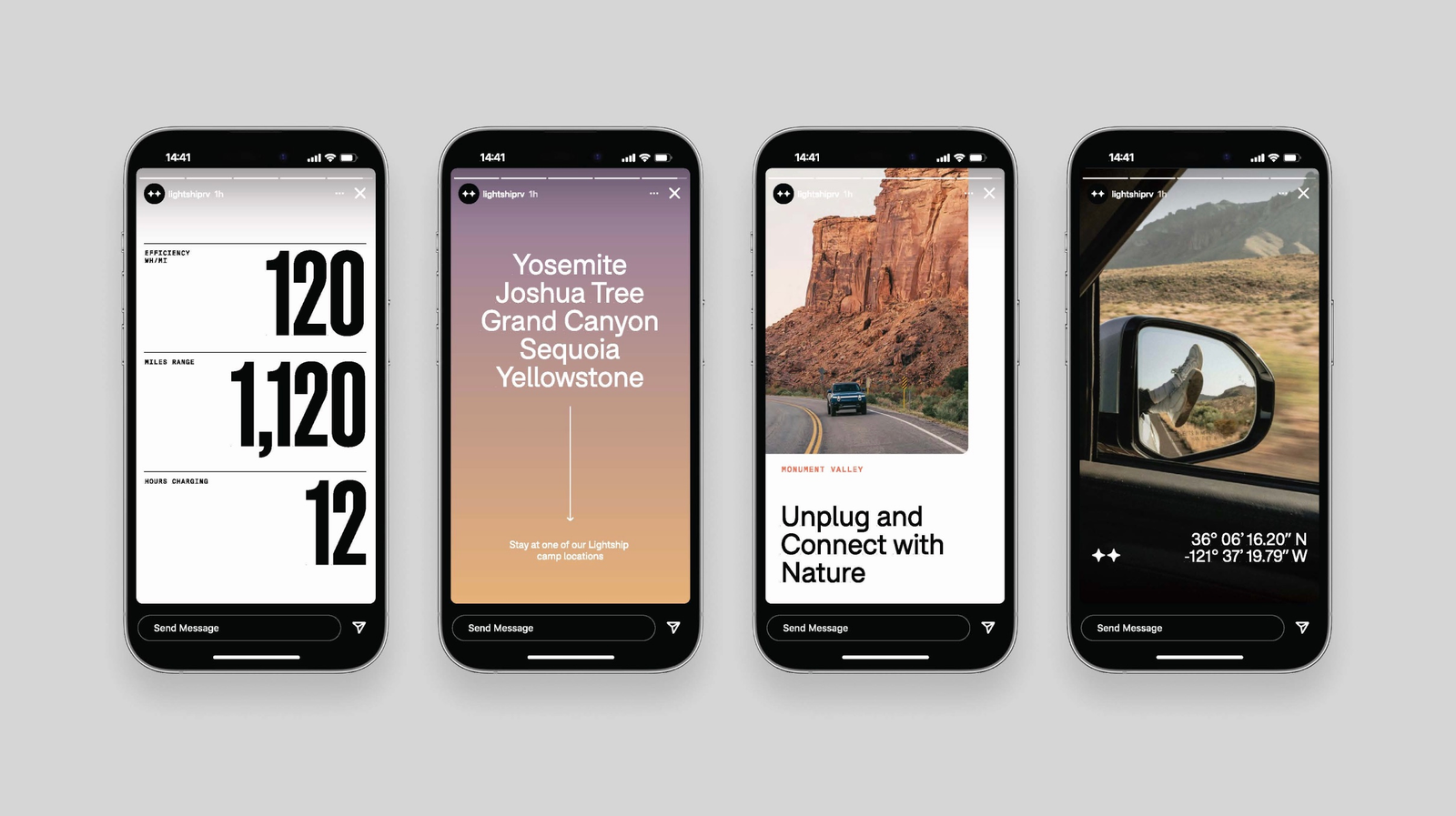
Social concepts / The journey and the details
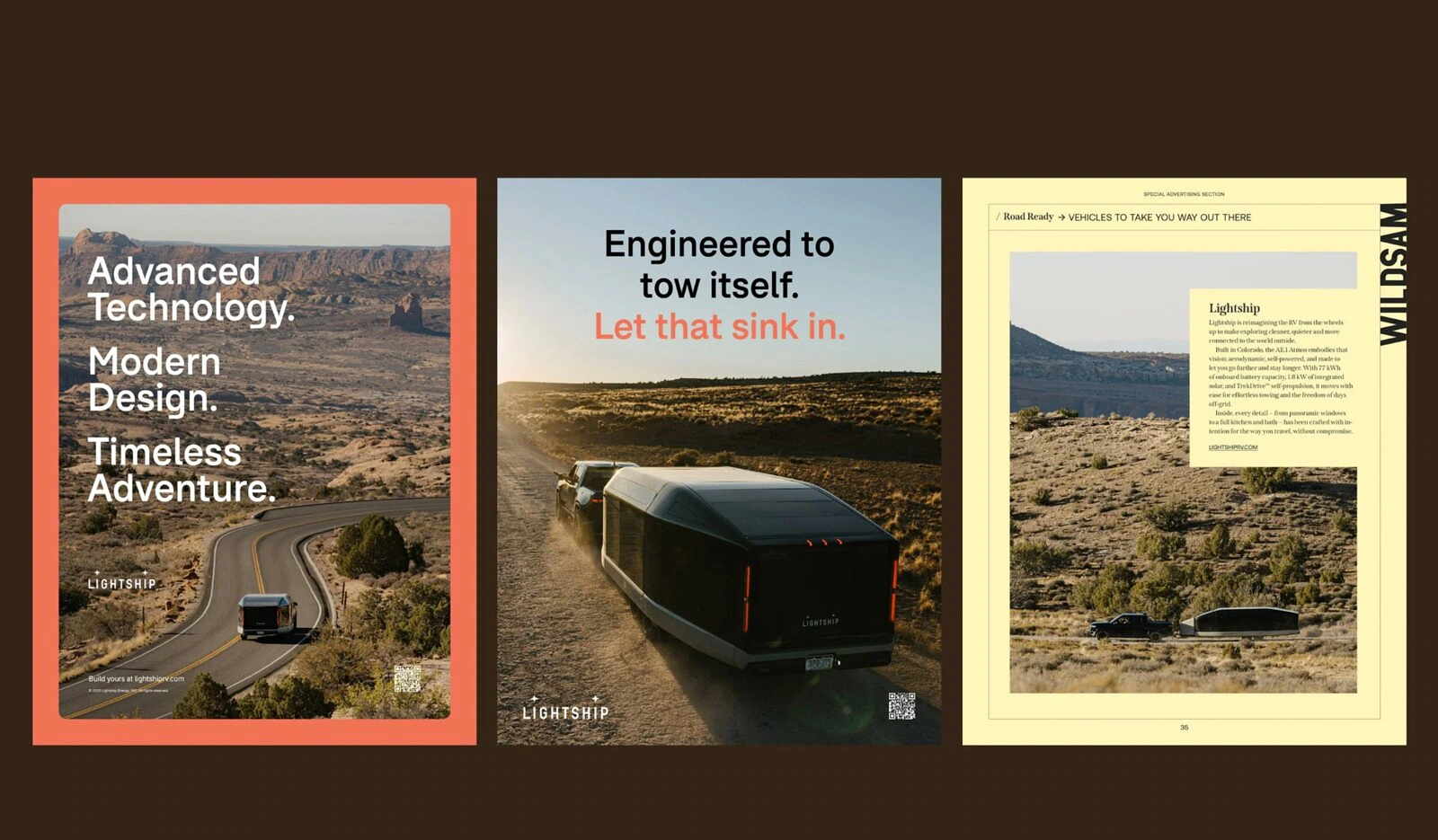
Lightship advertising concepts combining road photography with concise product and technology messaging.
Campaign / Product story in public
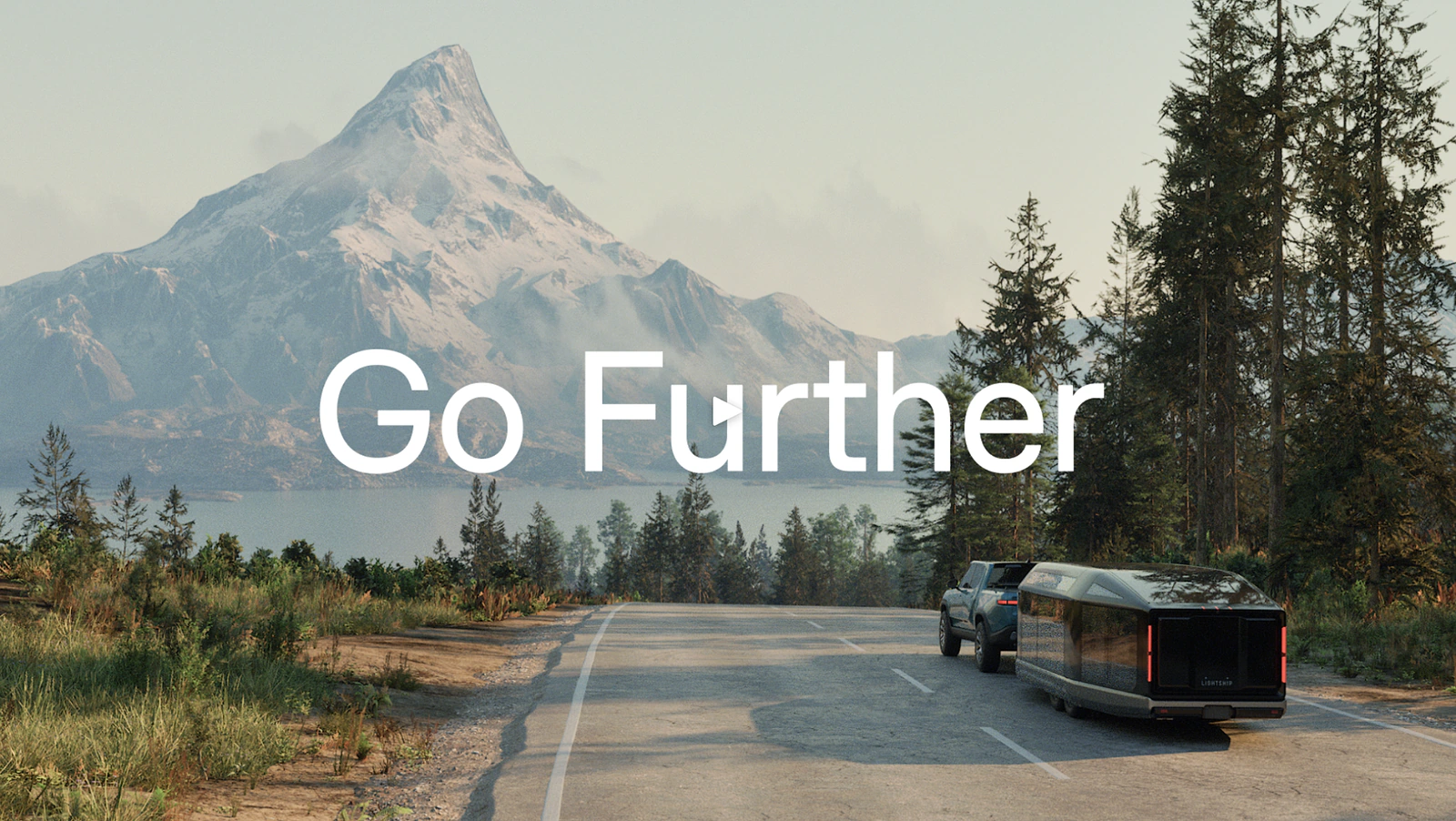
Go Further film poster with a Lightship trailer traveling through a mountain landscape.
Go Further / Anthem filmWe needed to introduce a new way to travel before a full library of real-world footage existed. I led creative development with two agency partners, bringing CGI and lifestyle footage into a film that connected the trailer to the journey ahead.
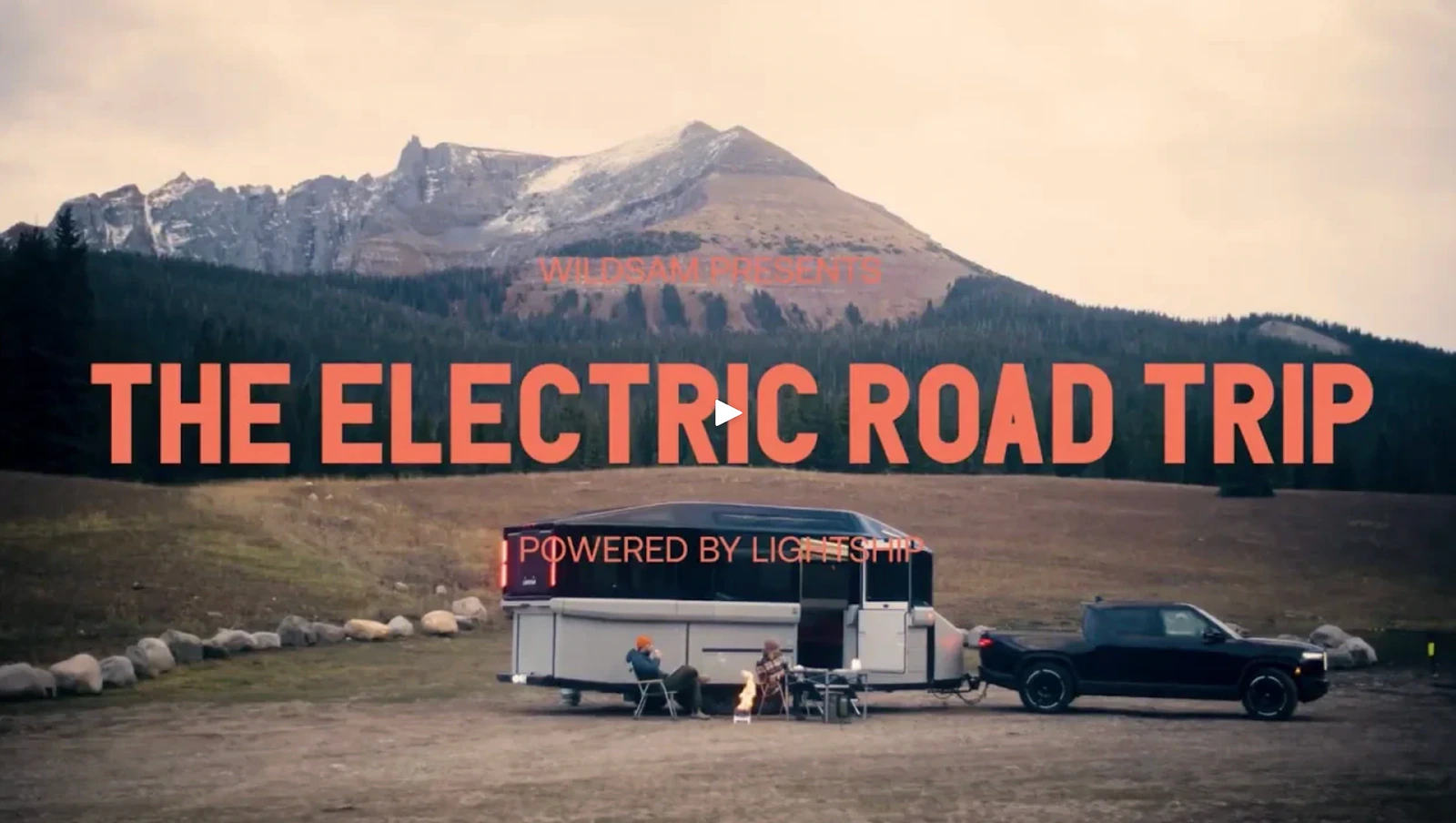
The Electric Road Trip film poster showing a Lightship trailer and tow vehicle in a mountain landscape.
Wildsam / The Electric Road TripA five-day Southwest shoot became a wider travel story across film, print advertising, digital guides and editorial. I led Lightship’s partnership with Wildsam, from the client relationship to art direction.

Design direction

The space you want at camp is the space you have to tow. Lightship’s answer was a trailer that changes for each part of the trip.

In Road Mode, the canopy lowers to reduce its profile. In Camp Mode, it rises to create a room with panoramic views. With the team, I helped shape the product around both: the precision of a vehicle in motion and the warmth of a place to stay. Early L1 development studies. The later AE.1 production vehicle reflects the continuing work of Lightship’s design and engineering teams.
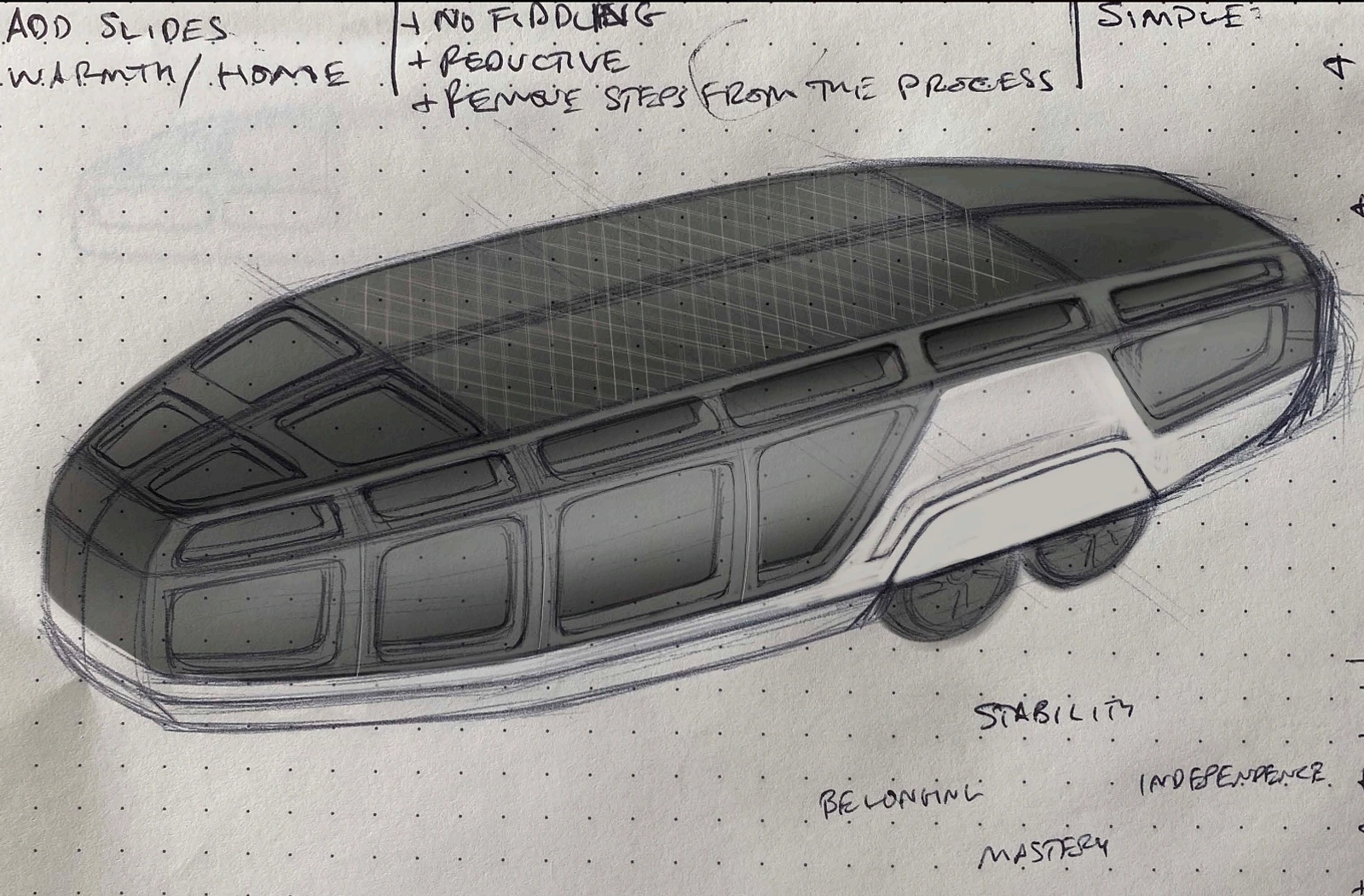
Early Lightship exterior sketch exploring a low, architectural trailer form and long glass canopy.
Early L1 exterior study / Establishing the low towing profile.

Creative Direction

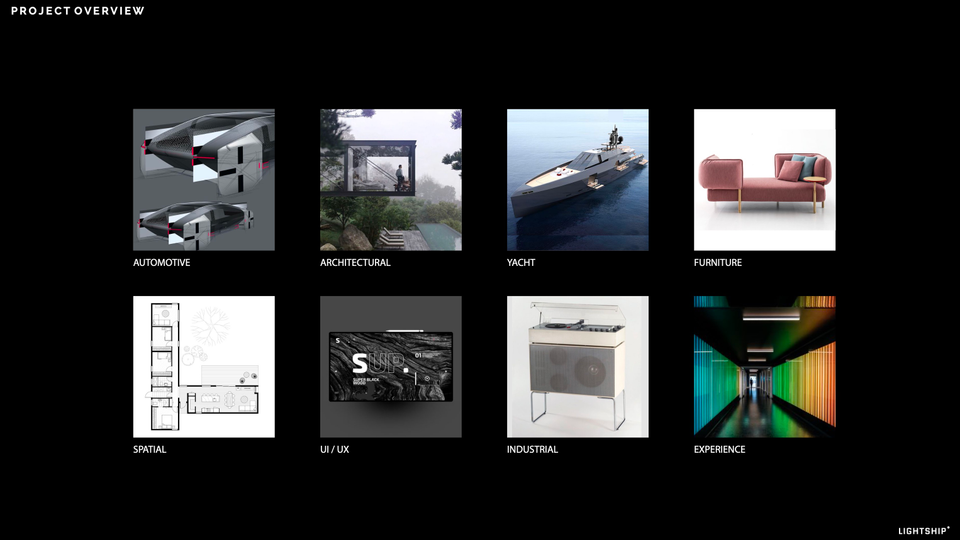
Lightship project overview bringing together automotive, architecture, yacht, furniture, spatial, interface, industrial and experience design.
Creative Direction / Eight disciplines, one experience
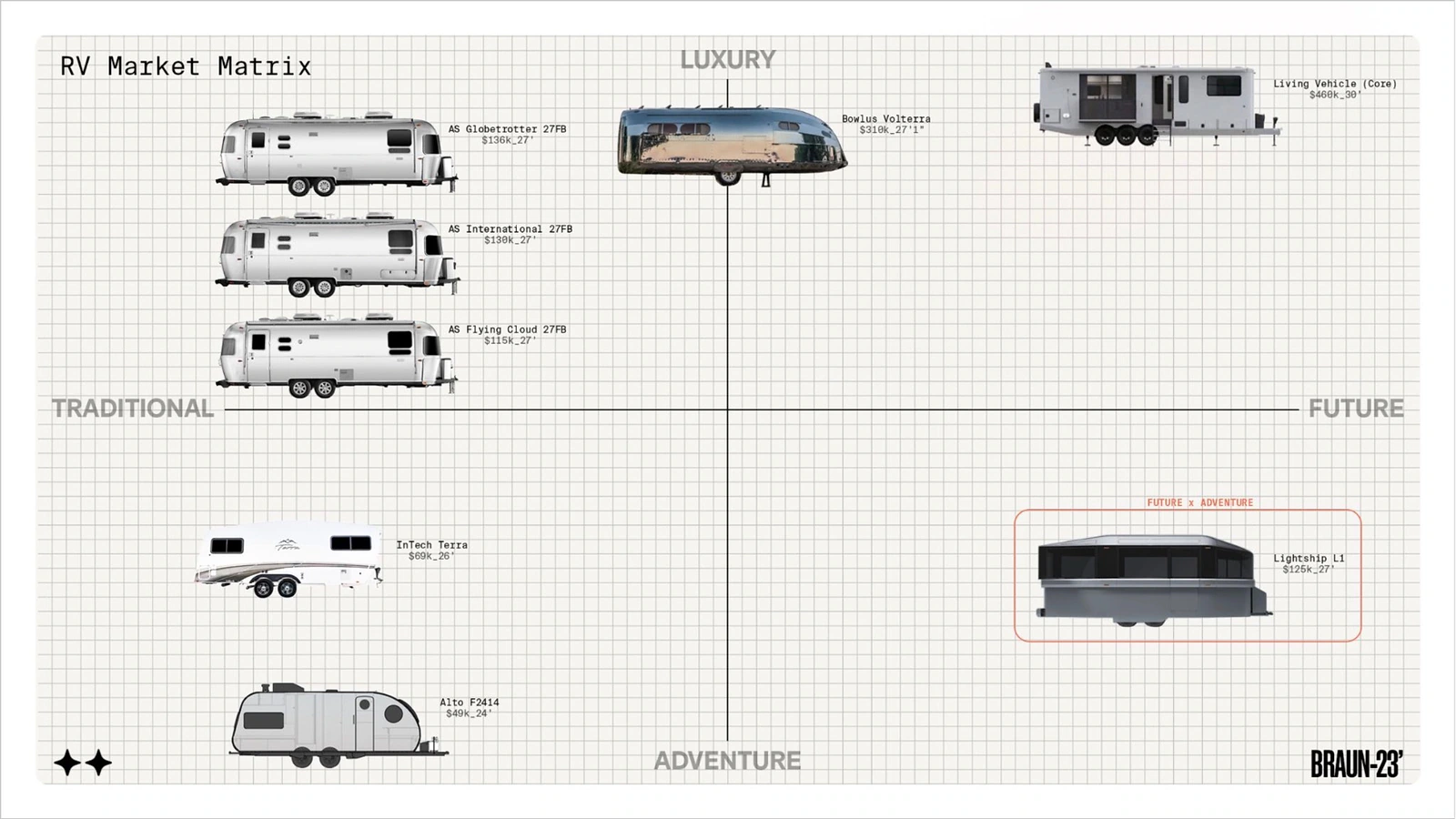
RV market matrix positioning Lightship between future and adventure relative to conventional luxury and traditional trailers.
Category / Future × adventure
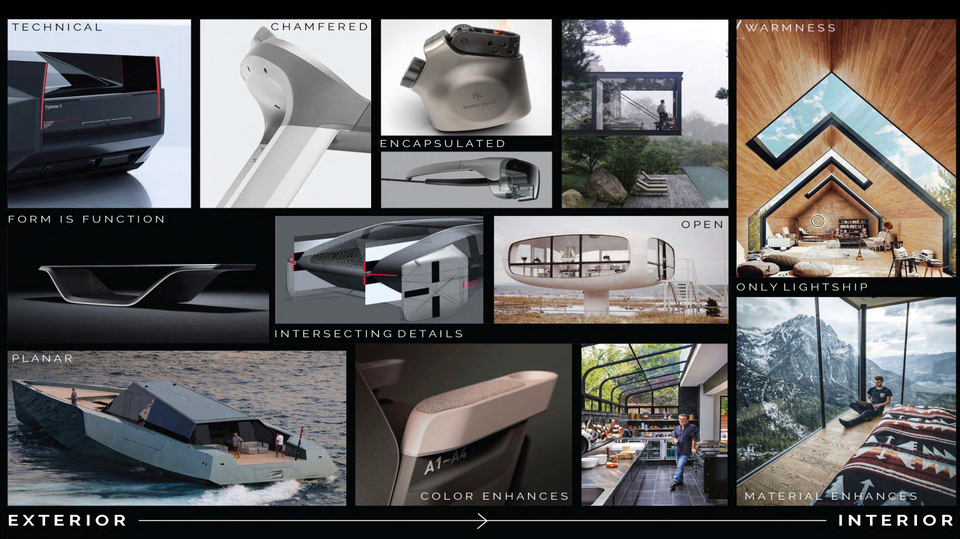
Lightship design principles connecting technical, chamfered and planar exterior forms with open architecture, warm interiors and considered materials.
Design principles / Technical outside, warm and open within
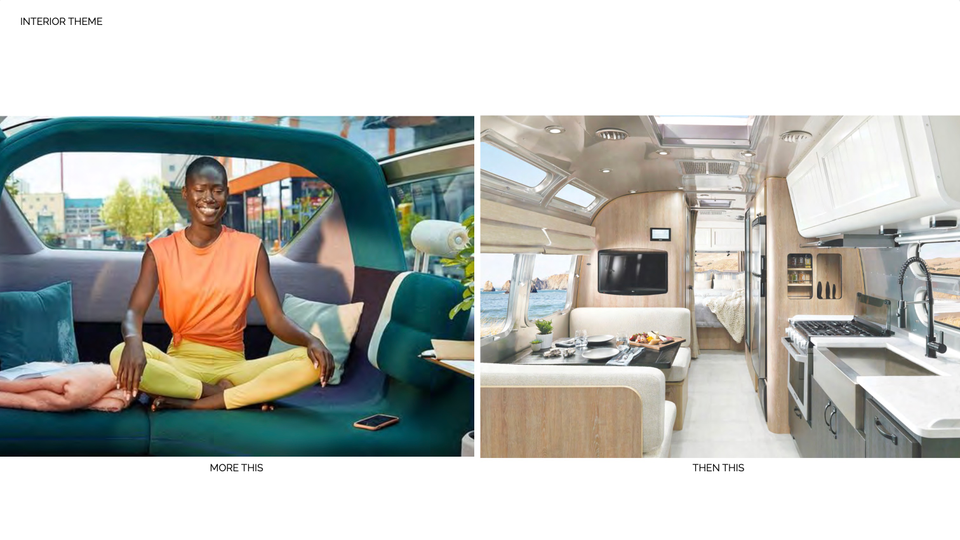
Early Lightship interior direction comparing an open, colorful lounge with the enclosed galley of a conventional travel trailer.
Interior intent / A living space built around people
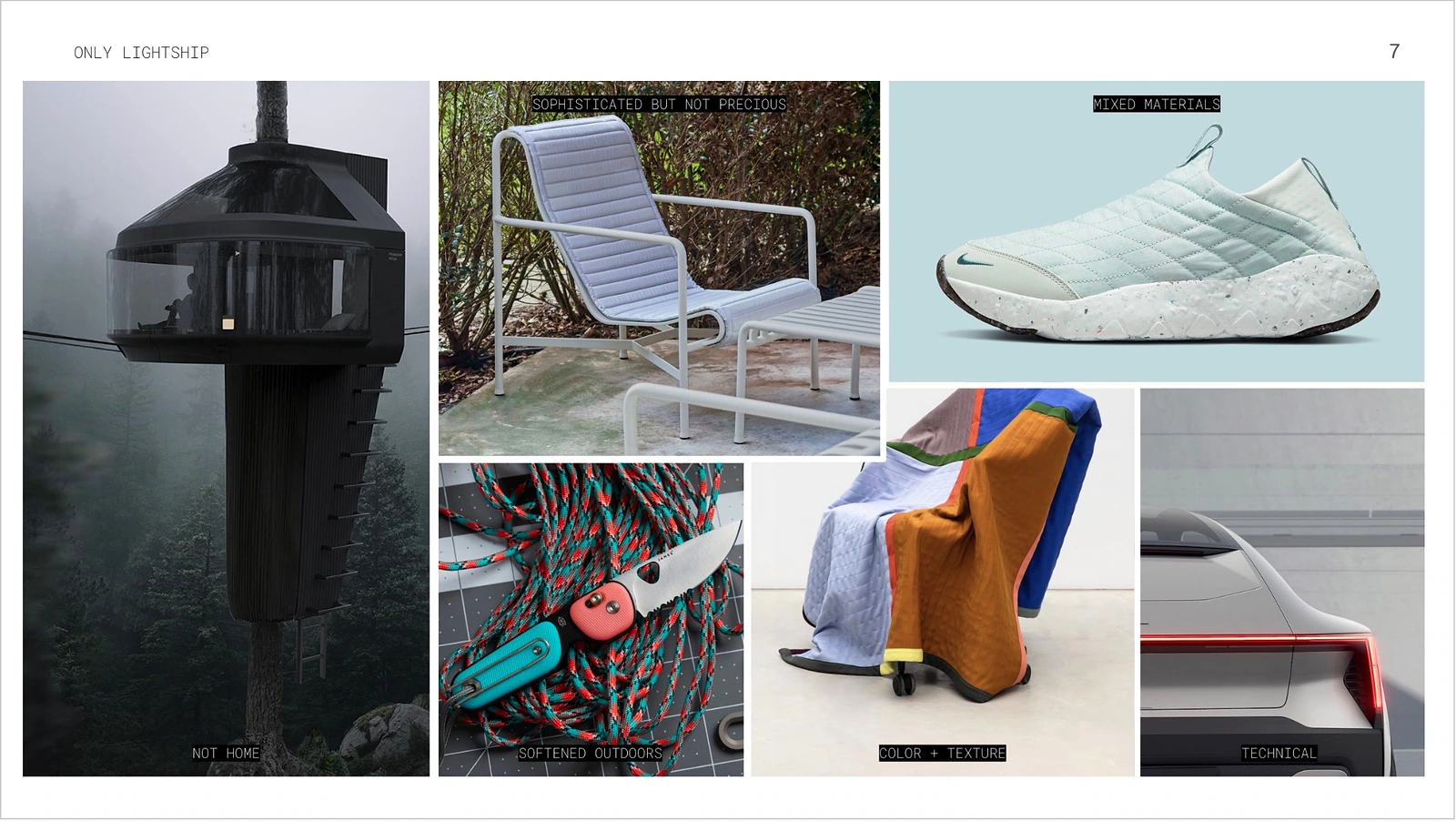
Lightship interior moodboard titled Only Lightship, combining modern architecture, outdoor equipment, mixed materials, color and technical references.
Creative Direction / Sophisticated, technical, not precious

Exterior Design

Early Lightship exterior sketch exploring a low, architectural trailer form and long glass canopy.
Early L1 exterior study / Establishing the low towing profile.
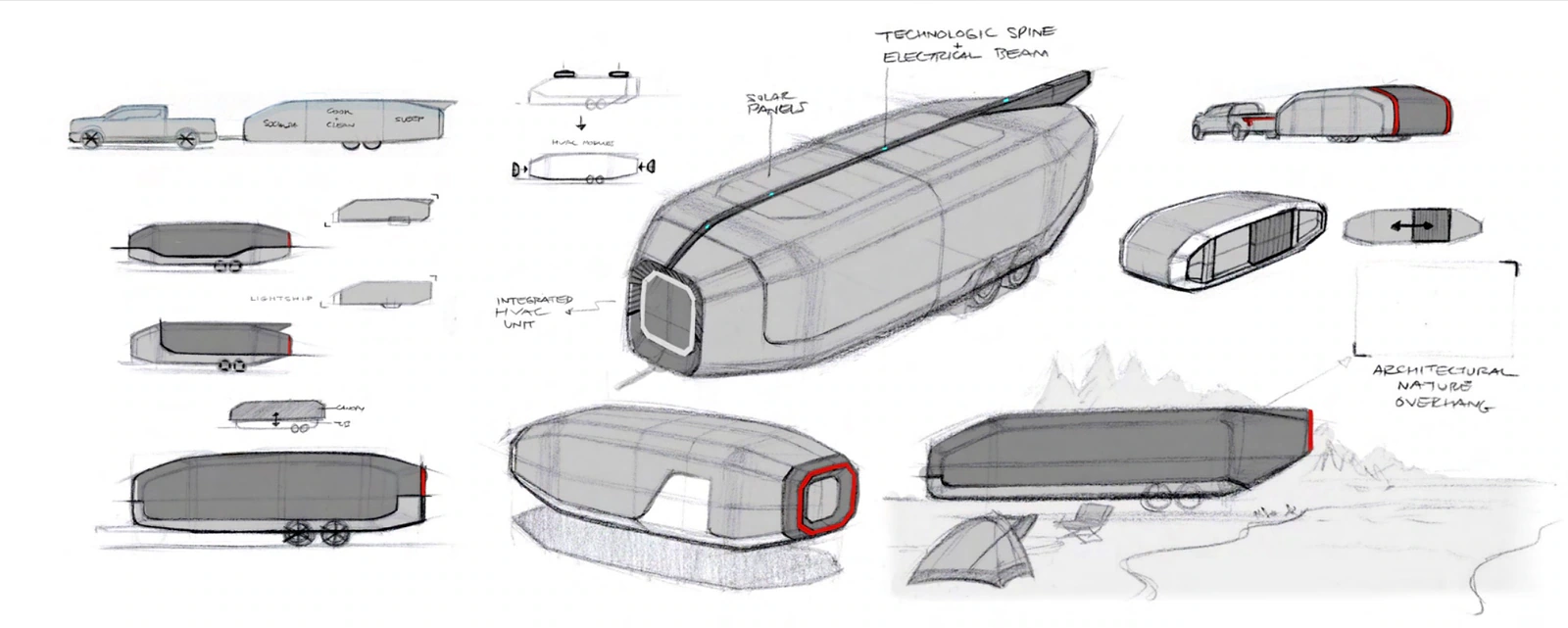
Early Lightship program direction board exploring solar panels, a technological spine, integrated HVAC and overall trailer architecture.
Program direction / Architecture + energy system
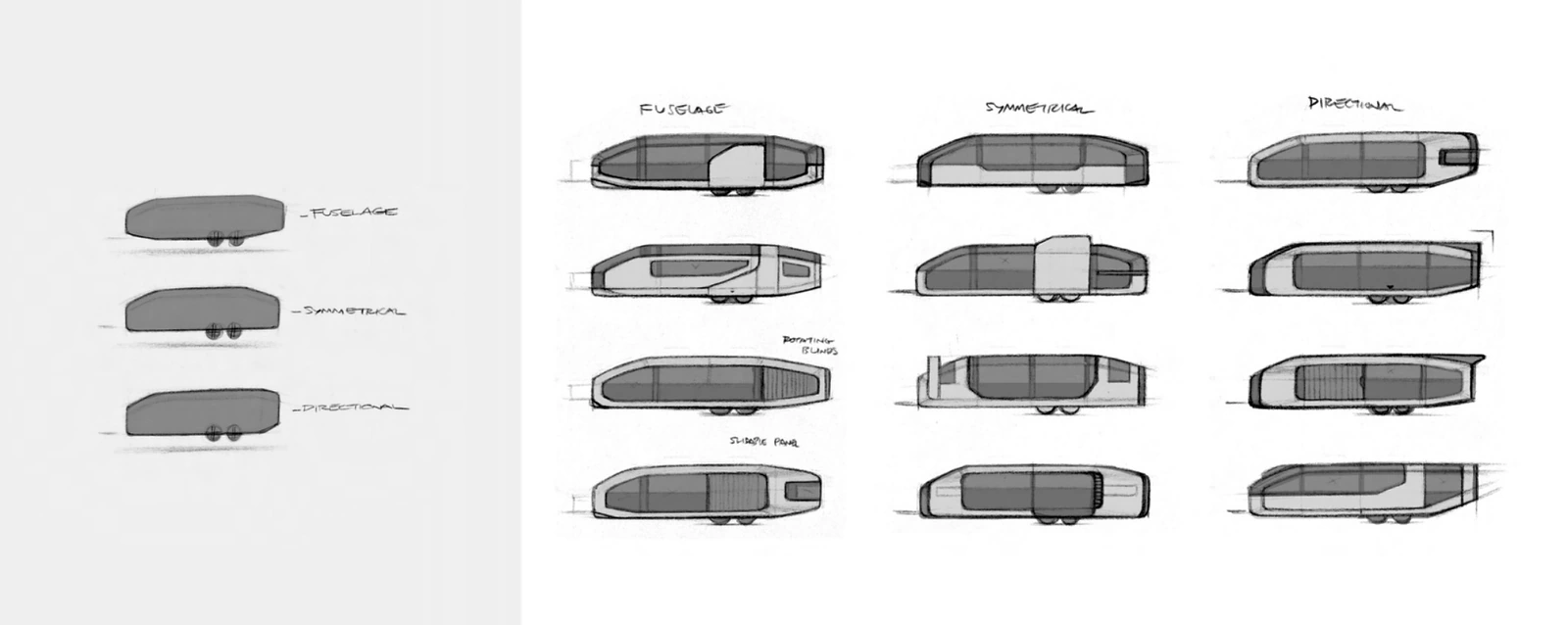
Early Lightship side-profile studies comparing fuselage, symmetrical and directional trailer architectures.
Proportion / Fuselage, symmetrical, directional
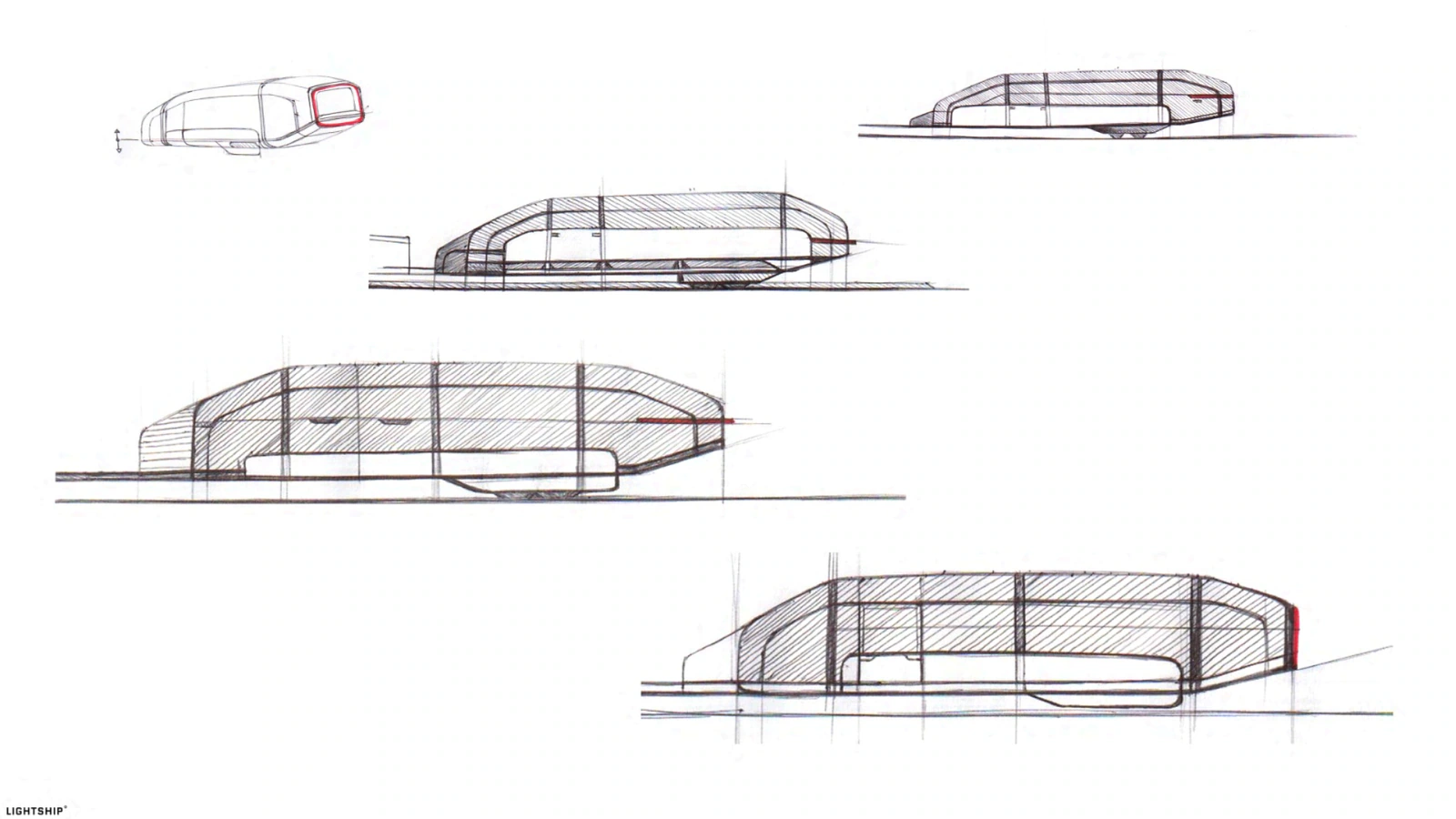
Early Lightship side and perspective sketches refining trailer length, roofline, window volume and stance.
Architecture / Establish the inhabited volume
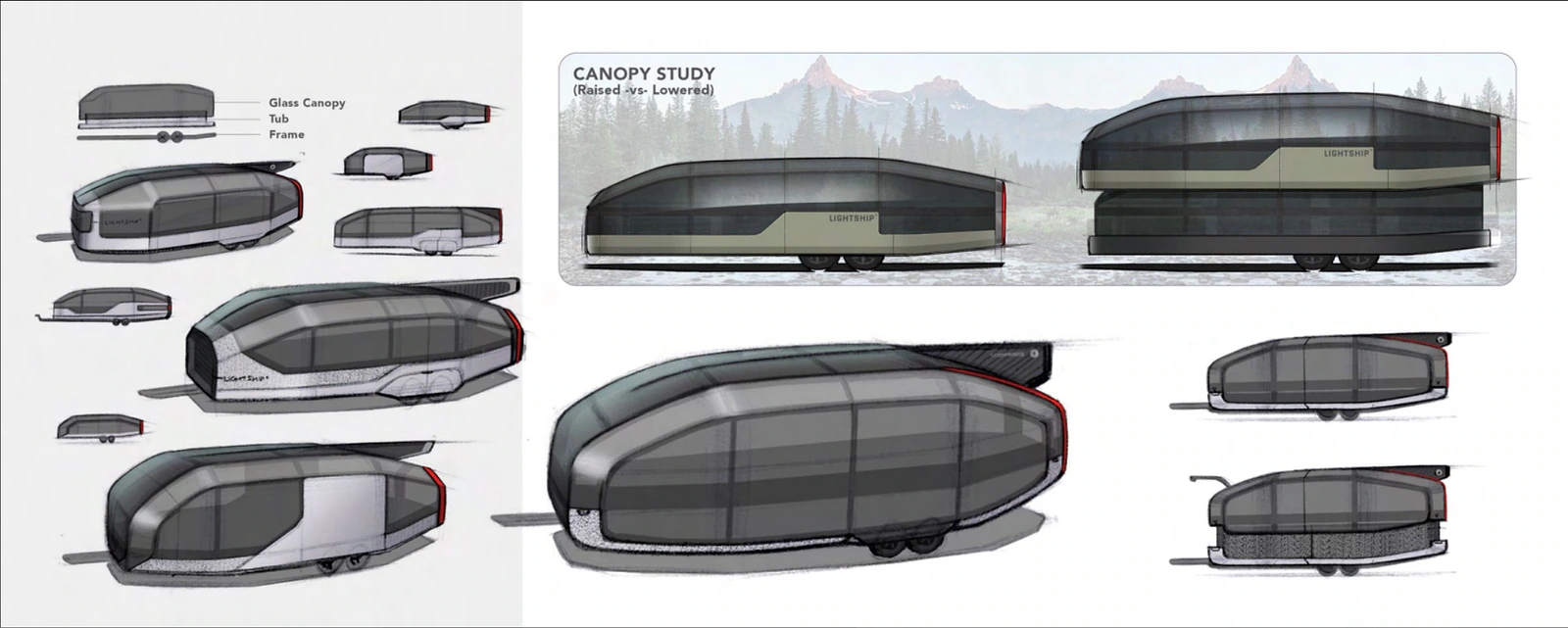
Early Lightship canopy study comparing lowered Road Mode and raised Camp Mode alongside exterior form studies.
Canopy study / Lower for towing, raised for camp.
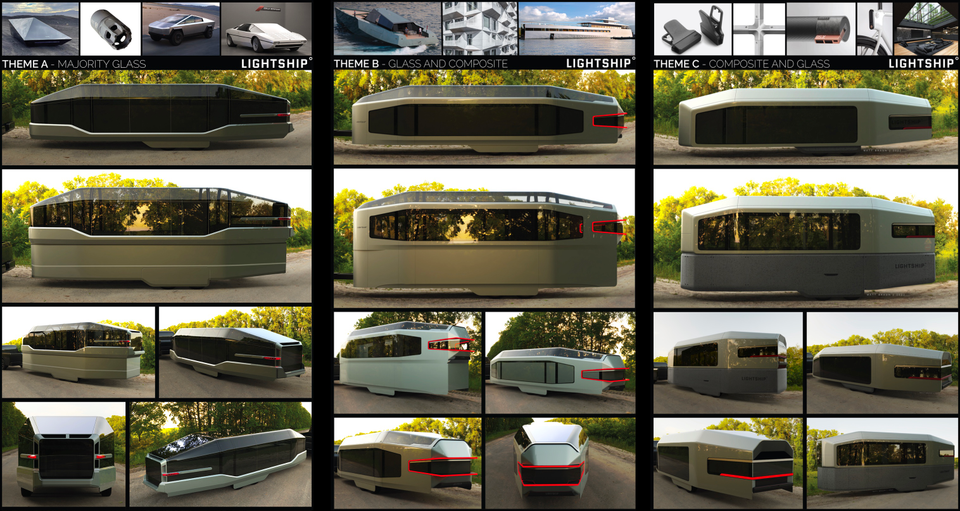
Three early Lightship exterior themes compare majority glass, glass and composite, and composite and glass in lowered and raised configurations.
Exterior exploration / Three approaches to glass and composite
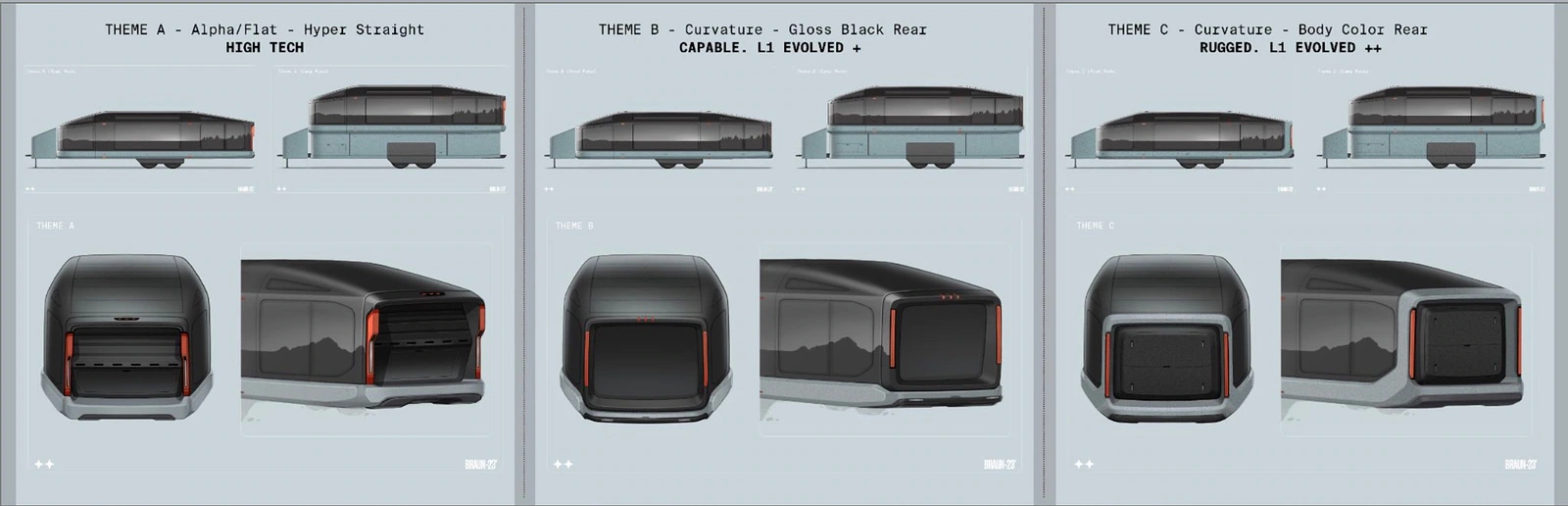
Lightship rear-design theme board comparing three exterior directions and hatch architectures.
Rear identity / Three themes, one functional problem
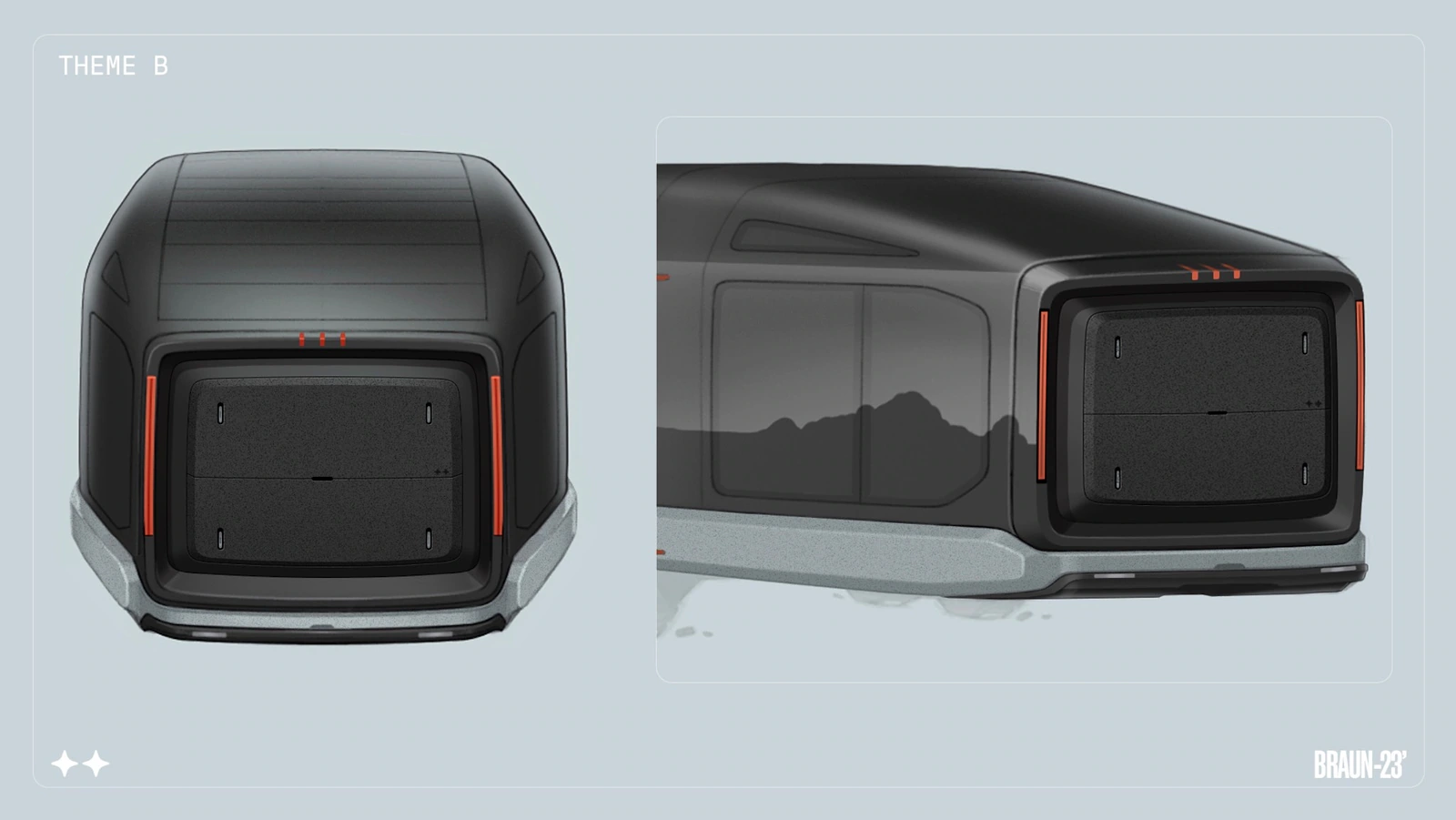
Refined Lightship Theme B rear design showing hatch architecture, lighting and black glass volume.
Refinement / Rear architecture resolves

Interior Design

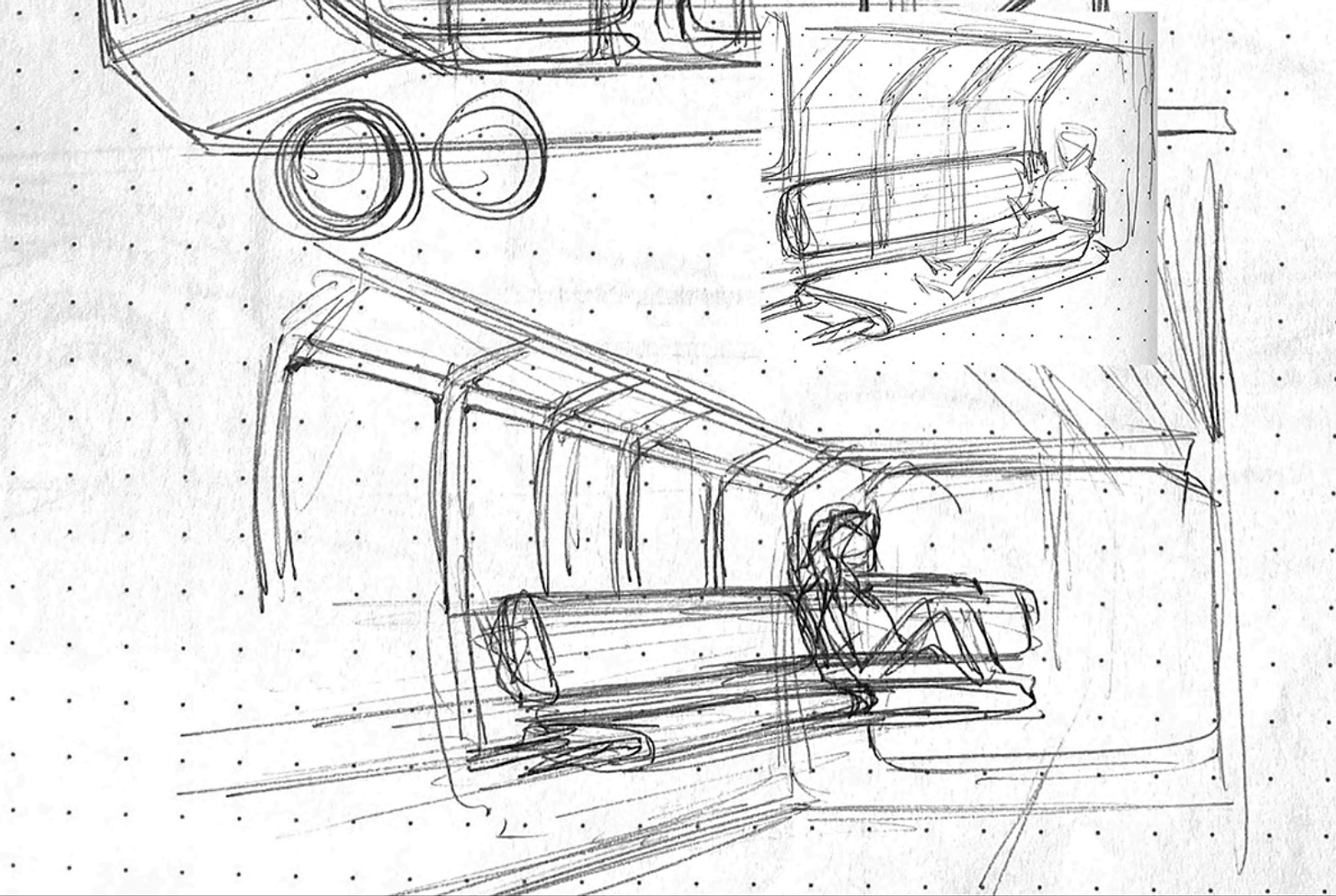
Early Lightship interior sketch exploring panoramic glazing, lounge seating and an open living space.
Experience / Design the space from the inside out
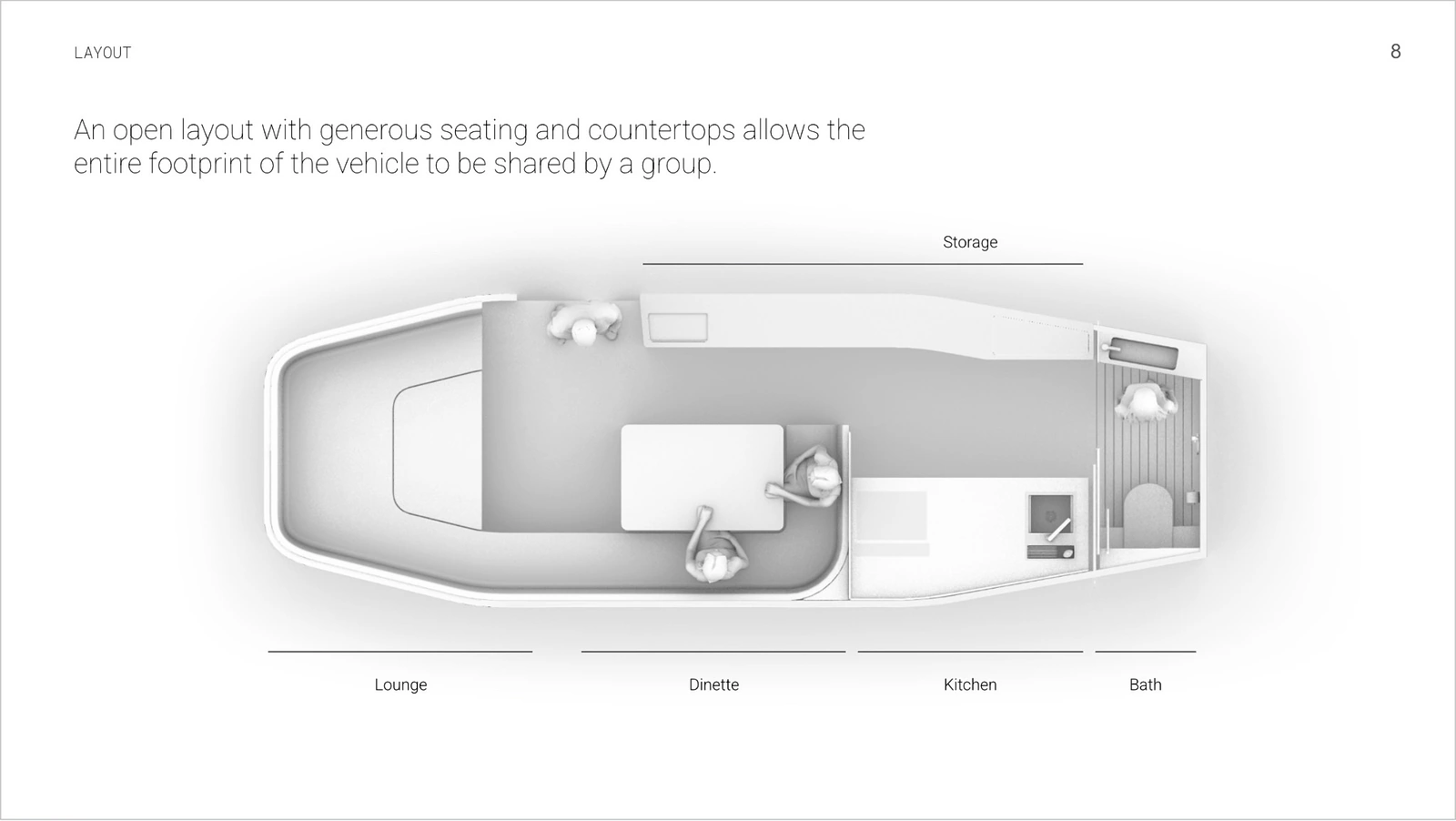
Early Lightship interior plan exploring an open lounge, dinette, kitchen and bath within the trailer footprint.
Layout / Share the whole footprint
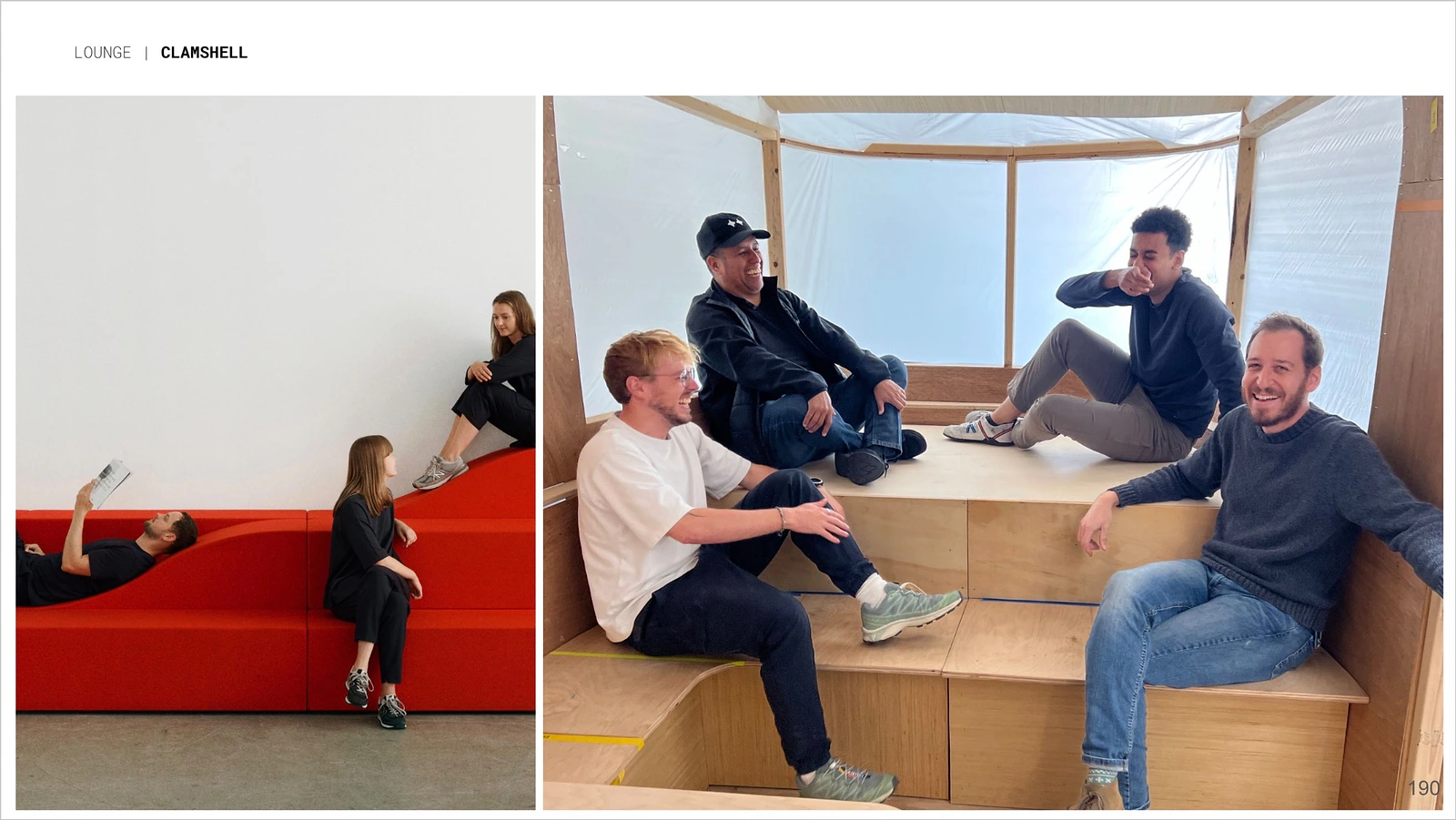
Lightship lounge-bed development showing full-scale seating studies and the team evaluating a plywood interior prototype.
Full-scale interior prototype / Exploring the space people would use.
Animated five-frame Lightship clamshell lounge-bed sequence showing a person converting the seat into a bed.
Early interior concept / A lounge that converts to a bed.
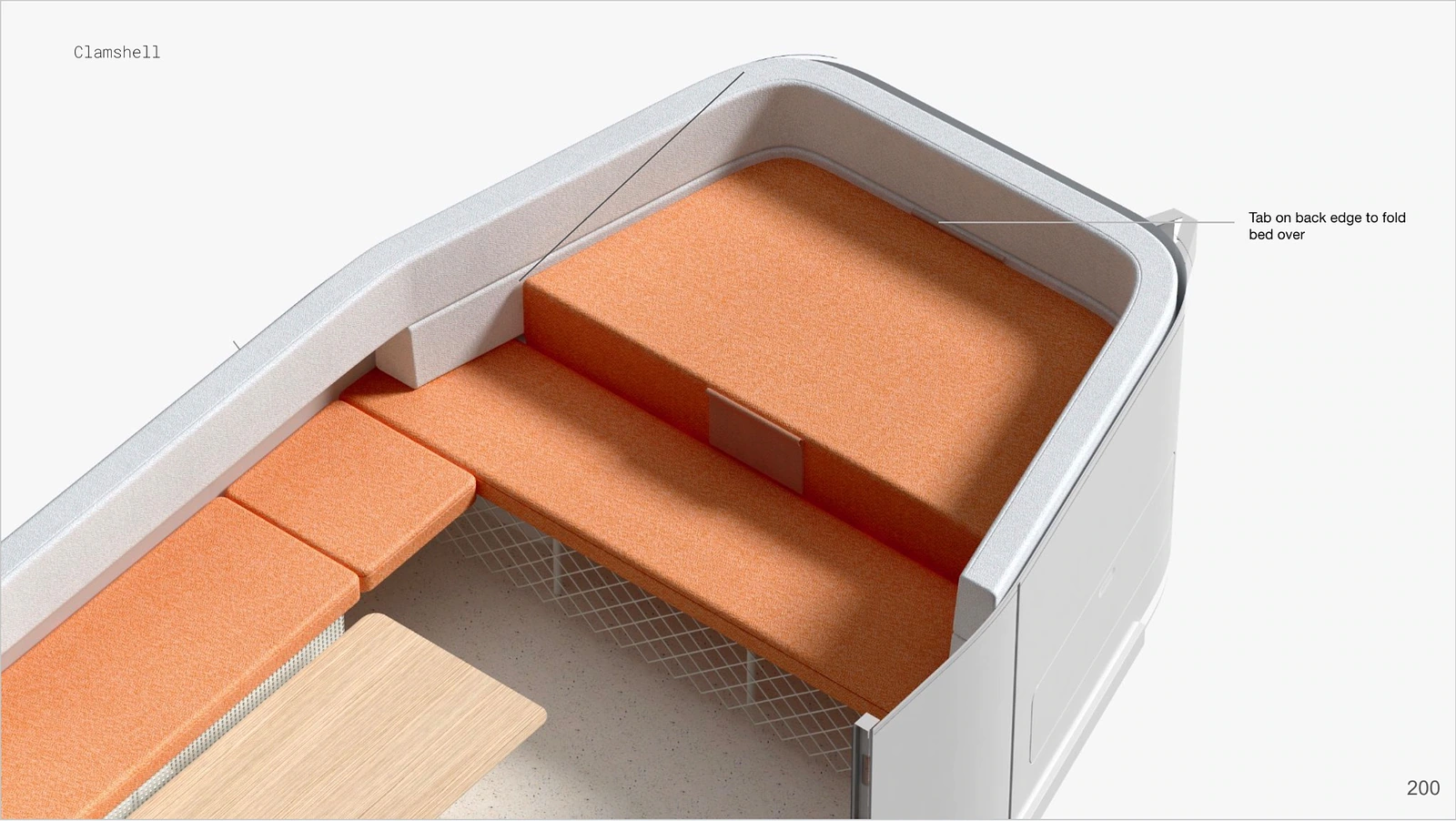
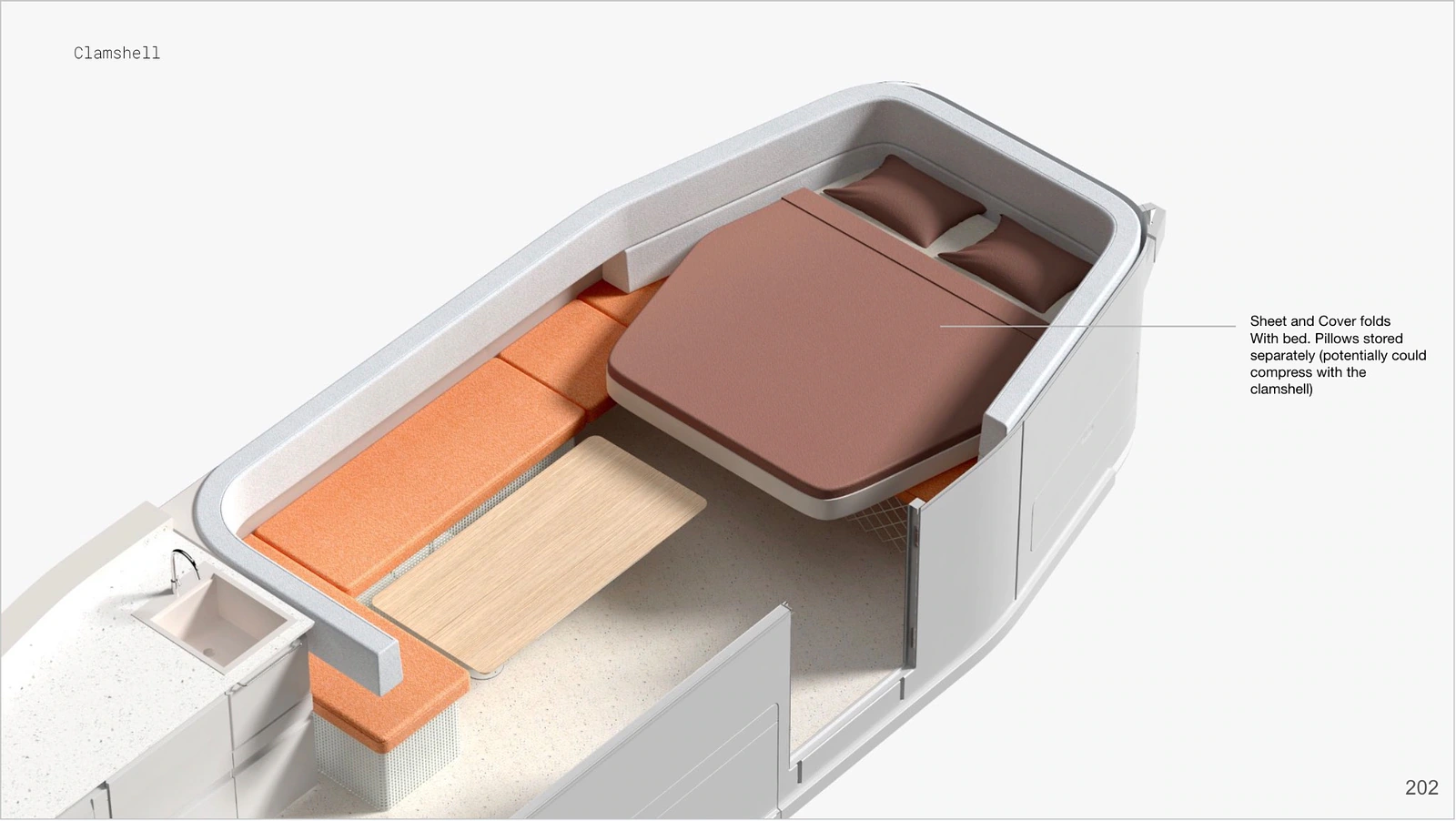
Early Lightship clamshell lounge-bed rendering showing the folded bed integrated into the rear lounge.
Concept / Fold the bed into the architecture
Lightship clamshell bed rendering with sheets and covers folding with the bed inside the rear lounge.
Early interior concept / Keeping bedding with the bed during the change from lounge to sleeping
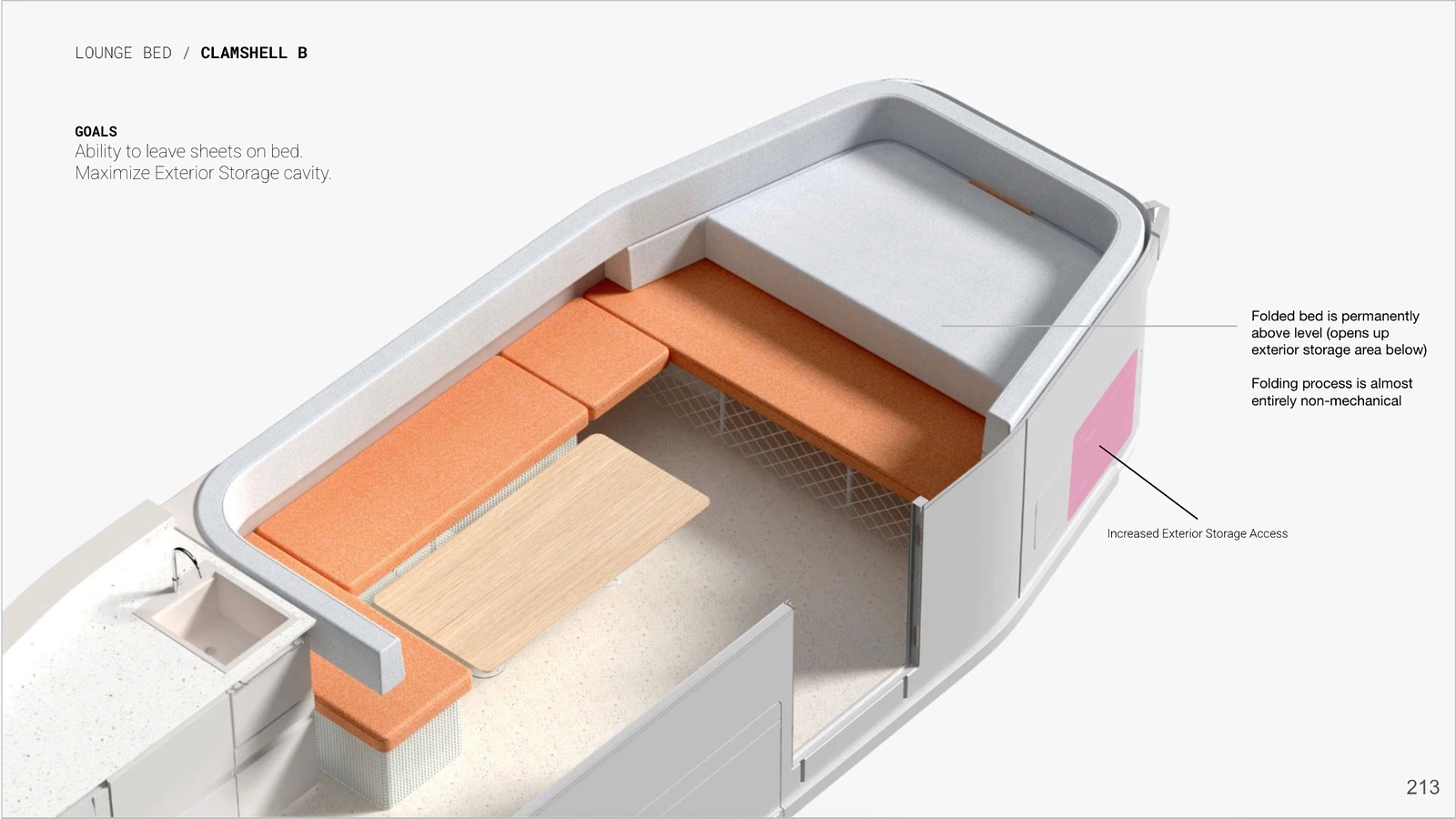
Lightship clamshell concept board showing goals to leave sheets on the bed, maximize exterior storage and use a nearly non-mechanical folding process.
Design criteria / Simplicity + storage
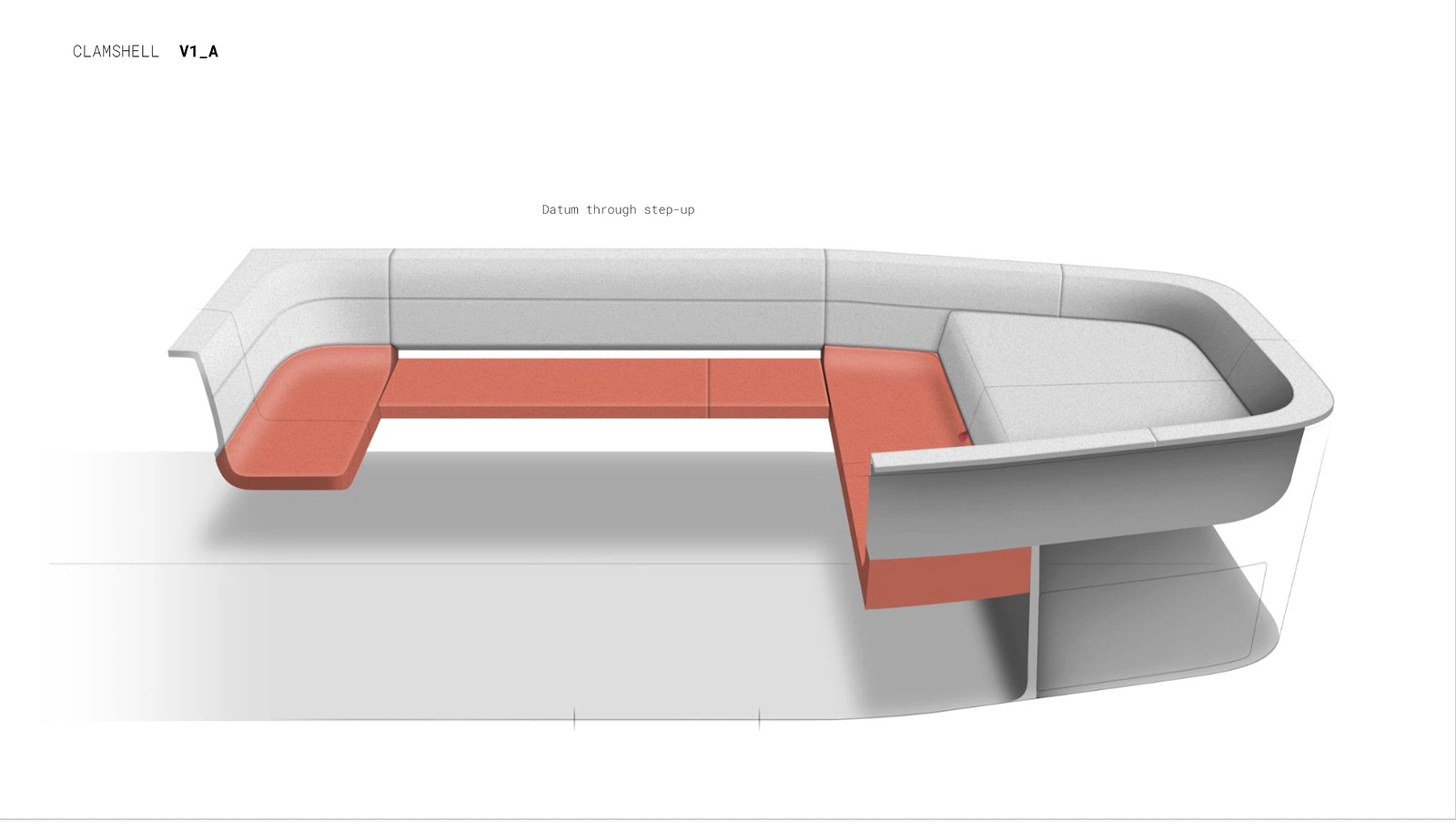
Early Lightship clamshell V1A sectional model studying lounge geometry, datum height and the bed volume.
Geometry / Resolve the package
Interior / A place to settle in
Windows / A connection to the outdoors
The product / On the road and at camp

Product experience

The photography and films had a simple job: help people picture their own trip.

We moved from the trailer crossing a landscape to the life taking place inside: making breakfast, gathering at the table, finding a quiet place to read. The images explained the design through the everyday moments it was made for.
Product experience
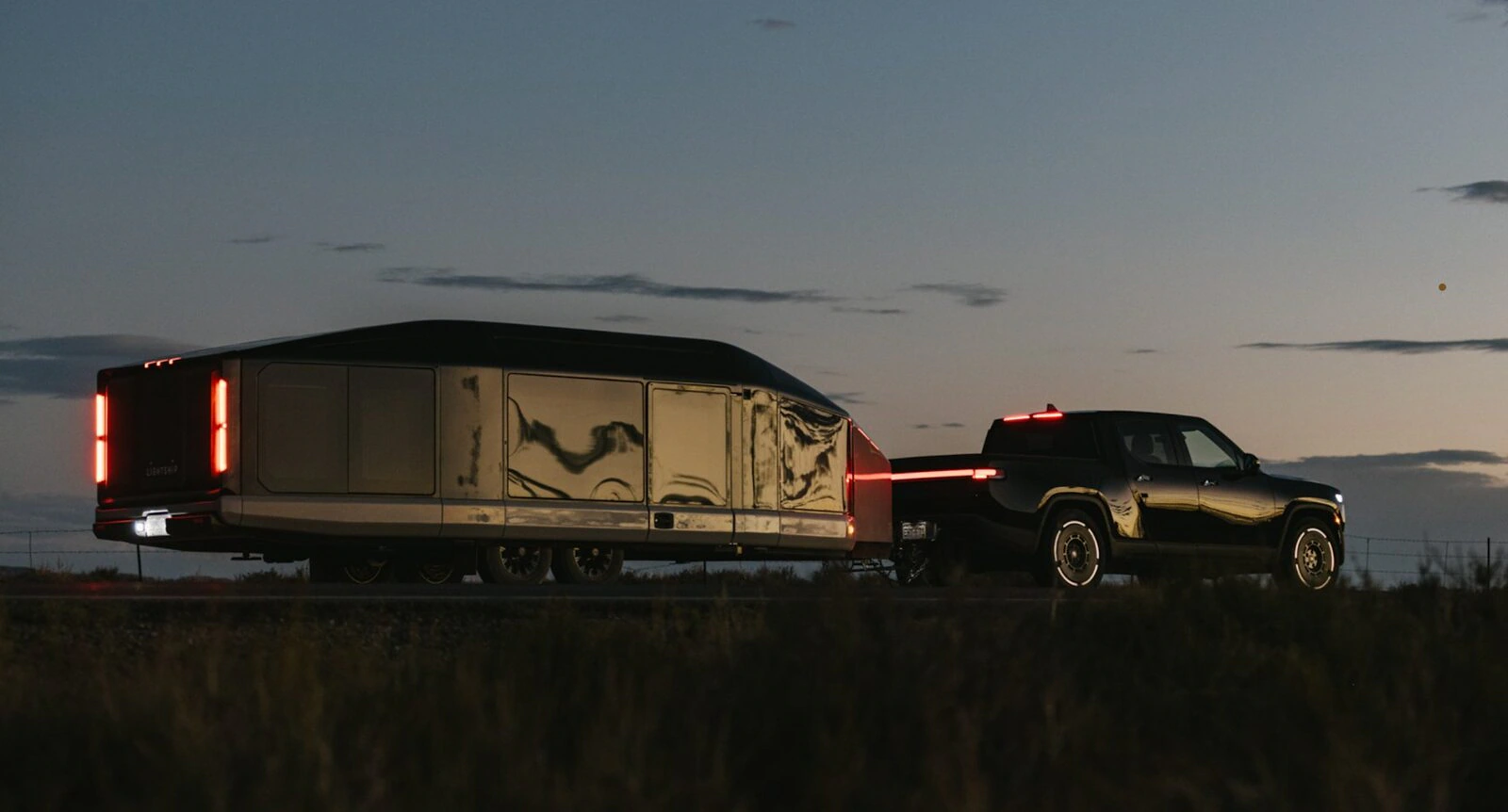
Lightship trailer being towed by a dark pickup at dusk.
On the road / Product silhouette at dusk
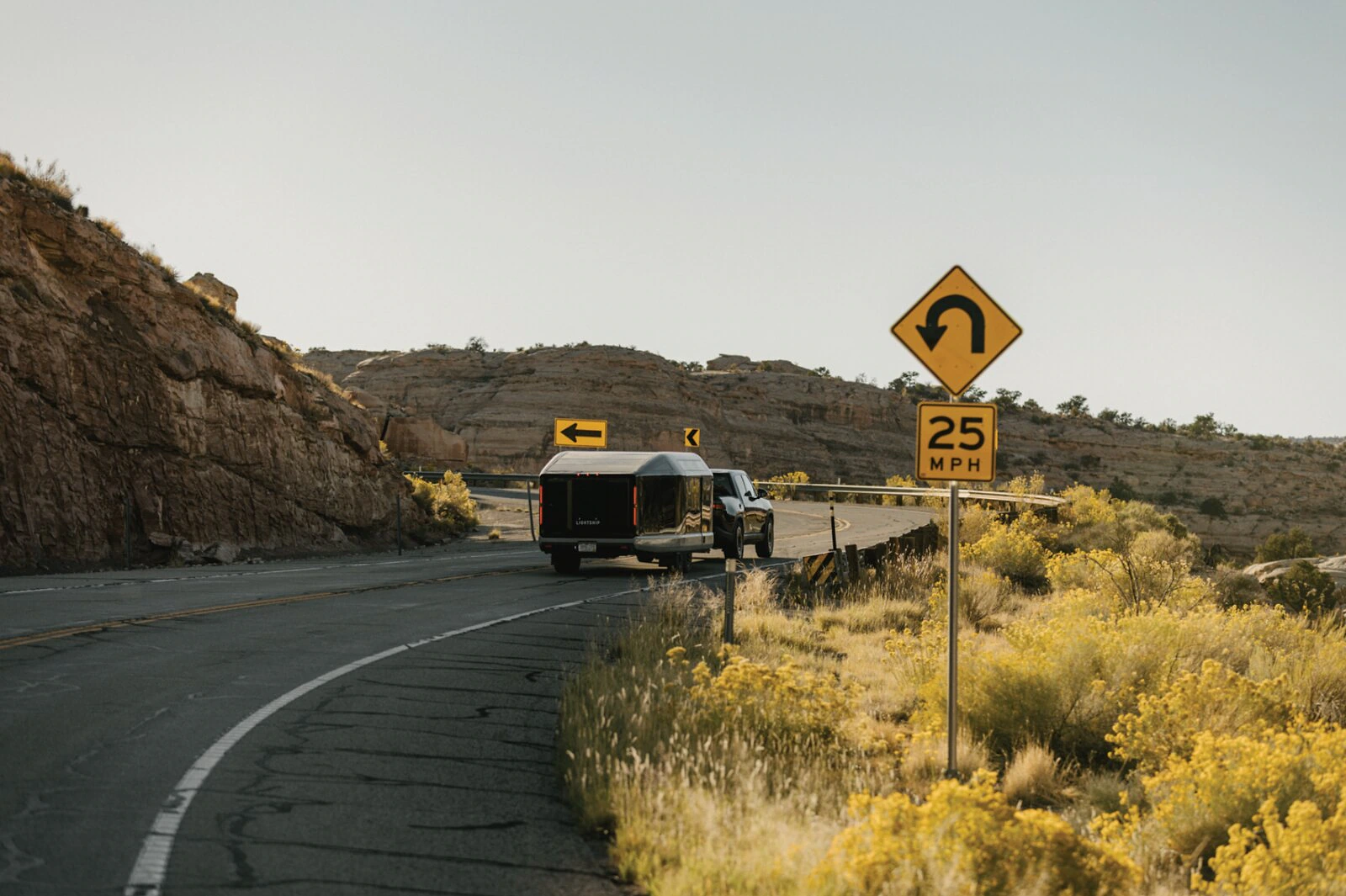
Lightship trailer traveling through a winding desert road.
Journey / Familiar road, unfamiliar object
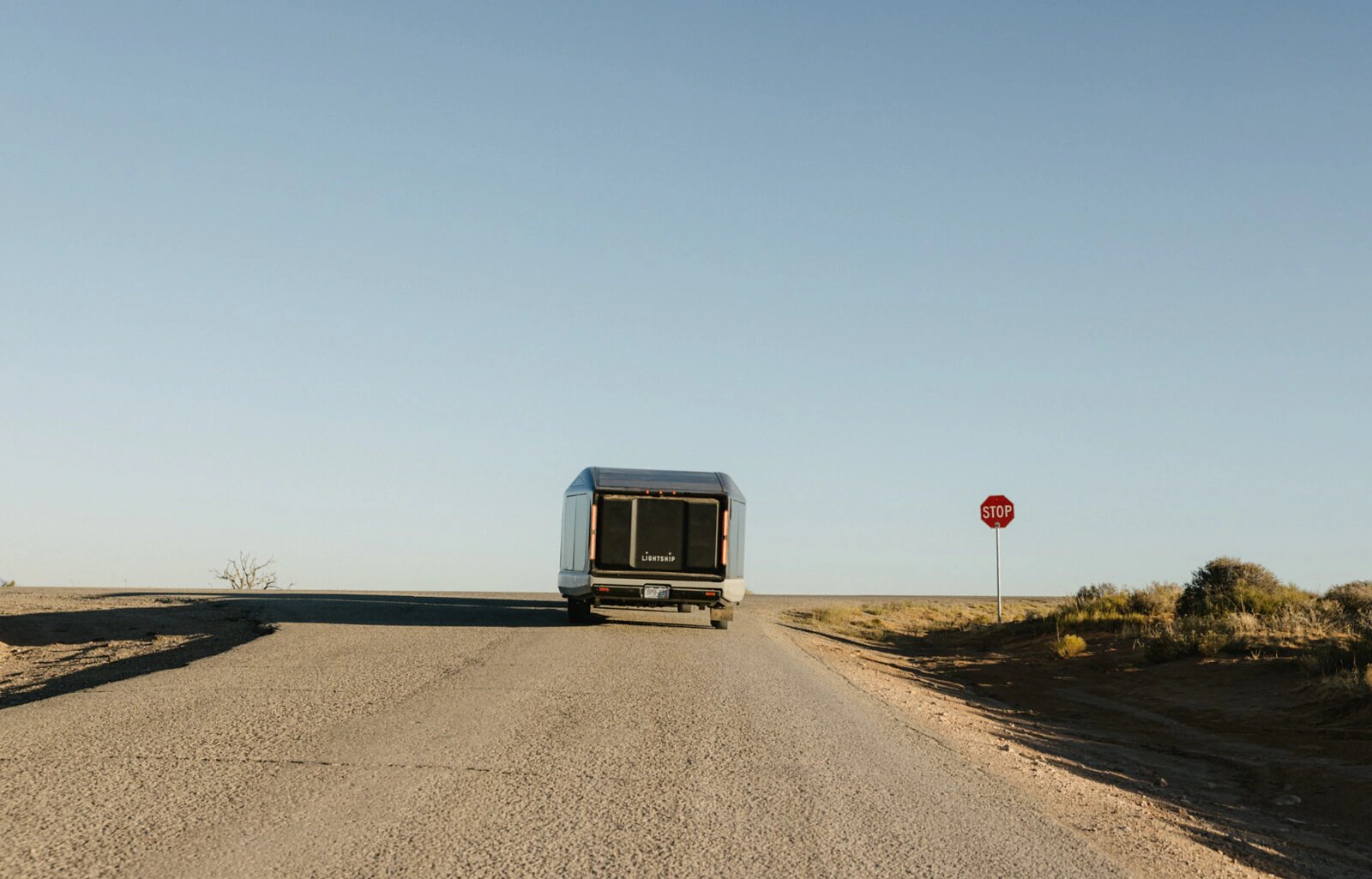
Lightship trailer on a minimal open road beneath a clear blue sky.
Scale / The road becomes part of the composition
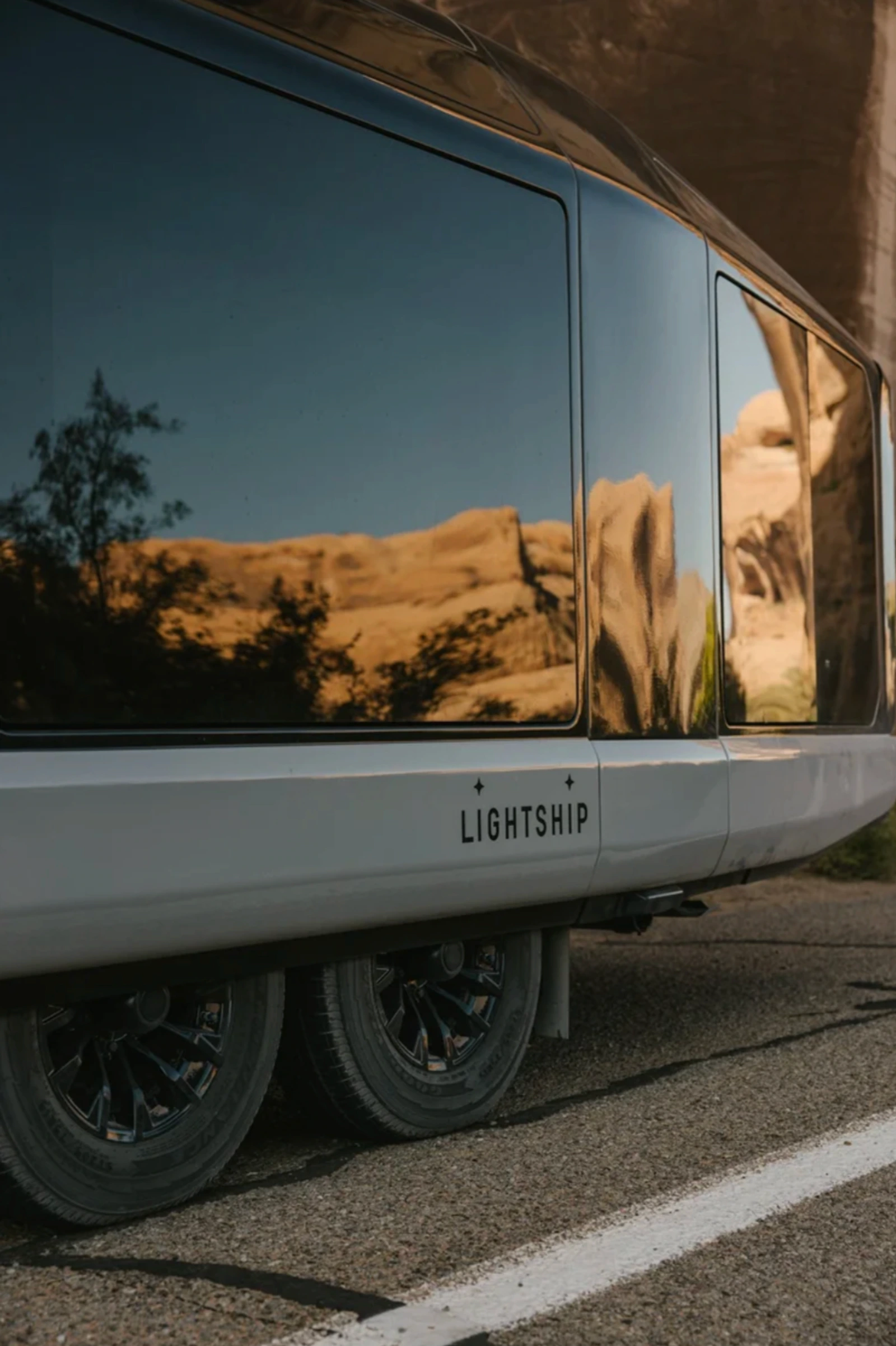
Reflective exterior detail of the Lightship trailer in a desert canyon setting.
Exterior / Reflective finishClose views of the exterior surface and dark glazing.
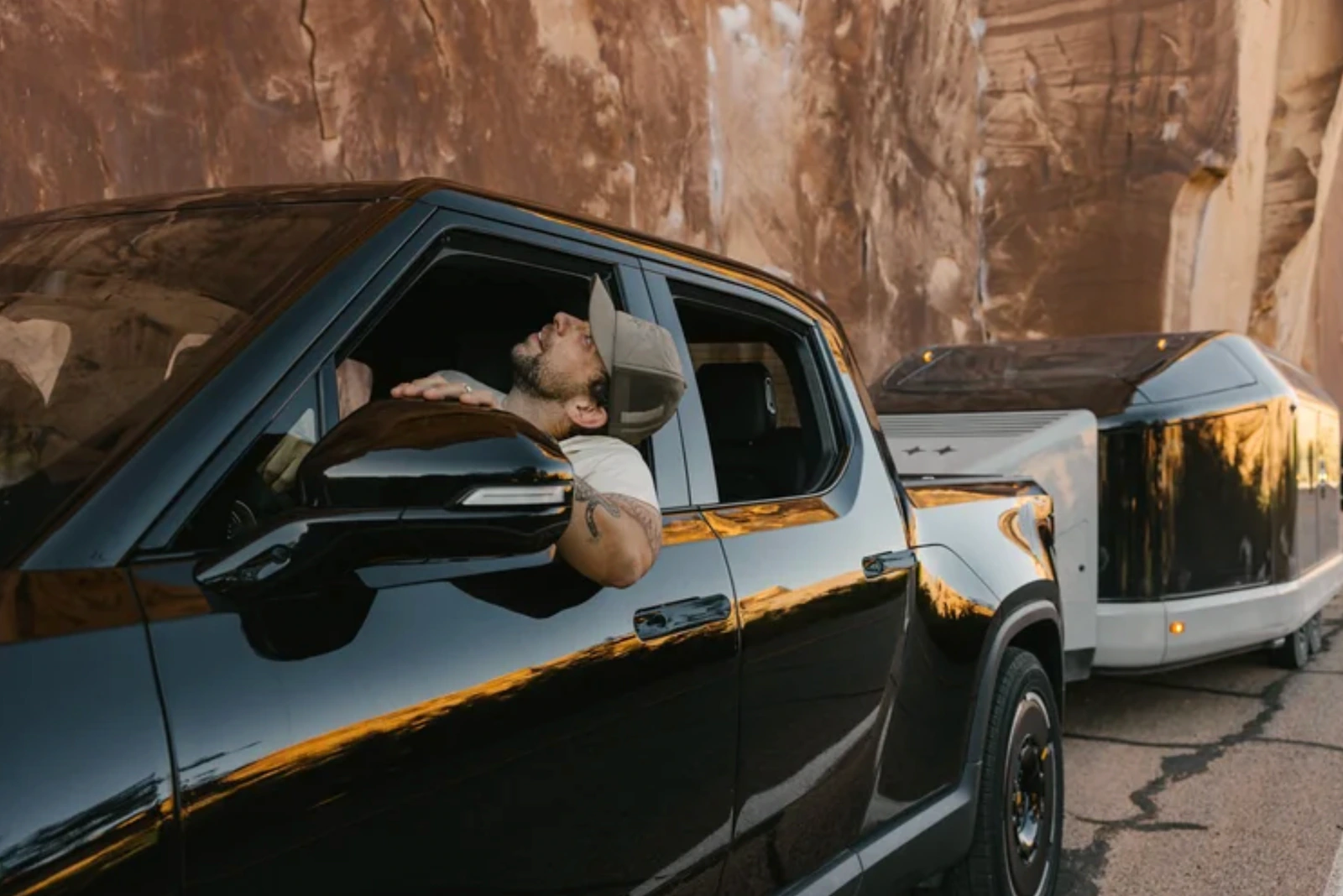
A Rivian truck towing the Lightship trailer through a canyon road.
Exterior / Real travel contextThe trailer being towed through the Southwest.
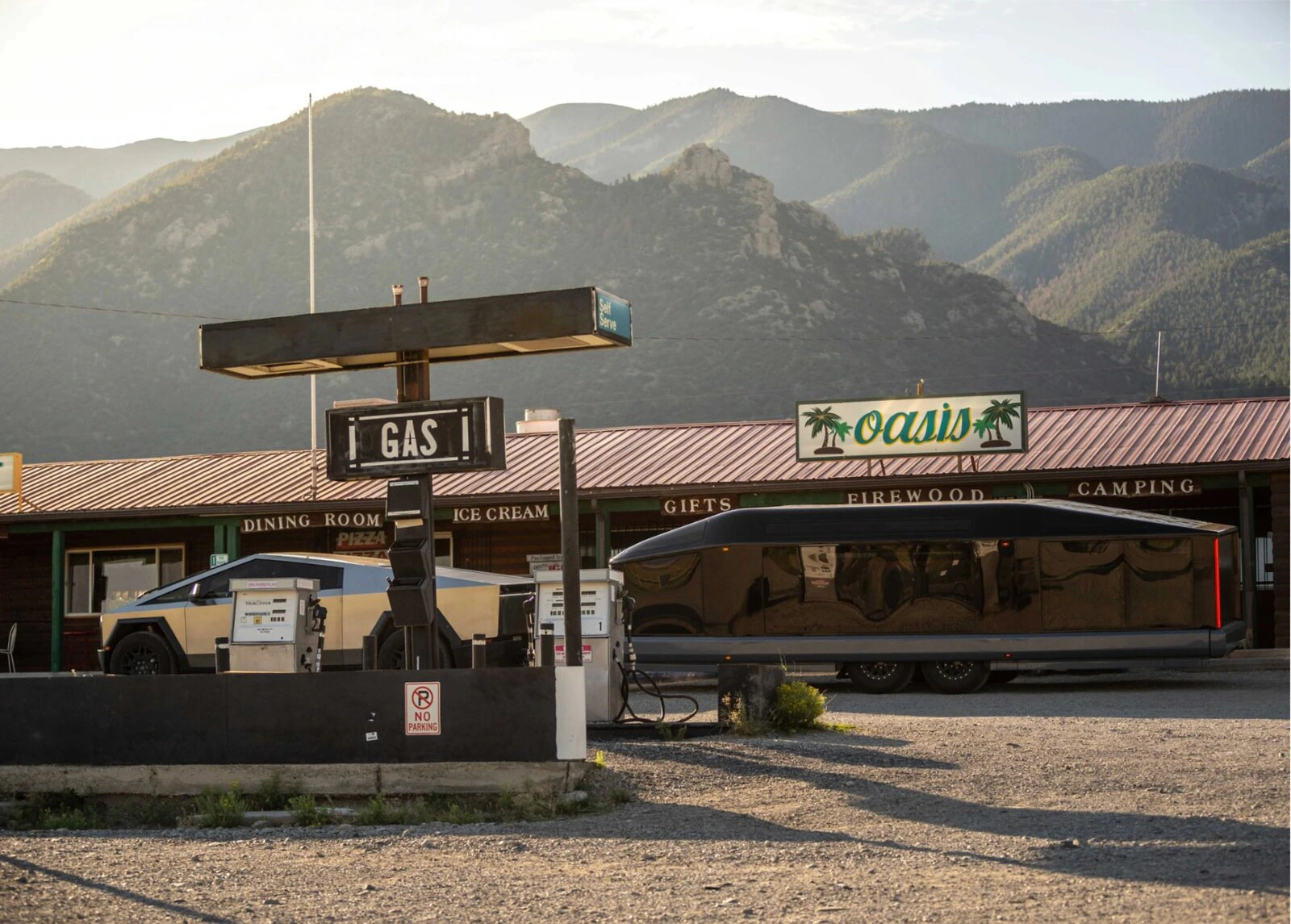
Lightship trailer and tow vehicle stopped at a vintage mountain gas station.
Road life / New technology in a familiar American landscape
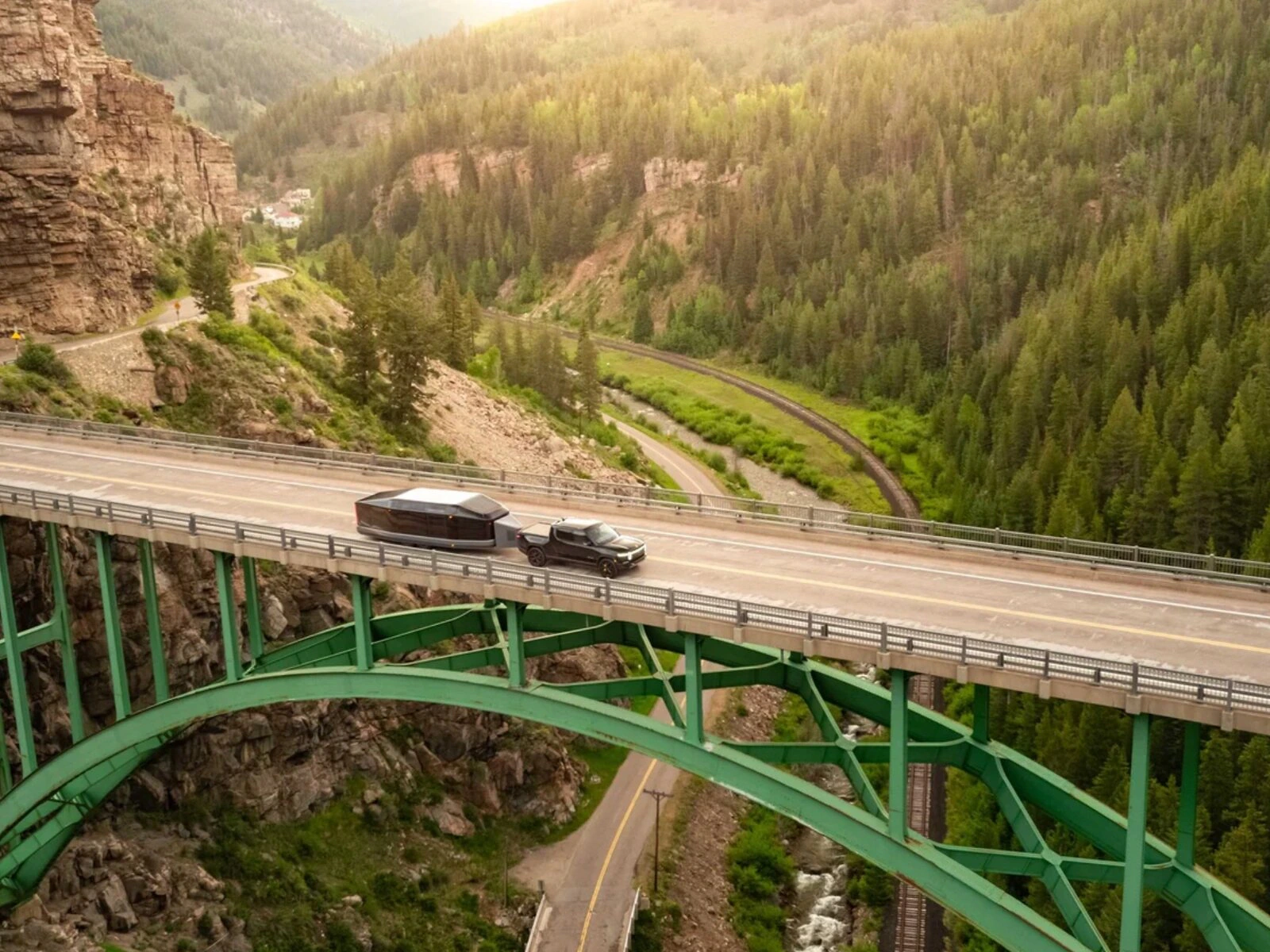
Lightship trailer and tow vehicle crossing a high green bridge through a mountain valley.
Journey / Product scale in the landscape

Product experience / Life inside

A place to live, not just sleep.
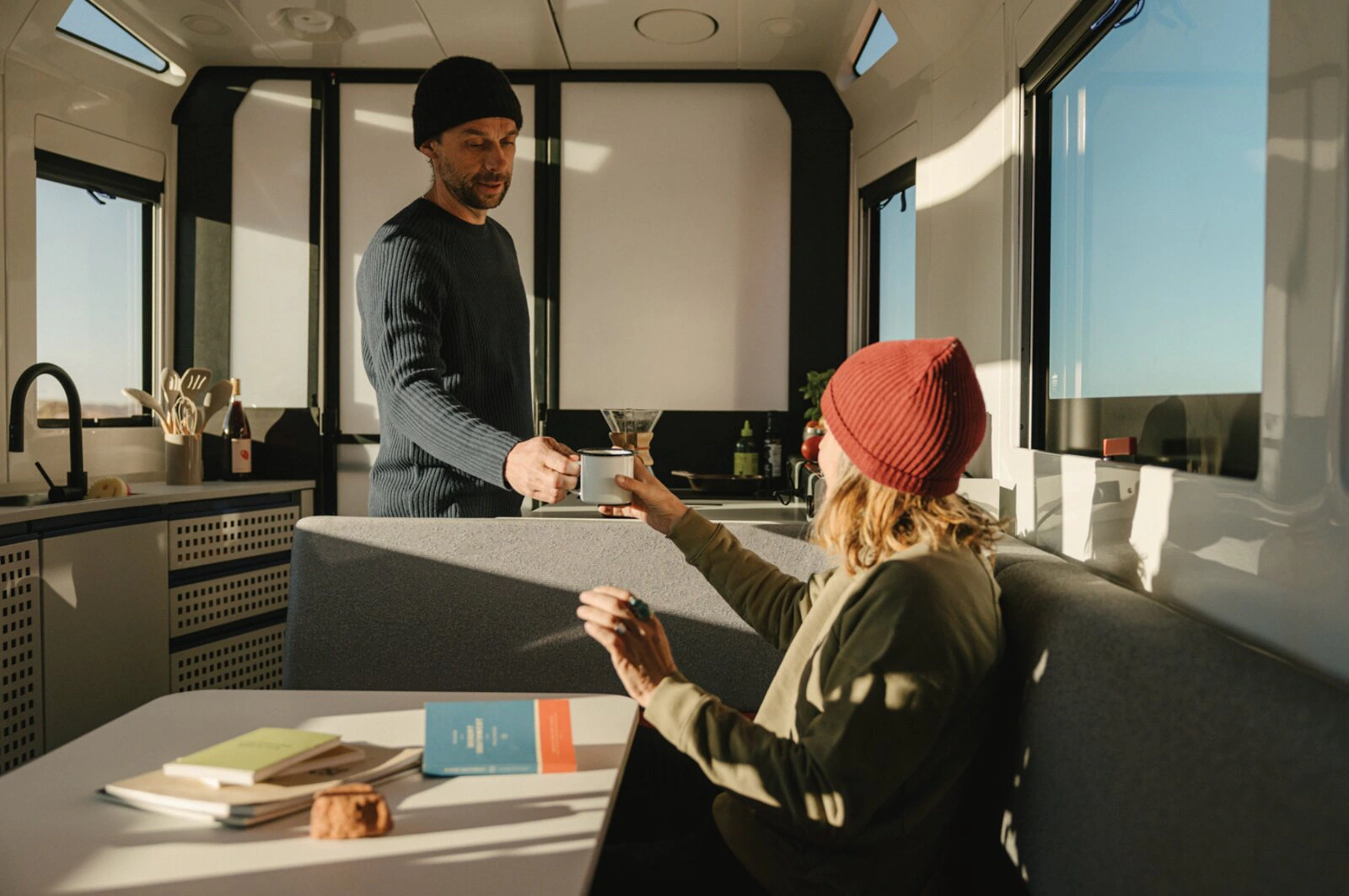
Two people sharing coffee inside the Lightship trailer in warm morning light.
Interior / Morning ritual
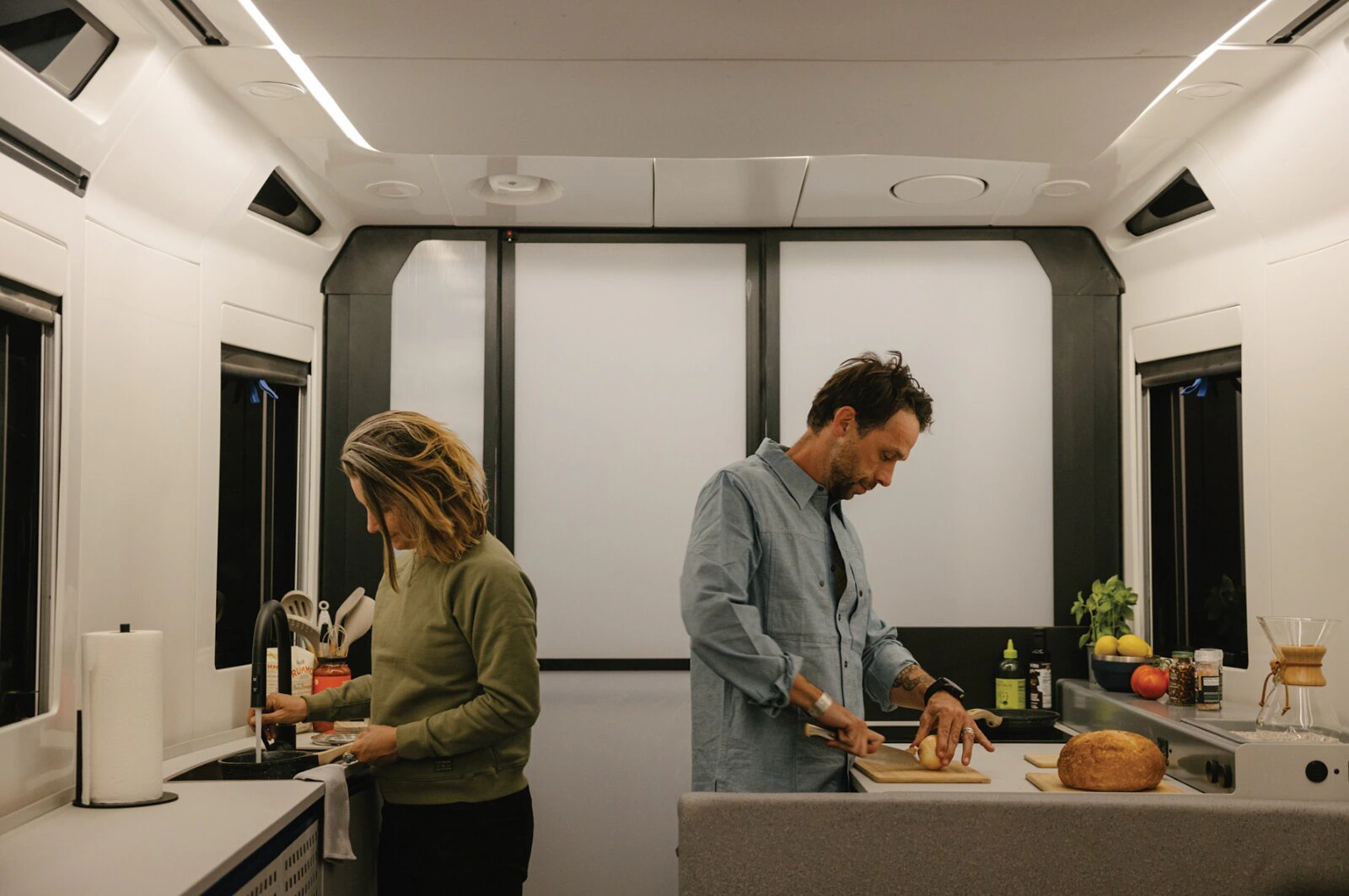
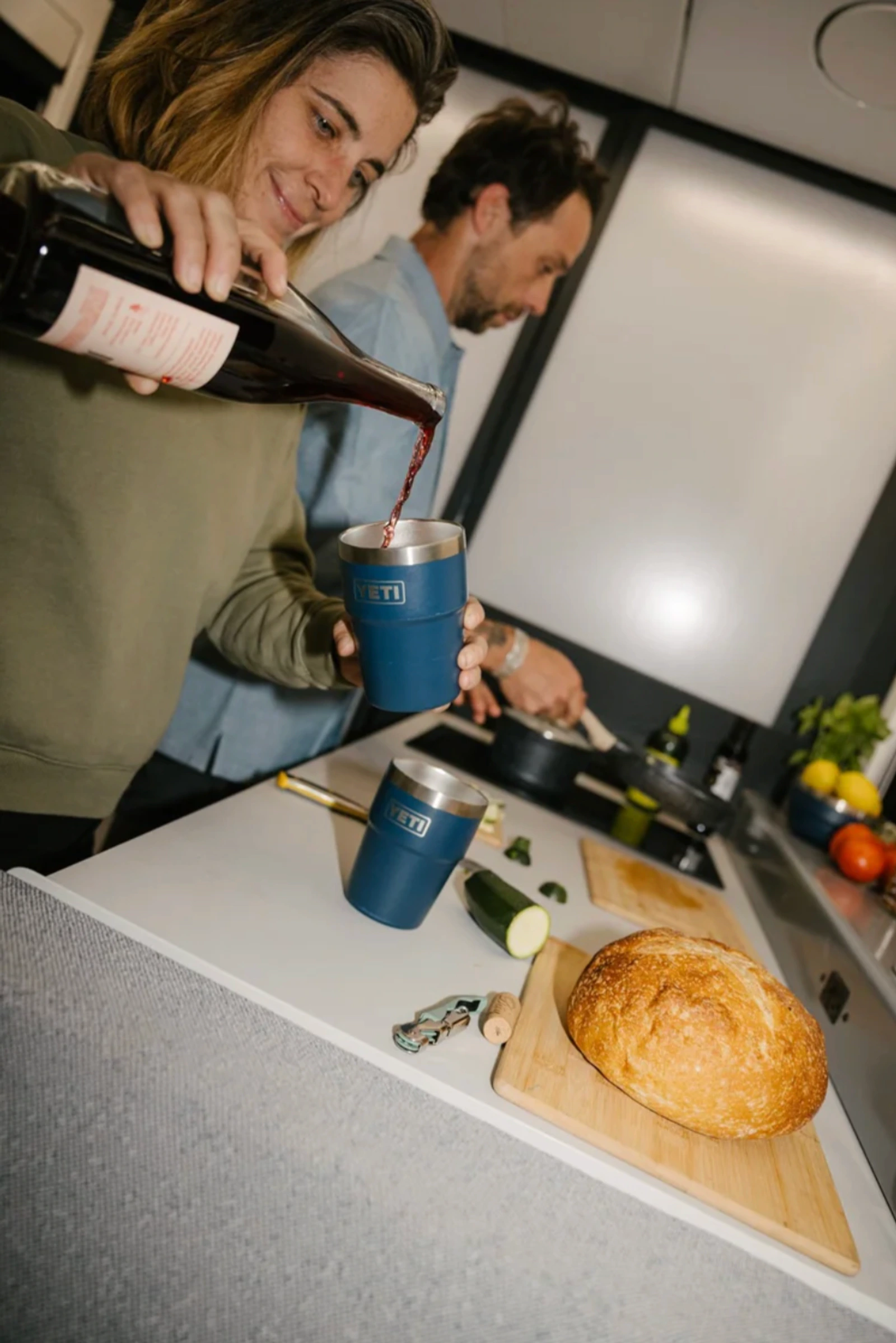
Two people preparing food inside the Lightship trailer kitchen.
Interior / A working living space
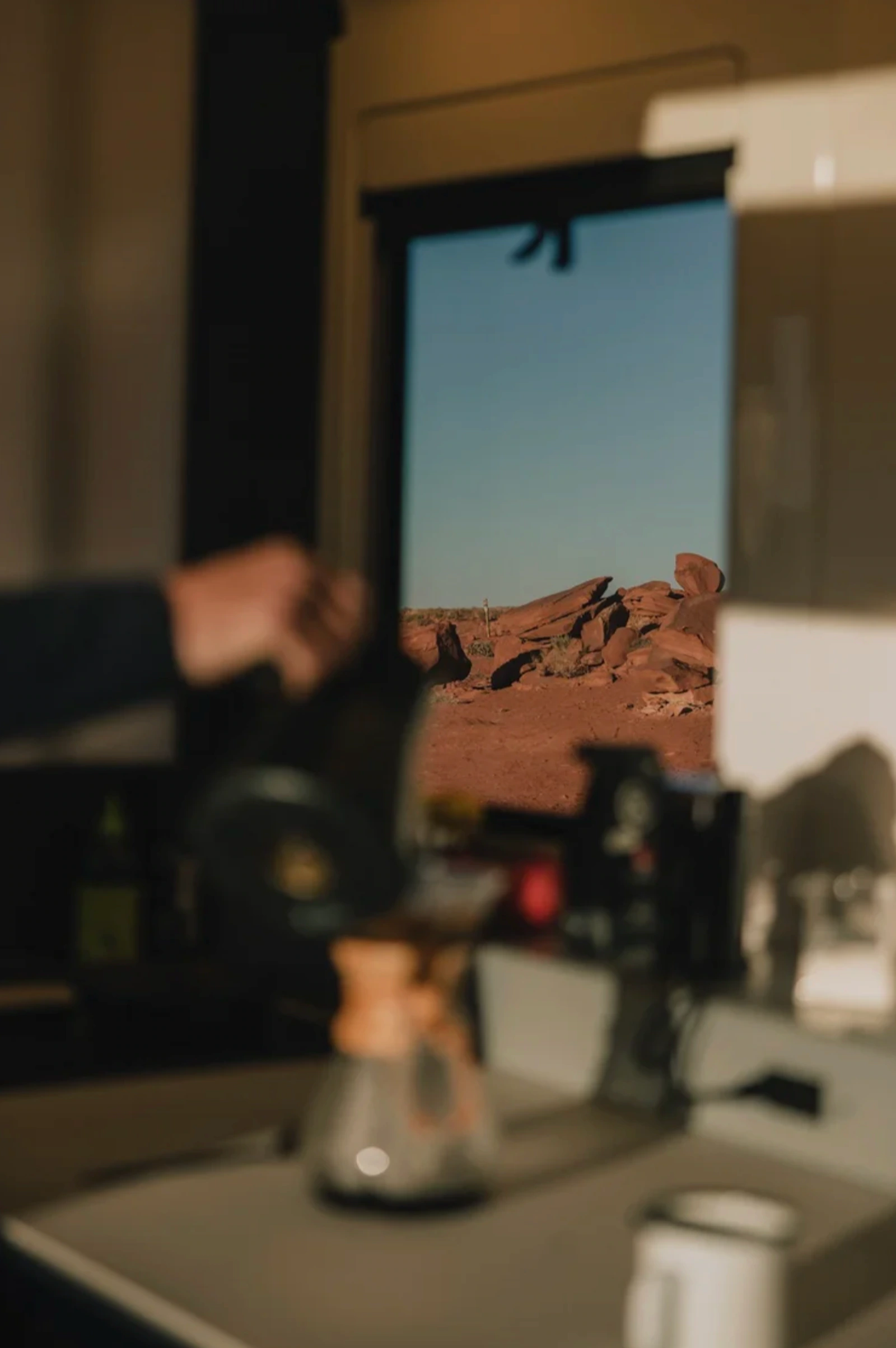
Soft-focus interior view from inside the Lightship trailer looking out to red desert rocks.
Interior / Desert point of viewA view from inside the cabin toward the surrounding landscape.
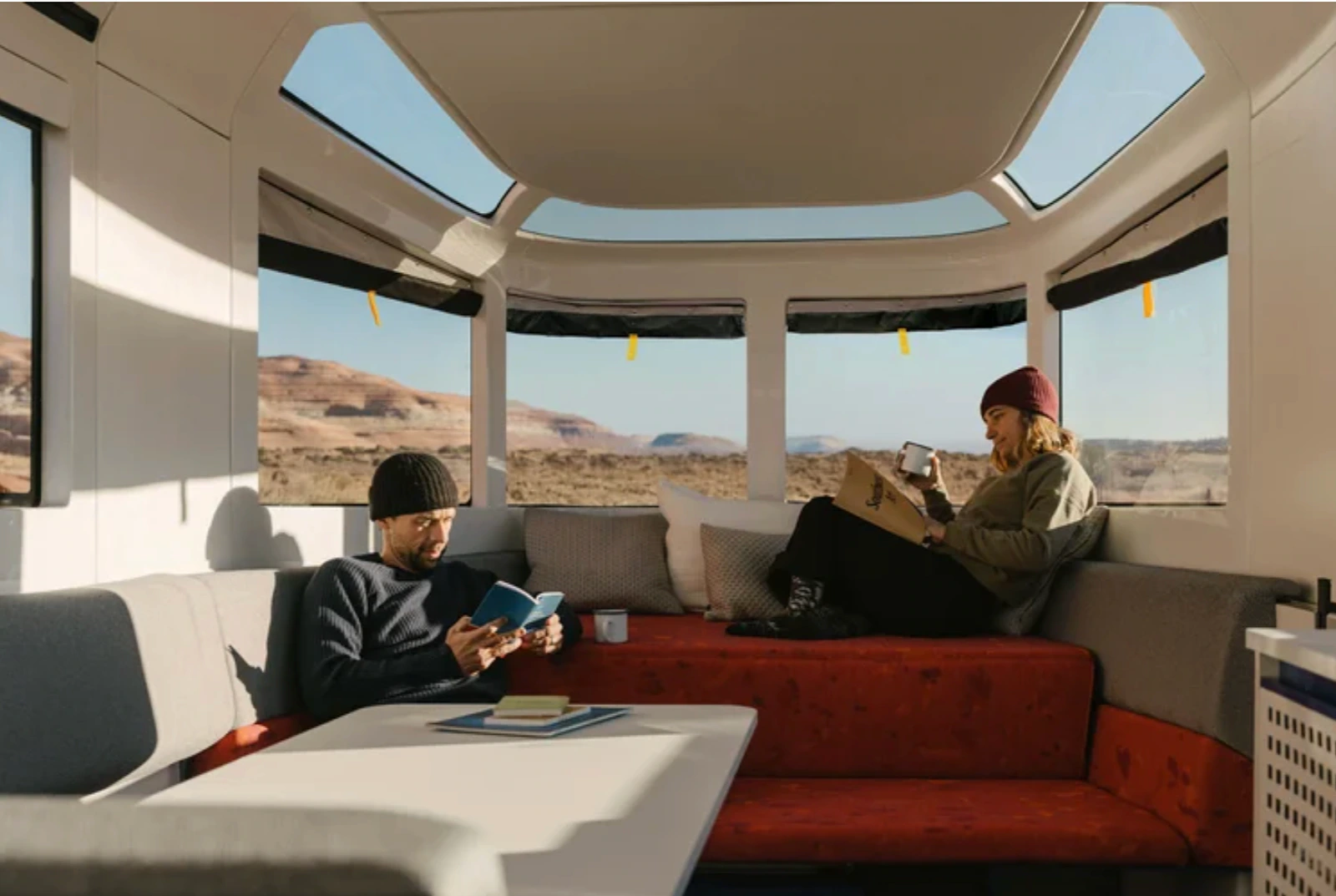
Two people relaxing inside the Lightship trailer lounge in a desert setting.
Interior / Lived-in cabinA wide view of the cabin as a living space.
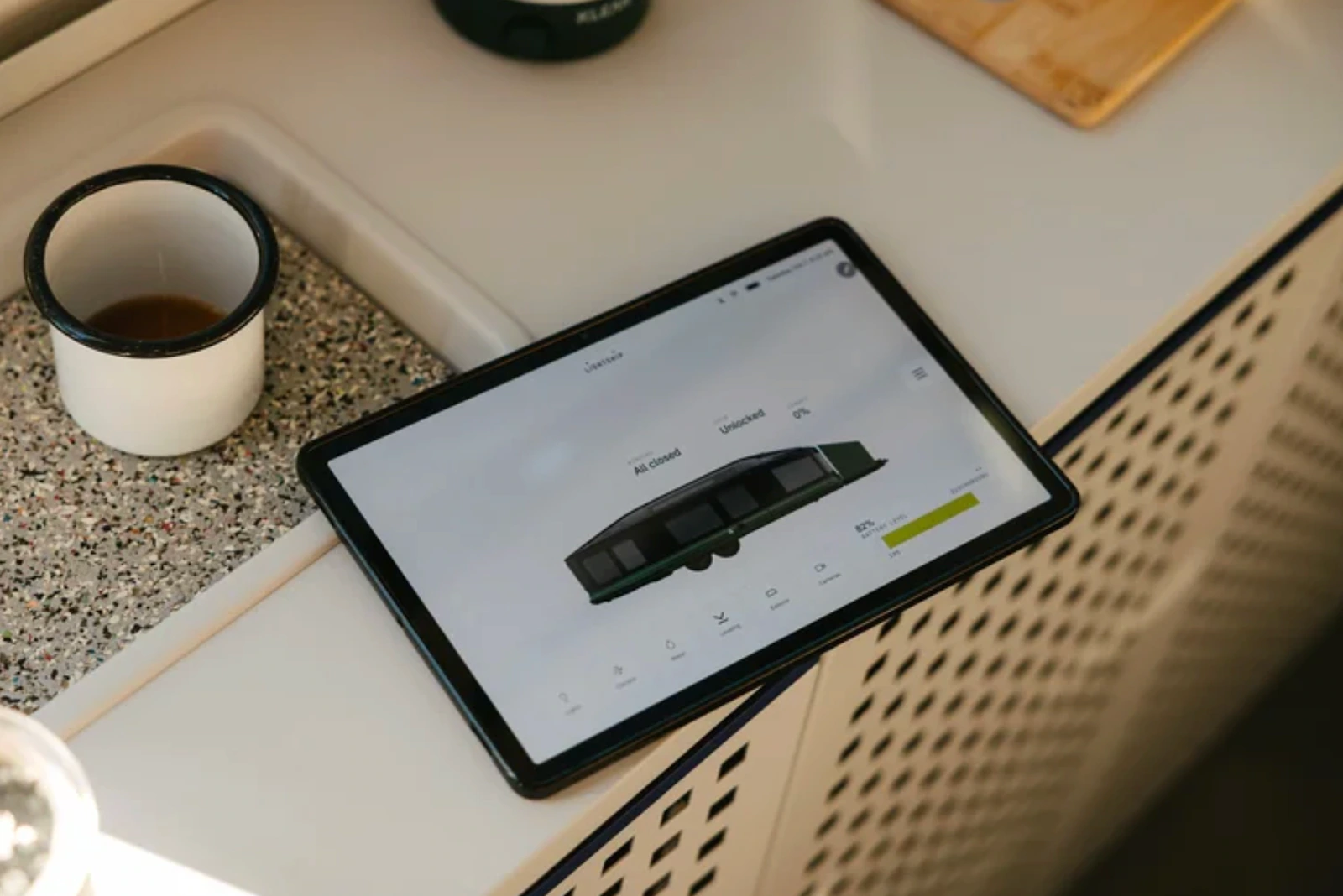
A tablet inside the Lightship trailer displaying the Lightship control interface.
Interior / Connected controlsThe product’s connected-control interface.
Two people preparing a meal inside the Lightship trailer kitchen.
Interior / Shared routinePreparing a meal in the galley.

Ownership & community

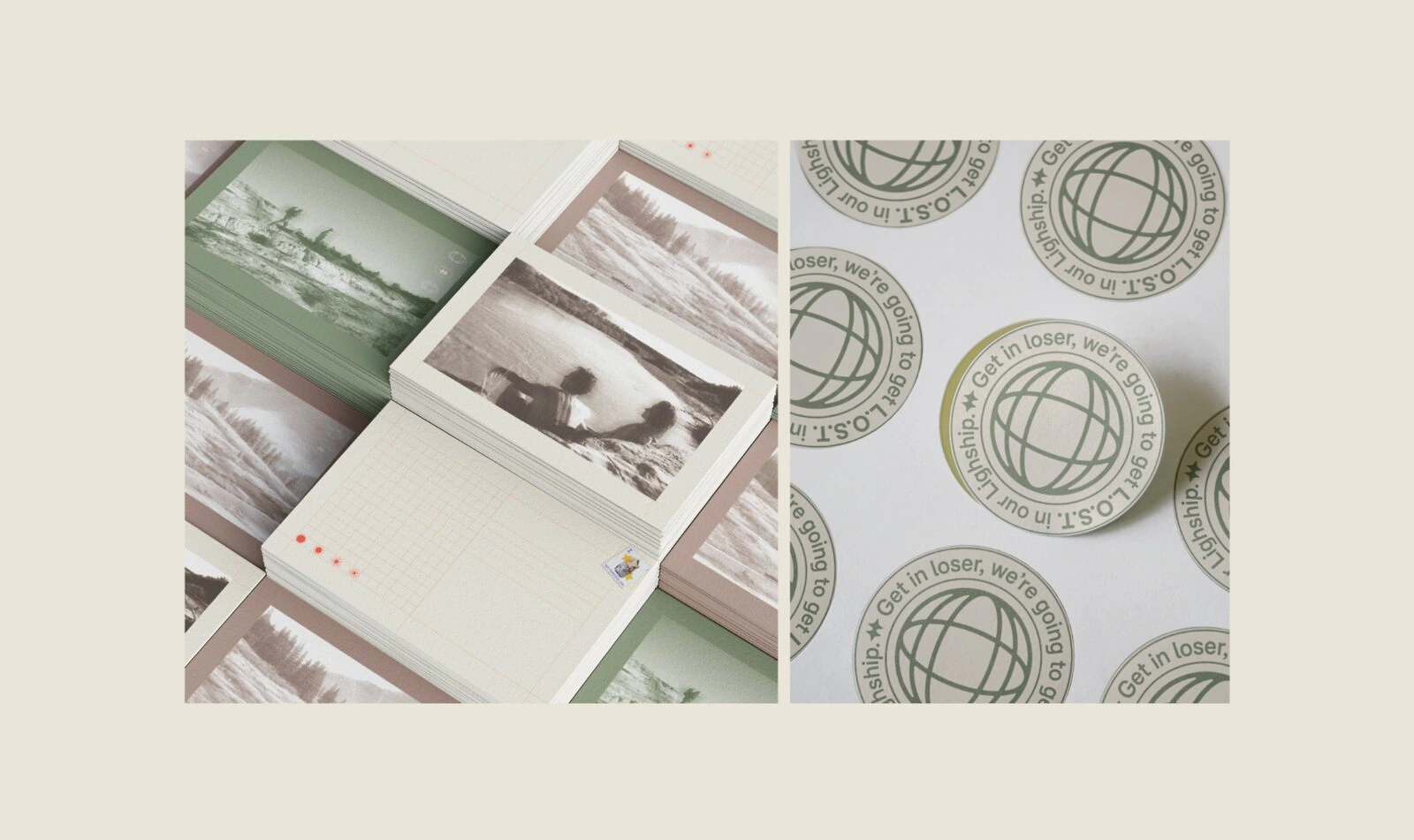
L.O.S.T.—the Lightship Owners Society of Travel—was created as a community for people who shared a vehicle and an appetite for discovery.

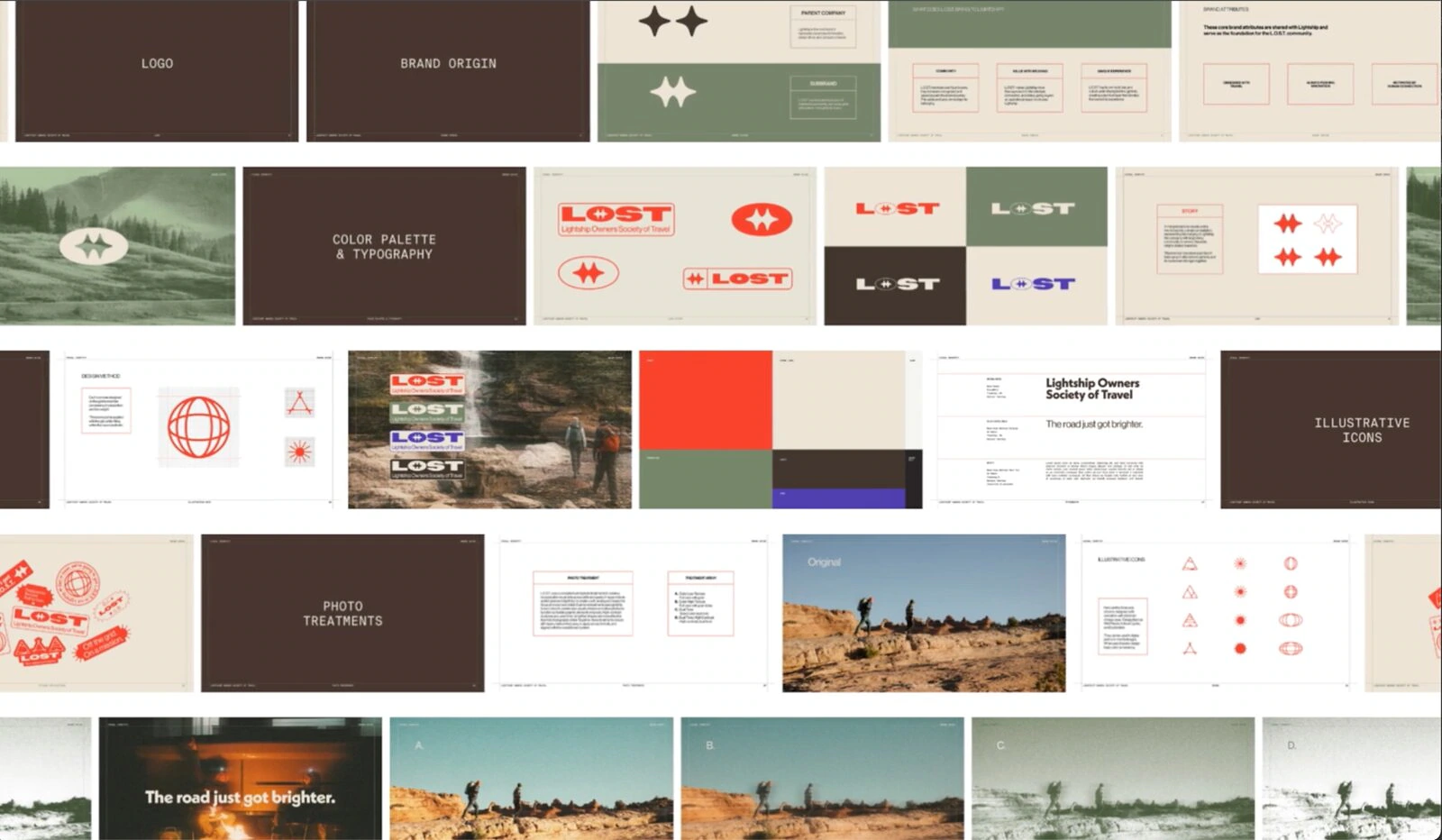
As Creative Director, I worked with the design team on an identity inspired by vintage field guides and the graphic language of road travel. It extended into owner pages, welcome materials, editorial and merchandise: a way to make ownership feel like the start of something.

Ownership & community
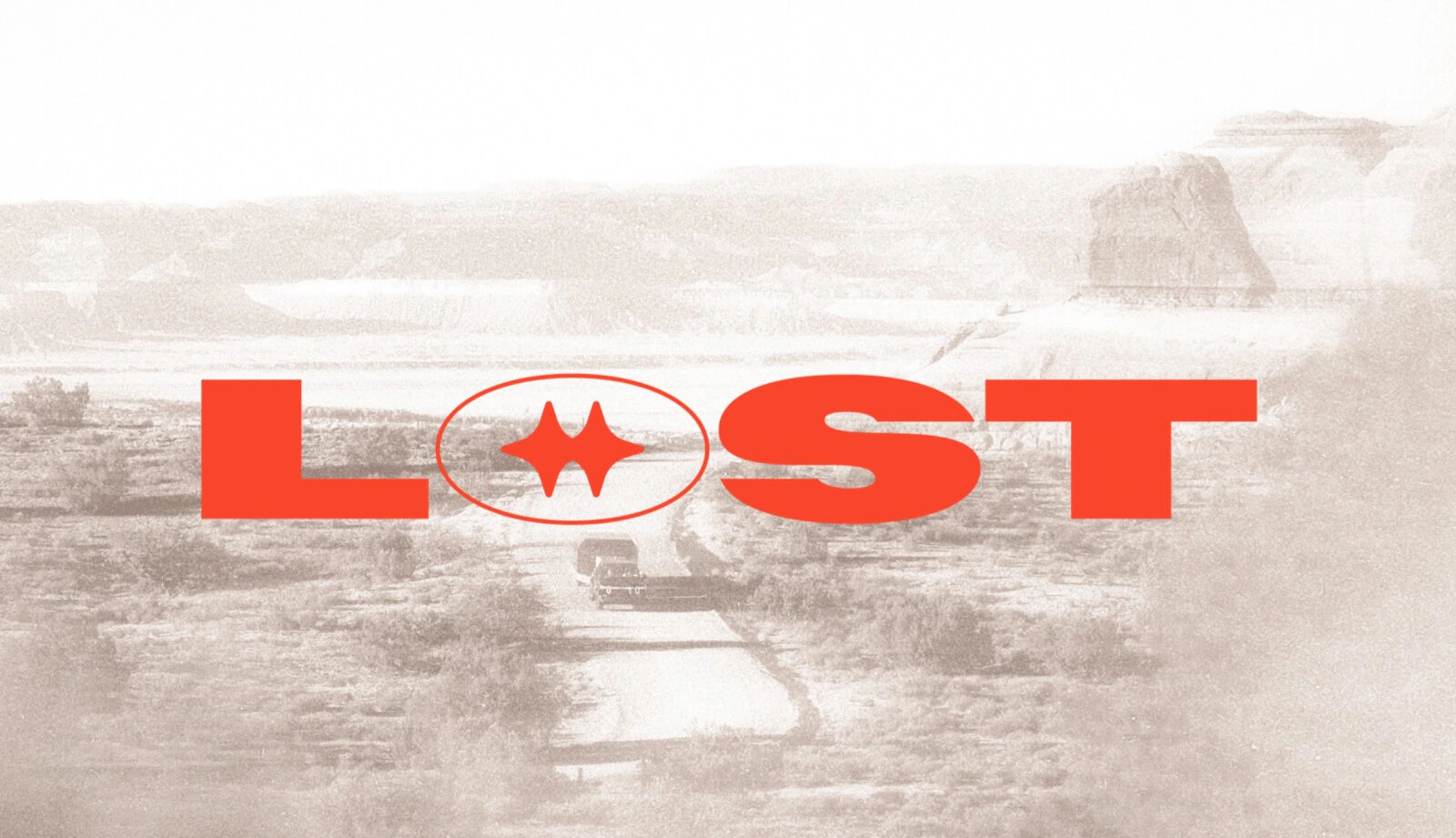
L.O.S.T. identity over a vintage-treated road-trip landscape.
L.O.S.T. / Lightship Owners Society of Travel
Laptop showing the L.O.S.T. owner-community website.
Digital / Owner community
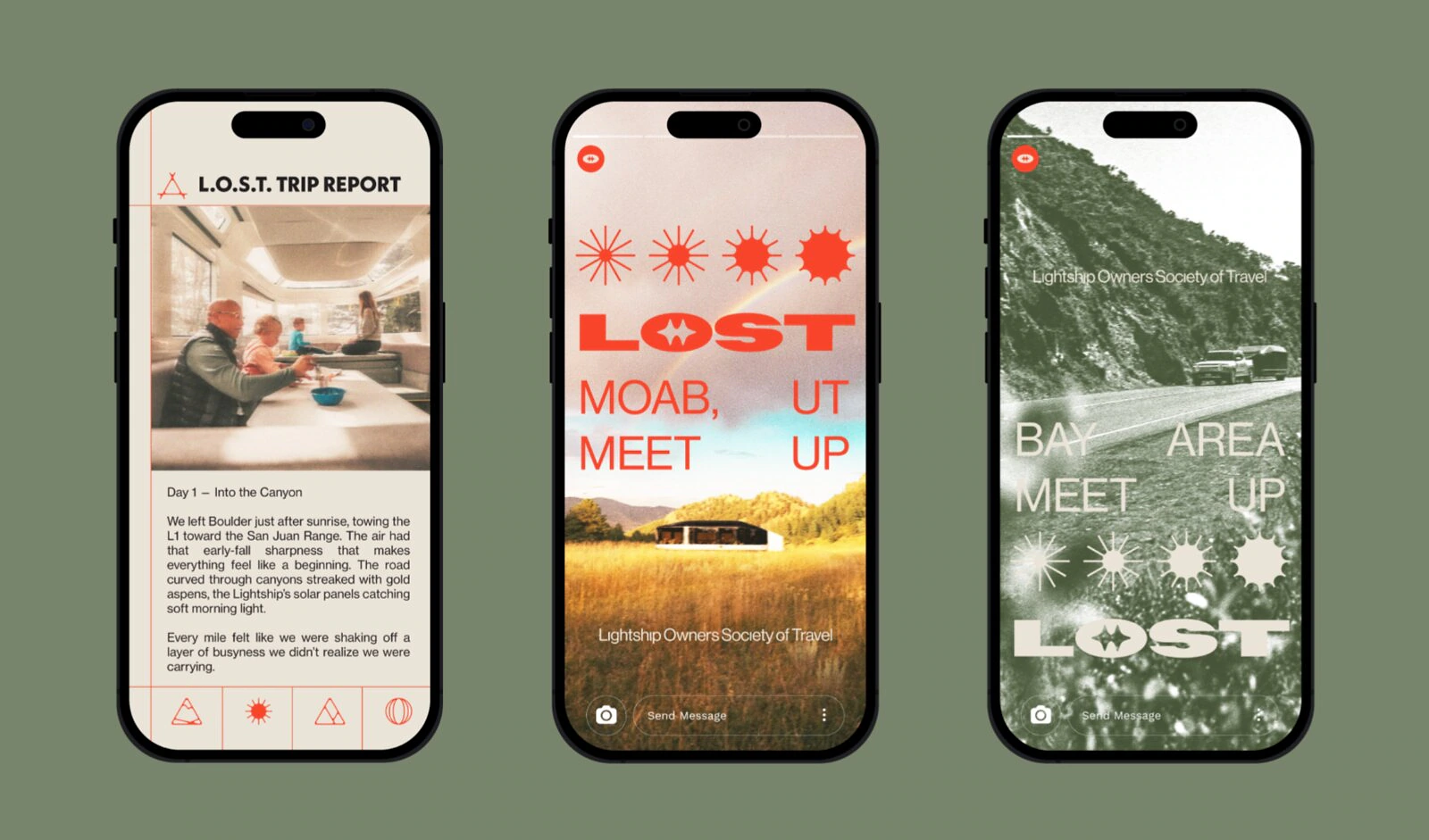
Three mobile applications of the L.O.S.T. identity including trip reports and meetups.
Mobile / Trip reports + meetups
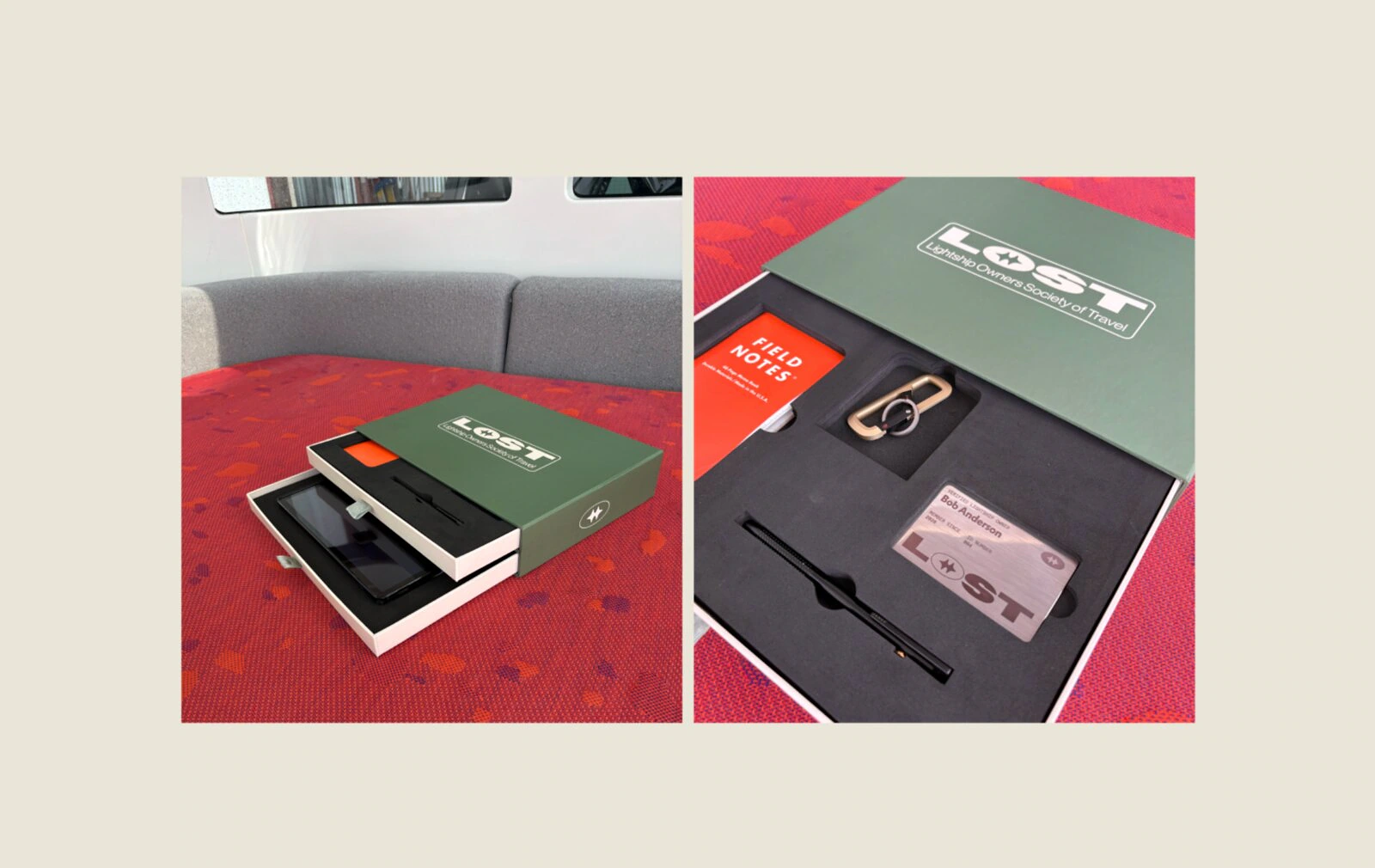
L.O.S.T. owner welcome kit with field notes, key hardware and member card.
Welcome kit / Ownership made tangible
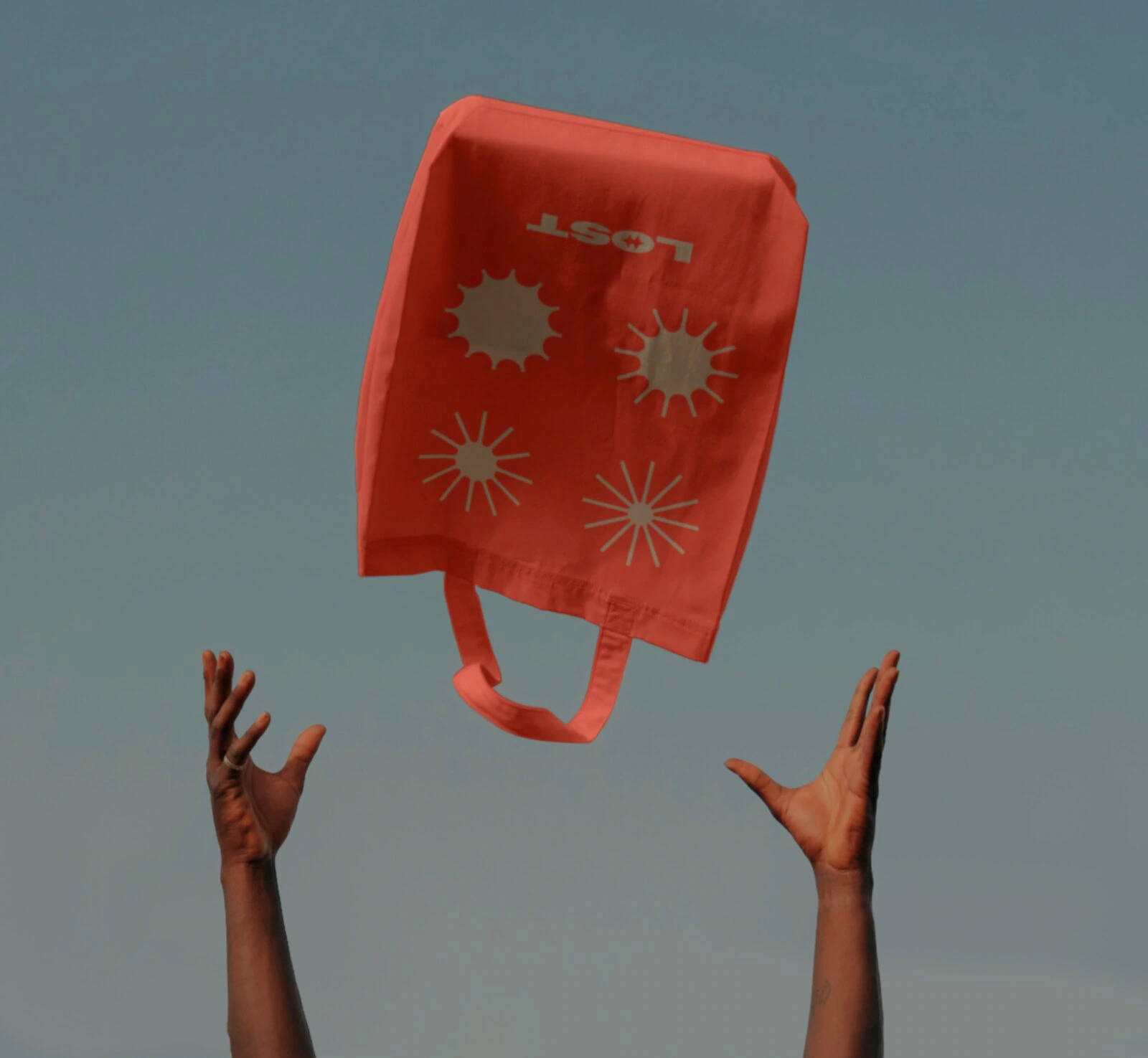
Red L.O.S.T. tote with illustrative travel symbols suspended against the sky.
Merchandise / Portable identity
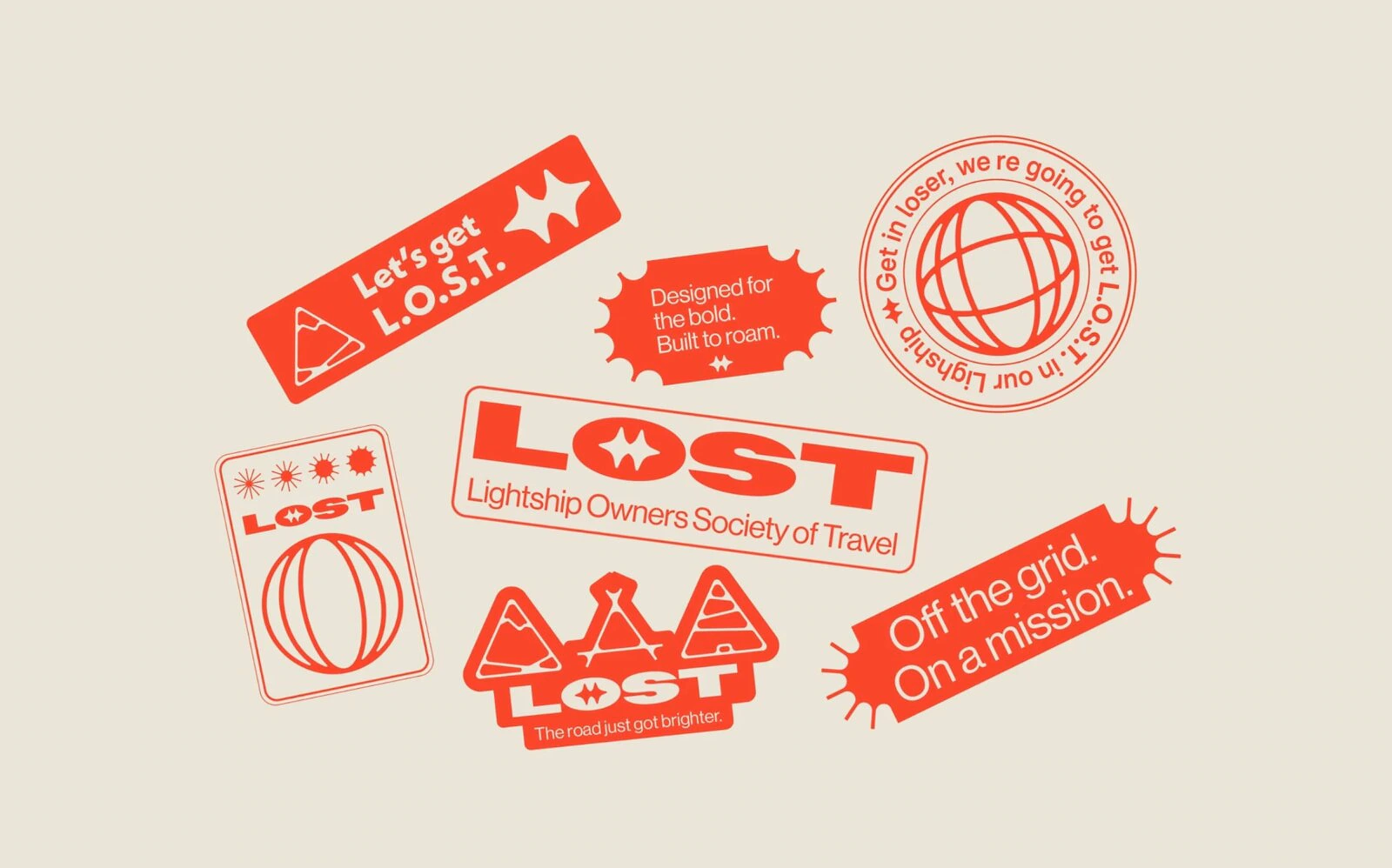
L.O.S.T. sticker and badge system in orange on a warm neutral field.
Graphic language / Badges, stamps + road ephemera
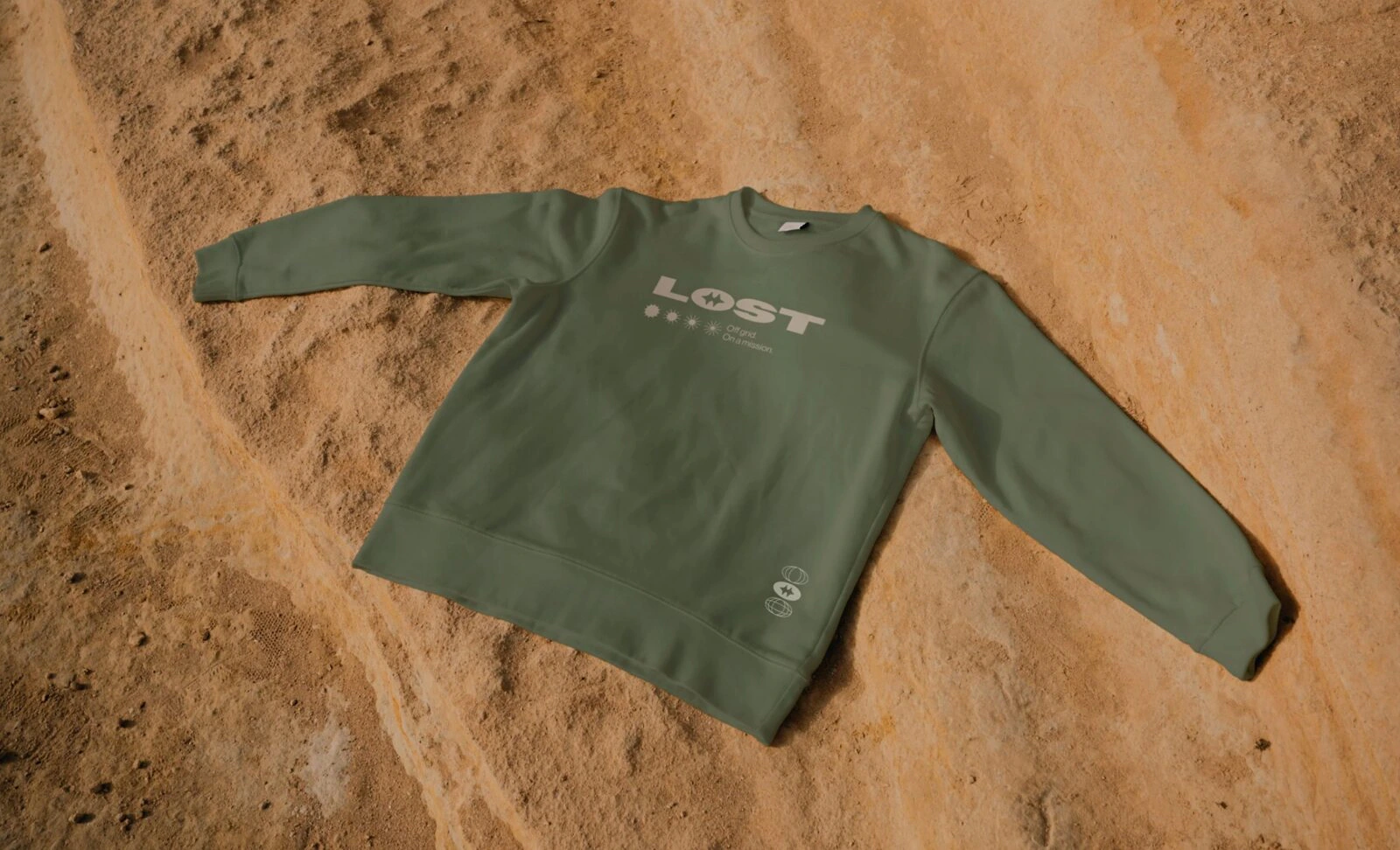
Green L.O.S.T. sweatshirt laid on desert rock.
Merchandise / Owner culture
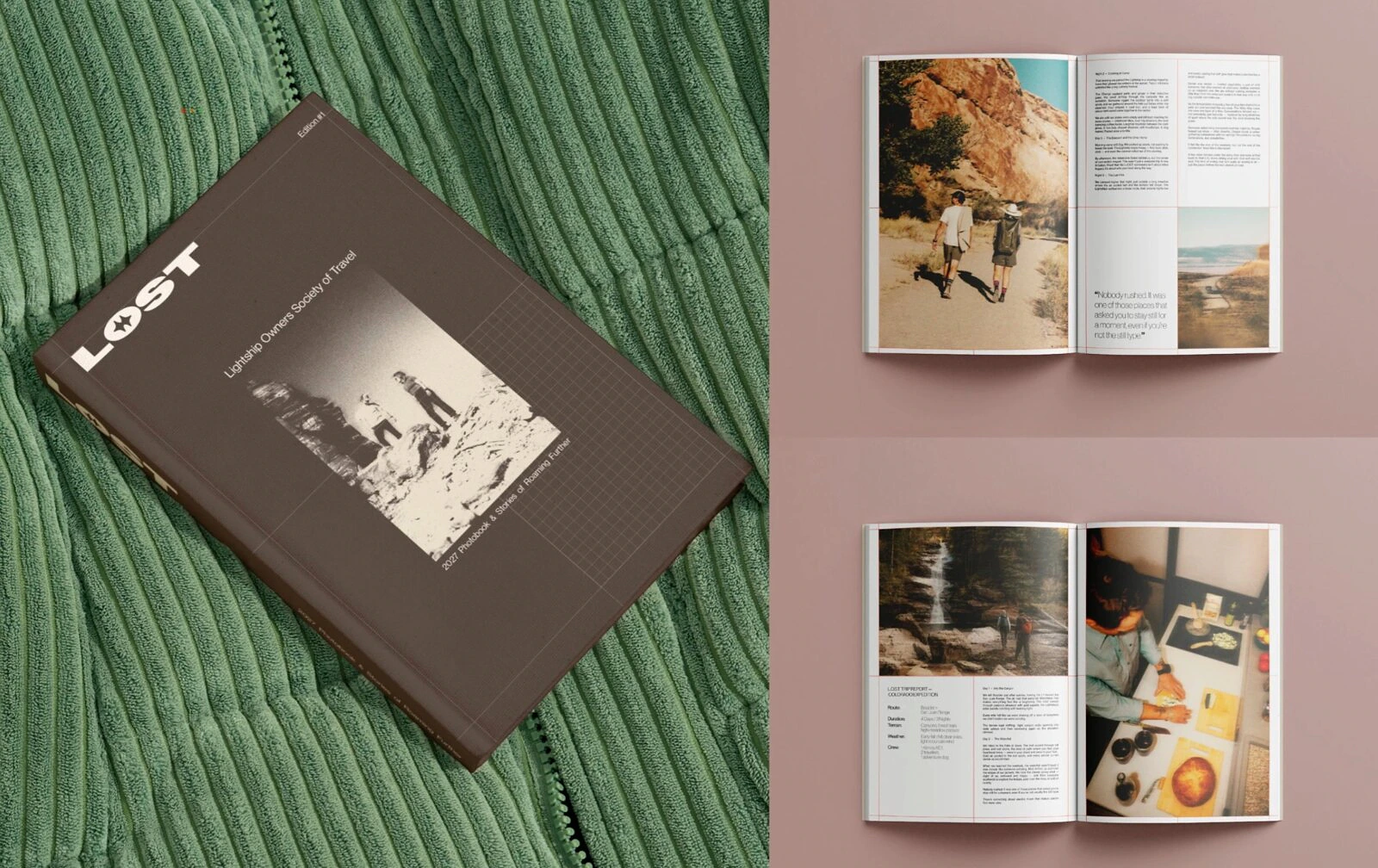
L.O.S.T. photobook and editorial spreads documenting travel stories.
Editorial / Stories of roaming further
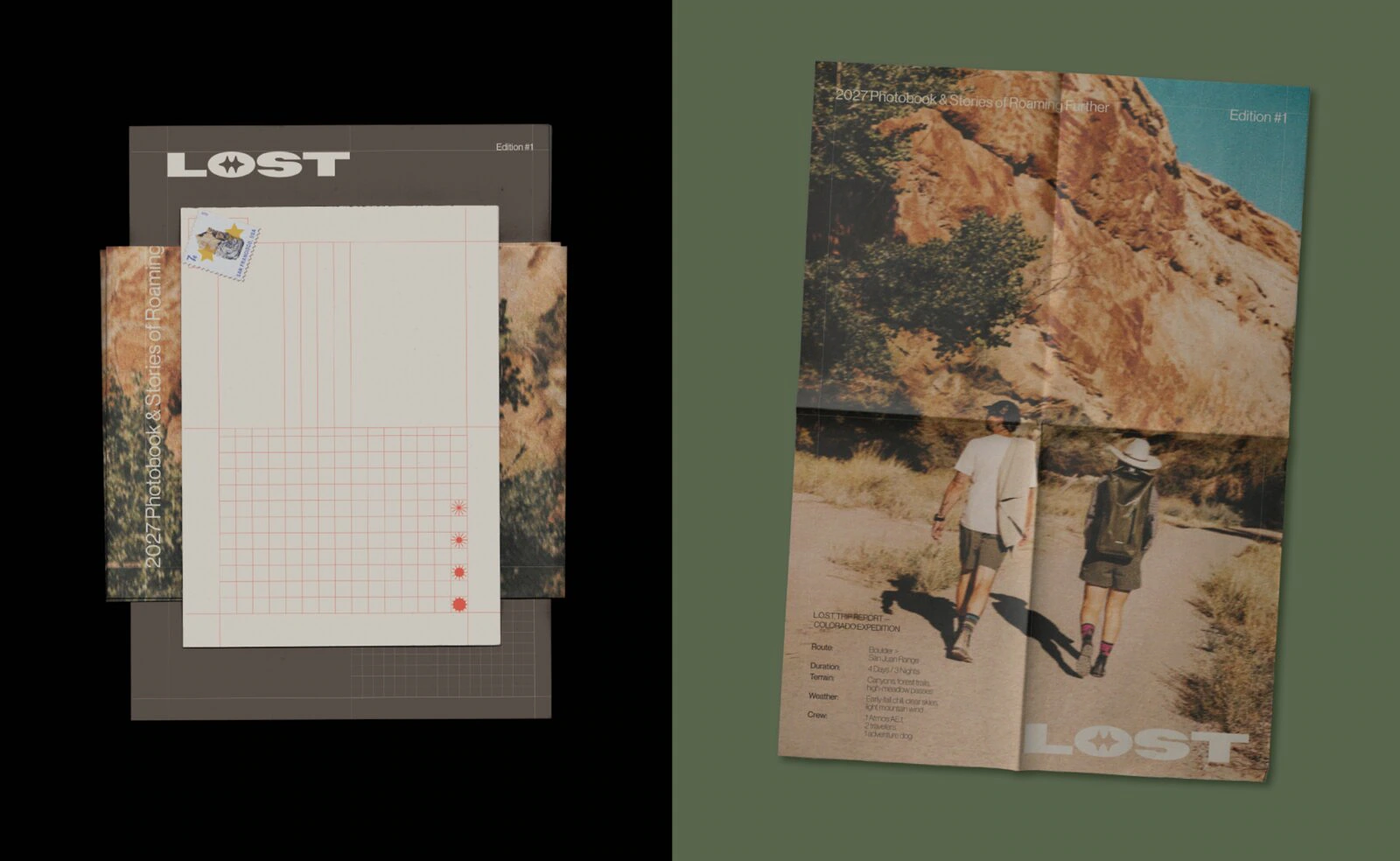
L.O.S.T. printed editorial ephemera including a photobook, postcard and field-grid paper.
Print / Field-guide behavior
L.O.S.T. postcards and circular travel pins extending the community identity.
Ephemera / Things worth keeping
Overview of the L.O.S.T. brand guideline system including identity, color, typography, icons and photo treatments.
System / Identity designed to travel

Launch environments

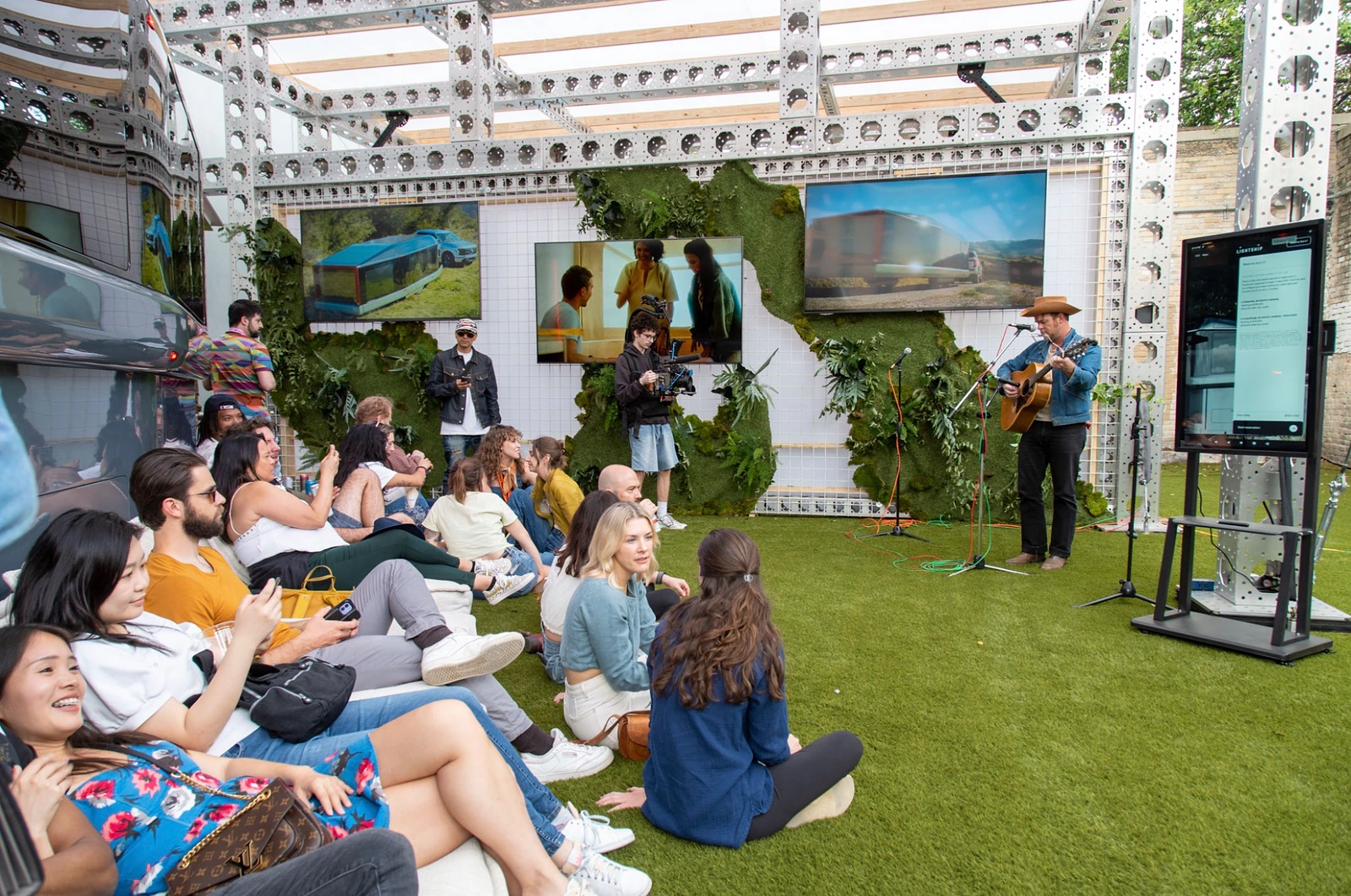
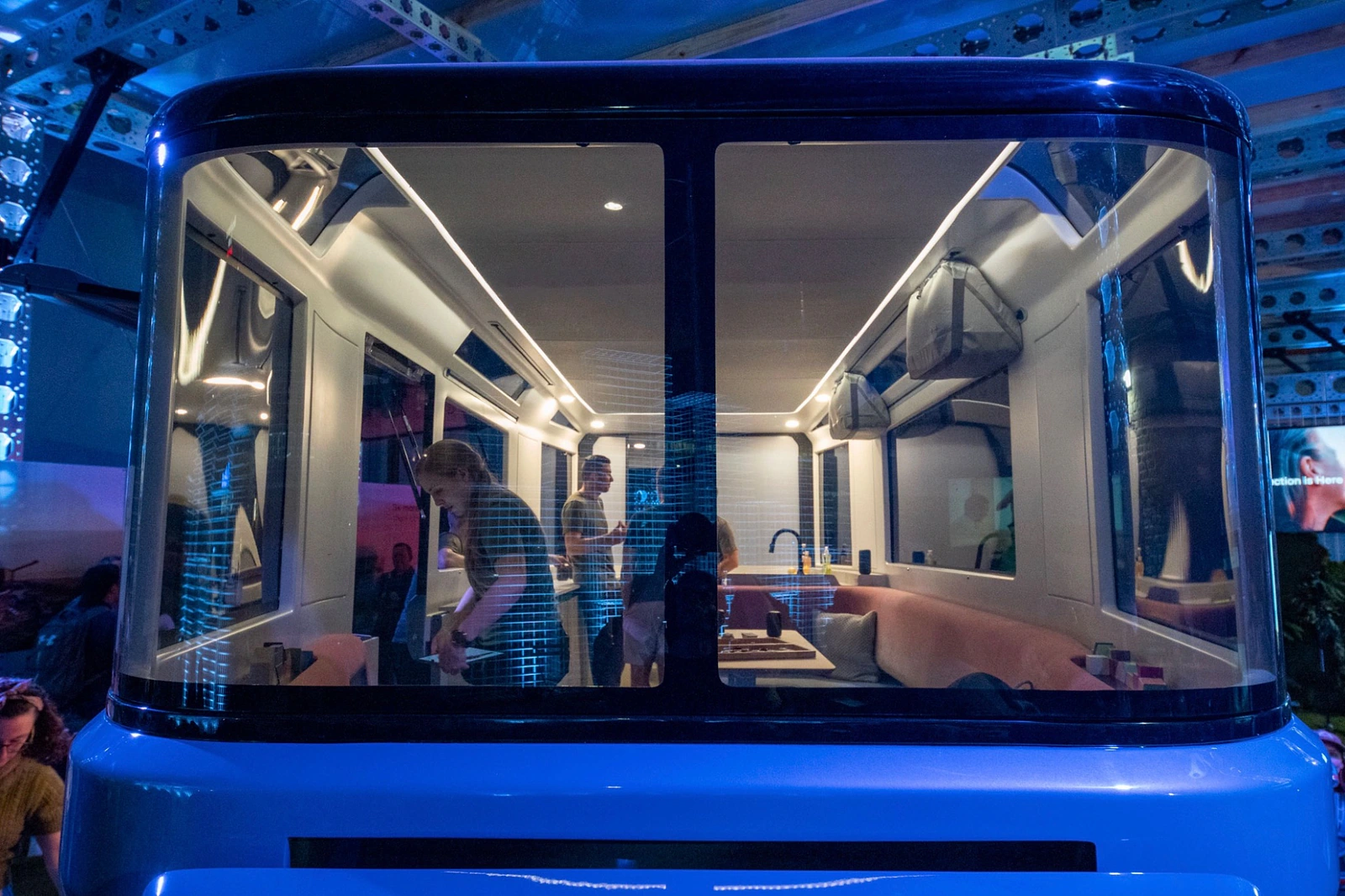
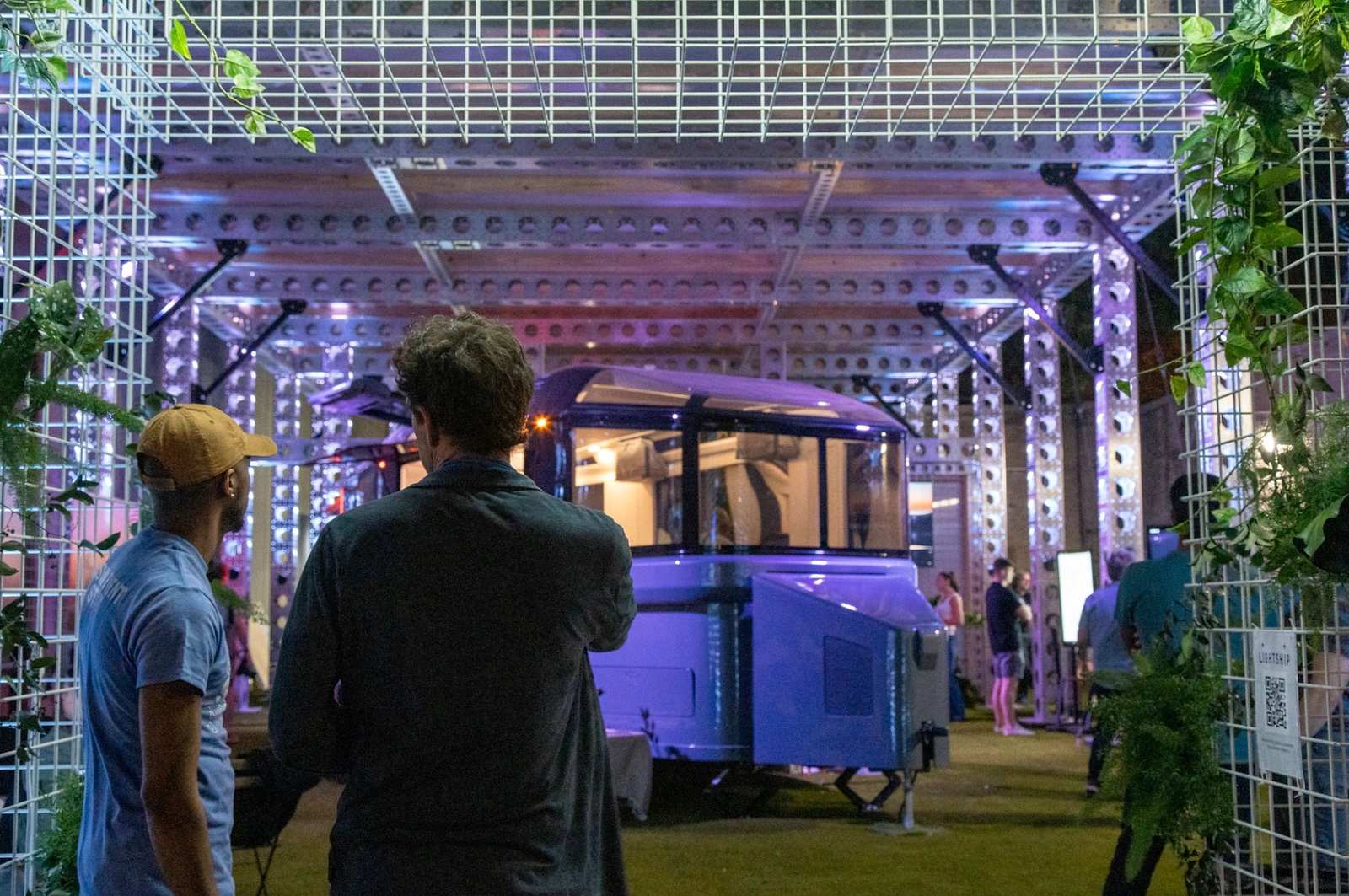
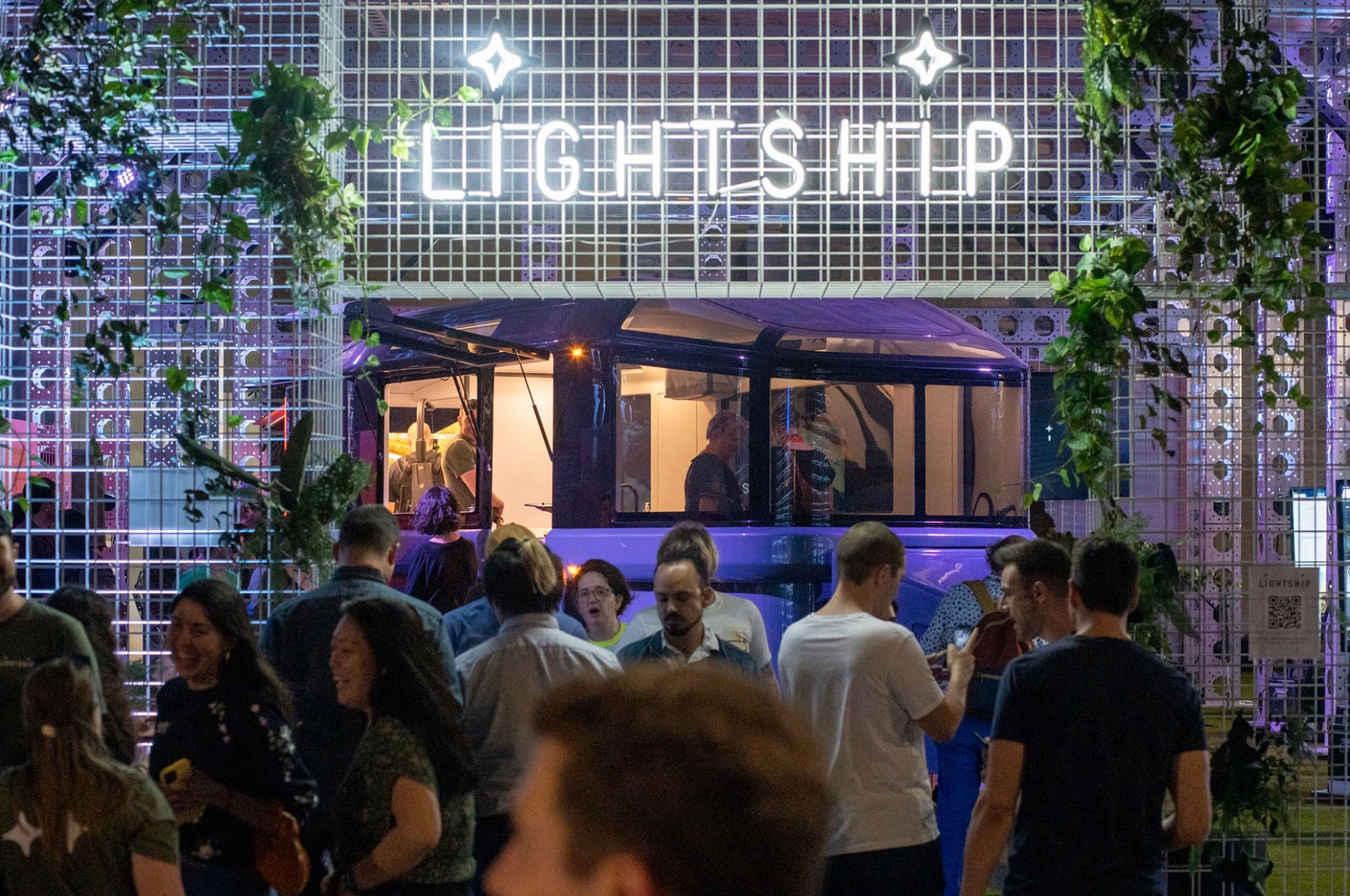
SXSW 2023 was Lightship’s first large public brand launch. Before a conventional retail environment existed, we needed a place for people to encounter the prototype.

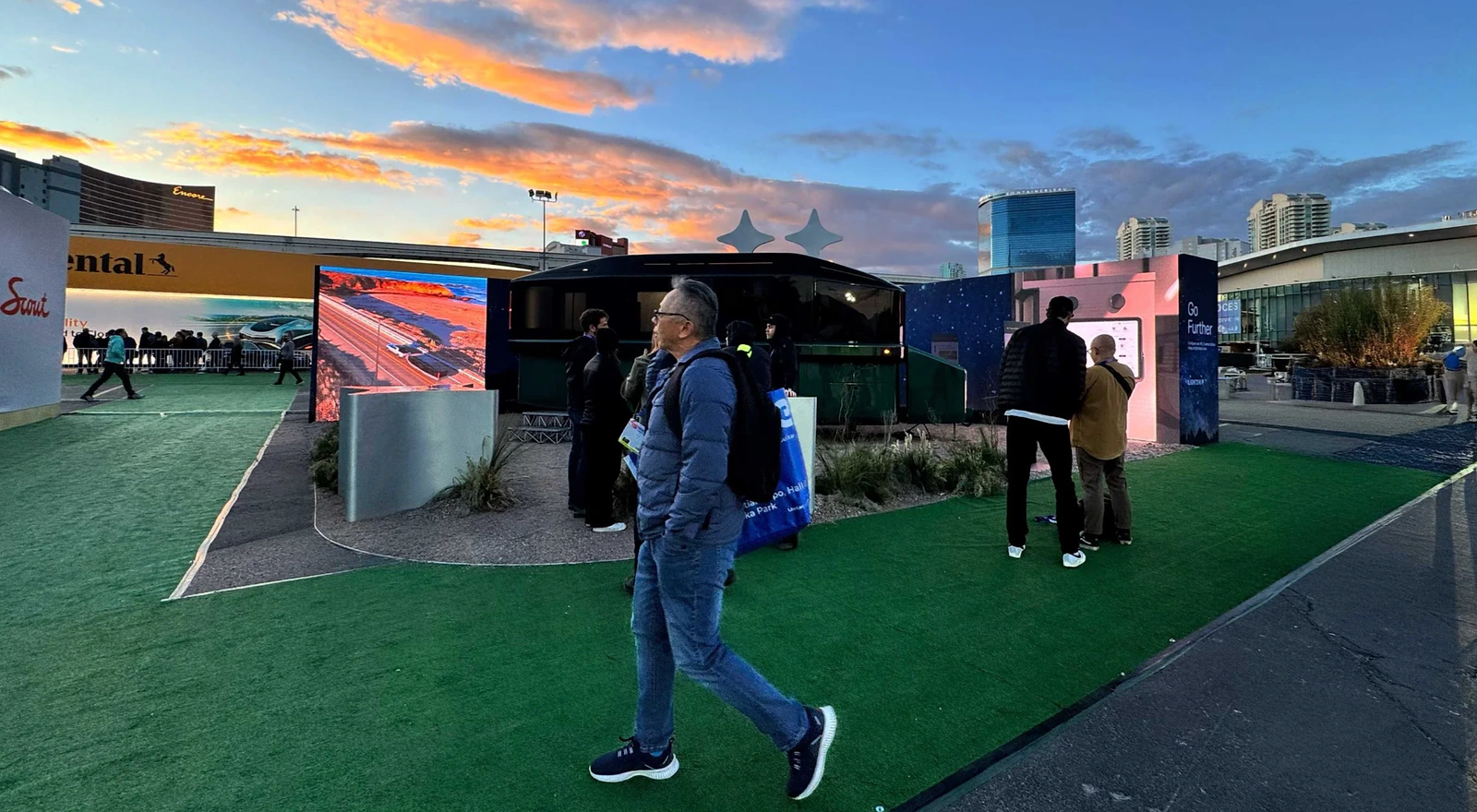
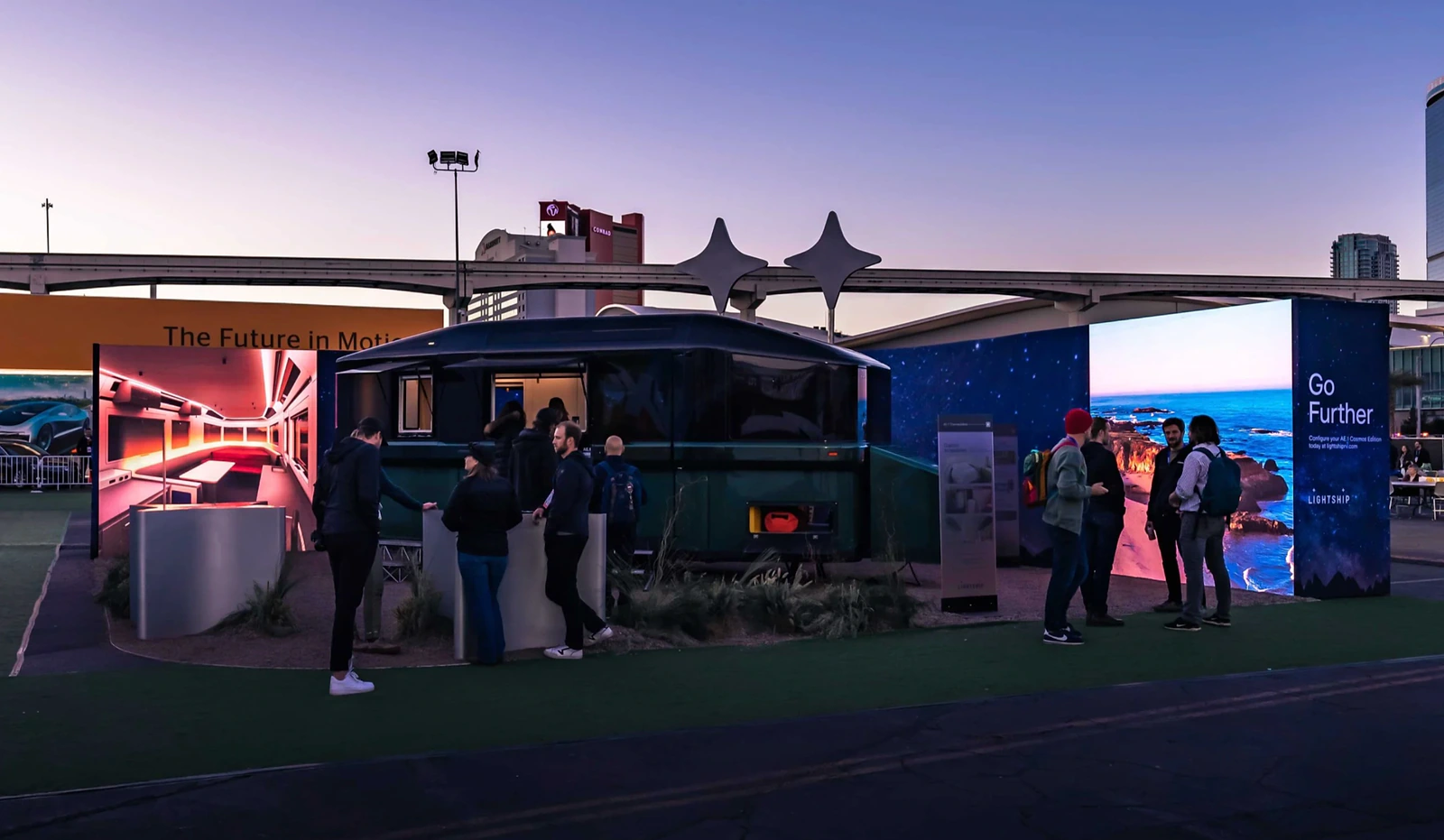
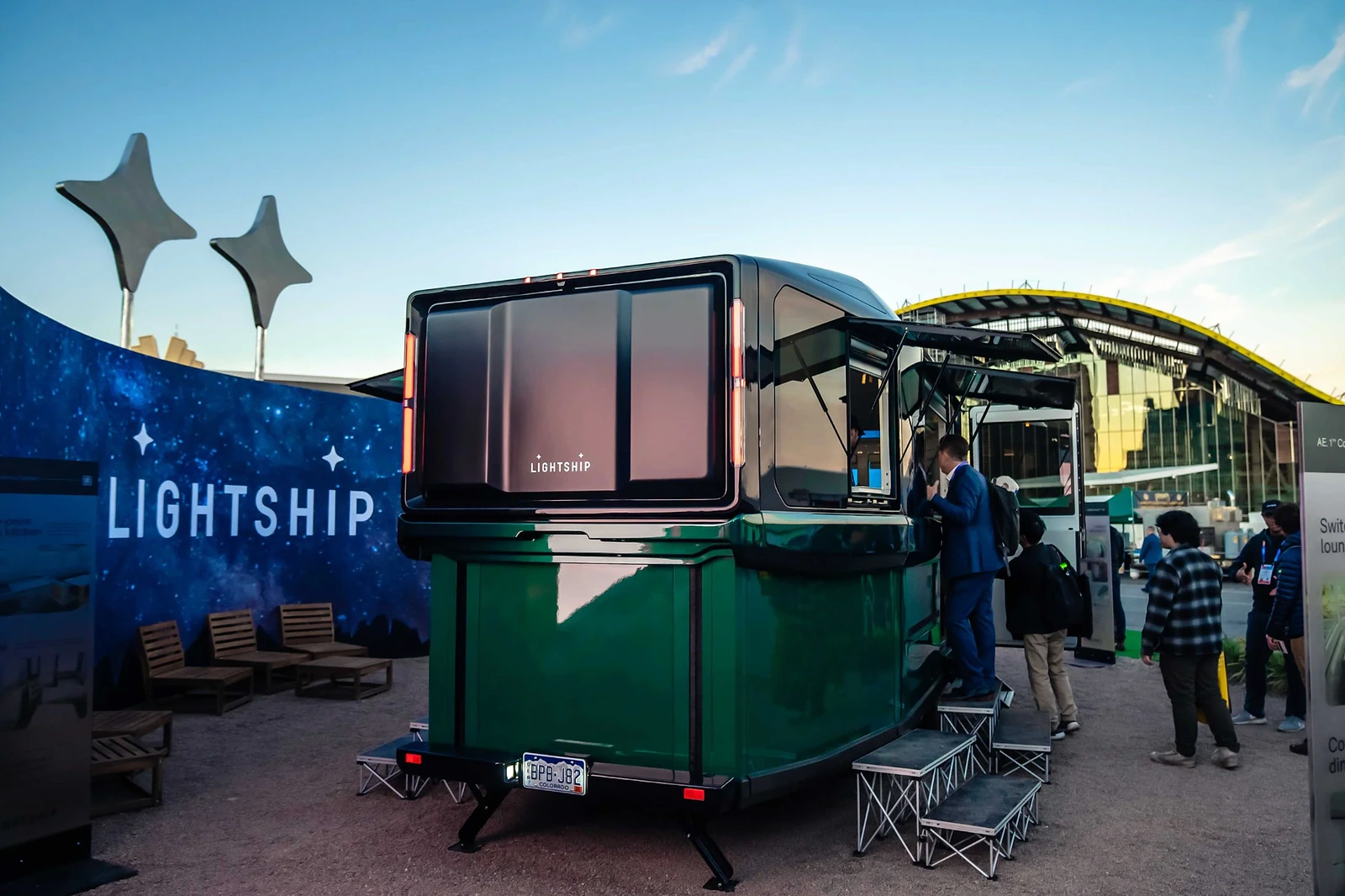
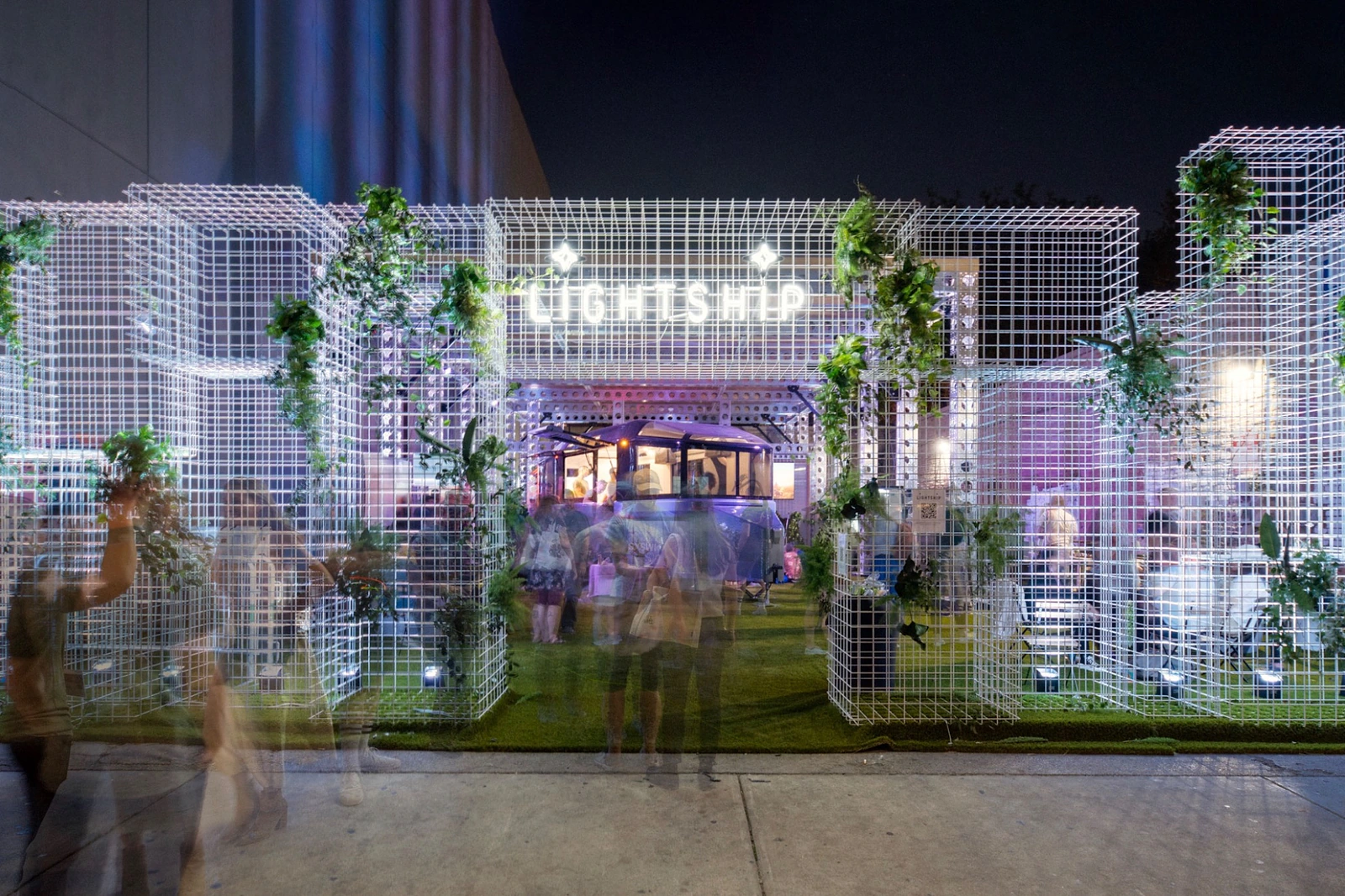
A modular white grid, light and film created a temporary setting around the trailer. Visitors could meet the product at its real scale and step into the story around it. The same spatial approach later carried into CES and subsequent launch environments.
Launch environments
Lightship SXSW 2023 brand launch environment at night with a white modular grid, planting and the L1 prototype.
SXSW 2023 / First public brand environment
Crowd gathered around the Lightship L1 prototype beneath the illuminated Lightship wordmark at SXSW 2023.
Audience inside the Lightship SXSW environment during live programming with the prototype and brand media surrounding the space.
Front glass view into the Lightship L1 prototype at the SXSW 2023 launch environment.
Visitors looking into the Lightship SXSW 2023 installation through the planted modular entrance.
Lightship CES activation at sunset with the trailer, display walls and visitors exploring the installation.
Front view of the Lightship CES display at dusk with illuminated exhibit graphics and visitors gathered around the trailer.
Rear three-quarter view of the Lightship trailer at CES showing the open exhibit setup and surrounding branded environment.
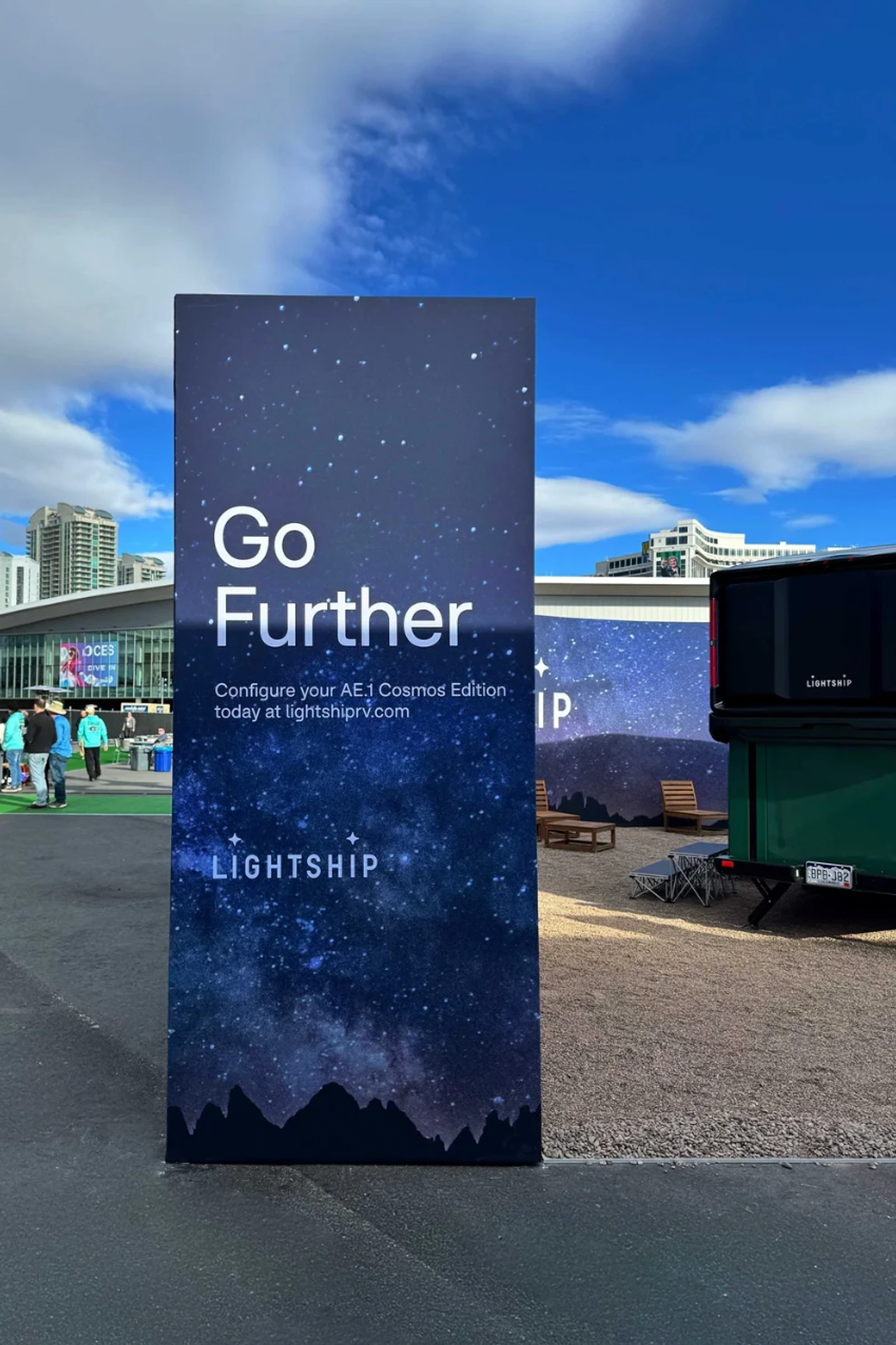
Vertical Lightship sign reading Go Further at the CES exhibit entrance.
Atmospheric close-up of grasses in the Lightship exhibit landscape with the trailer softly visible in the background.

Workplace & culture

The brand also had an audience closer to home: the people building Lightship.

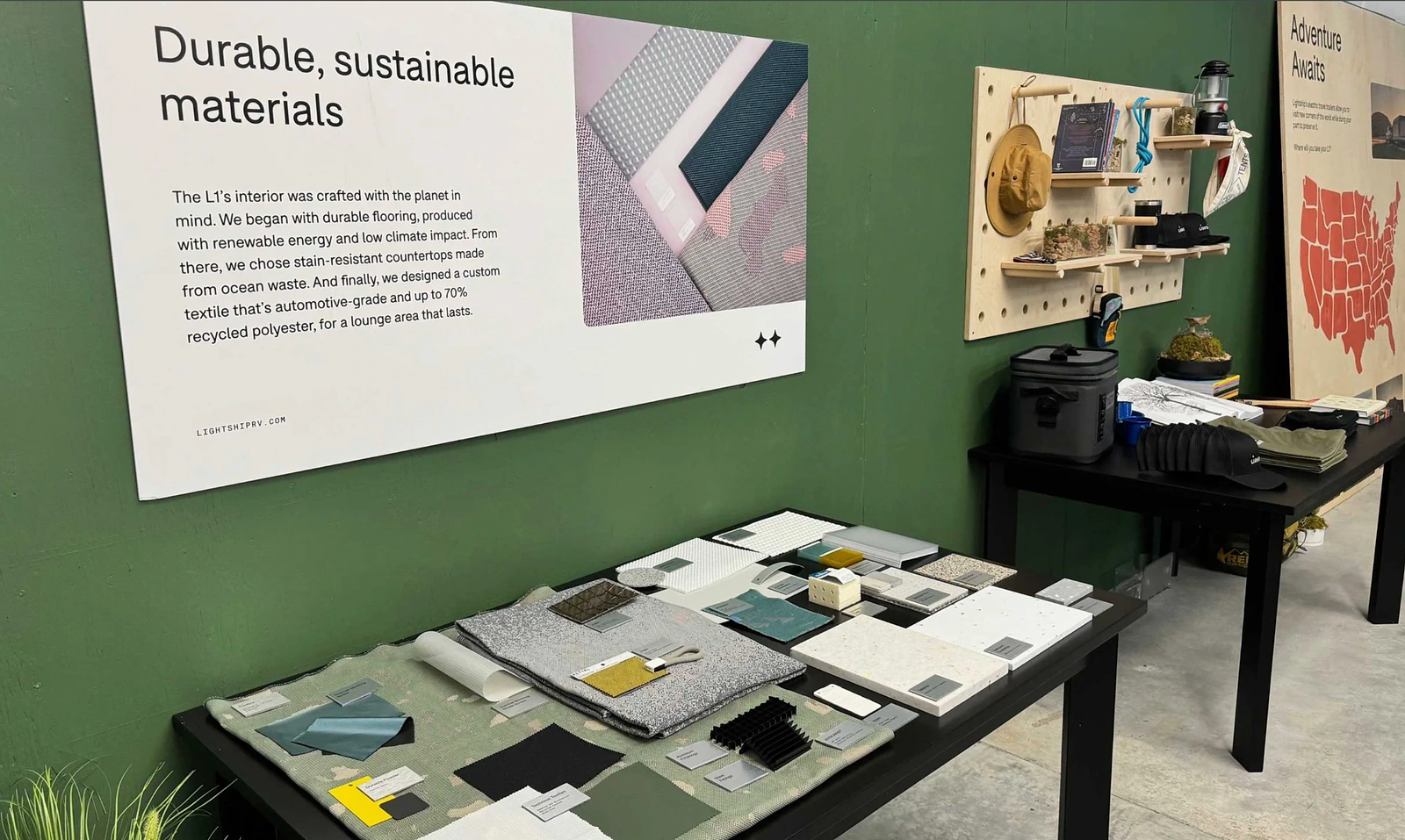
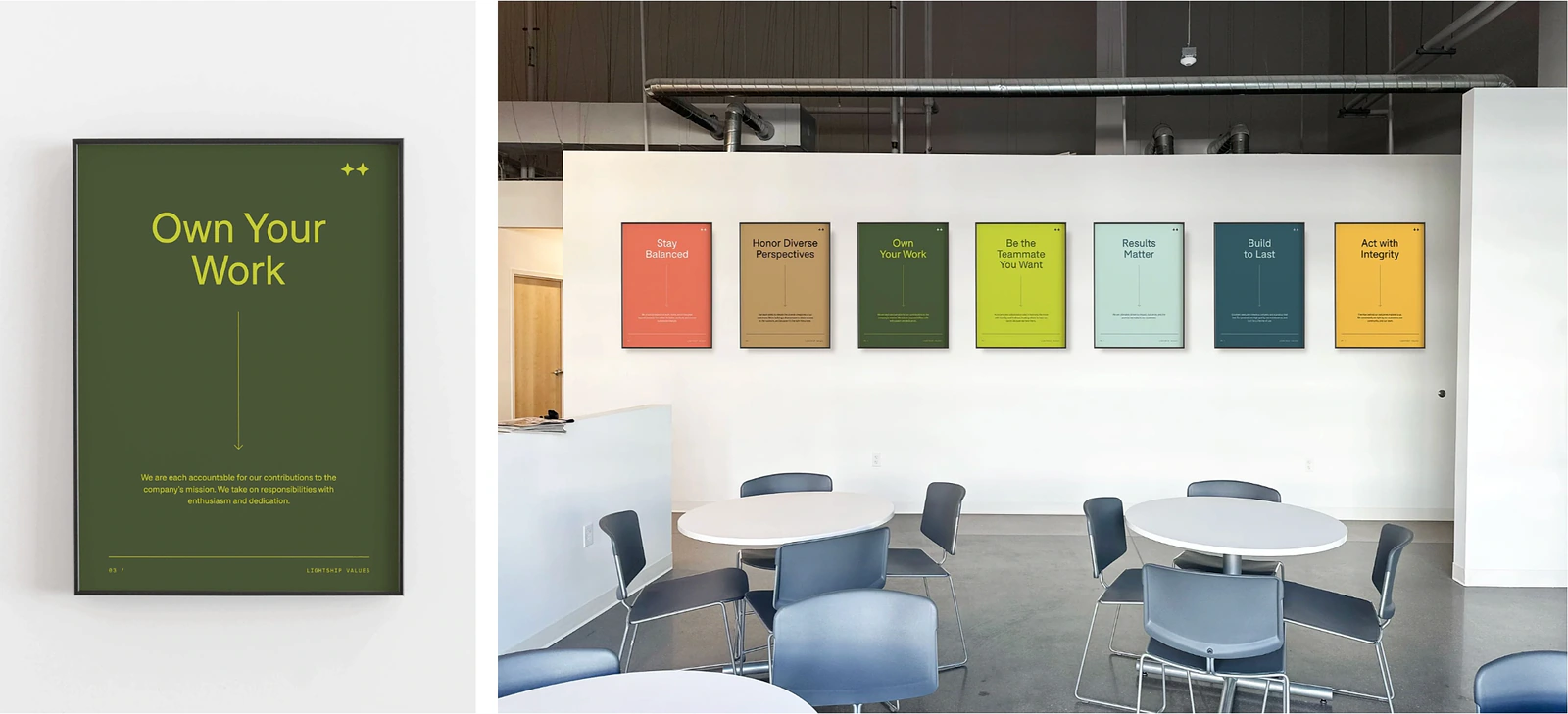
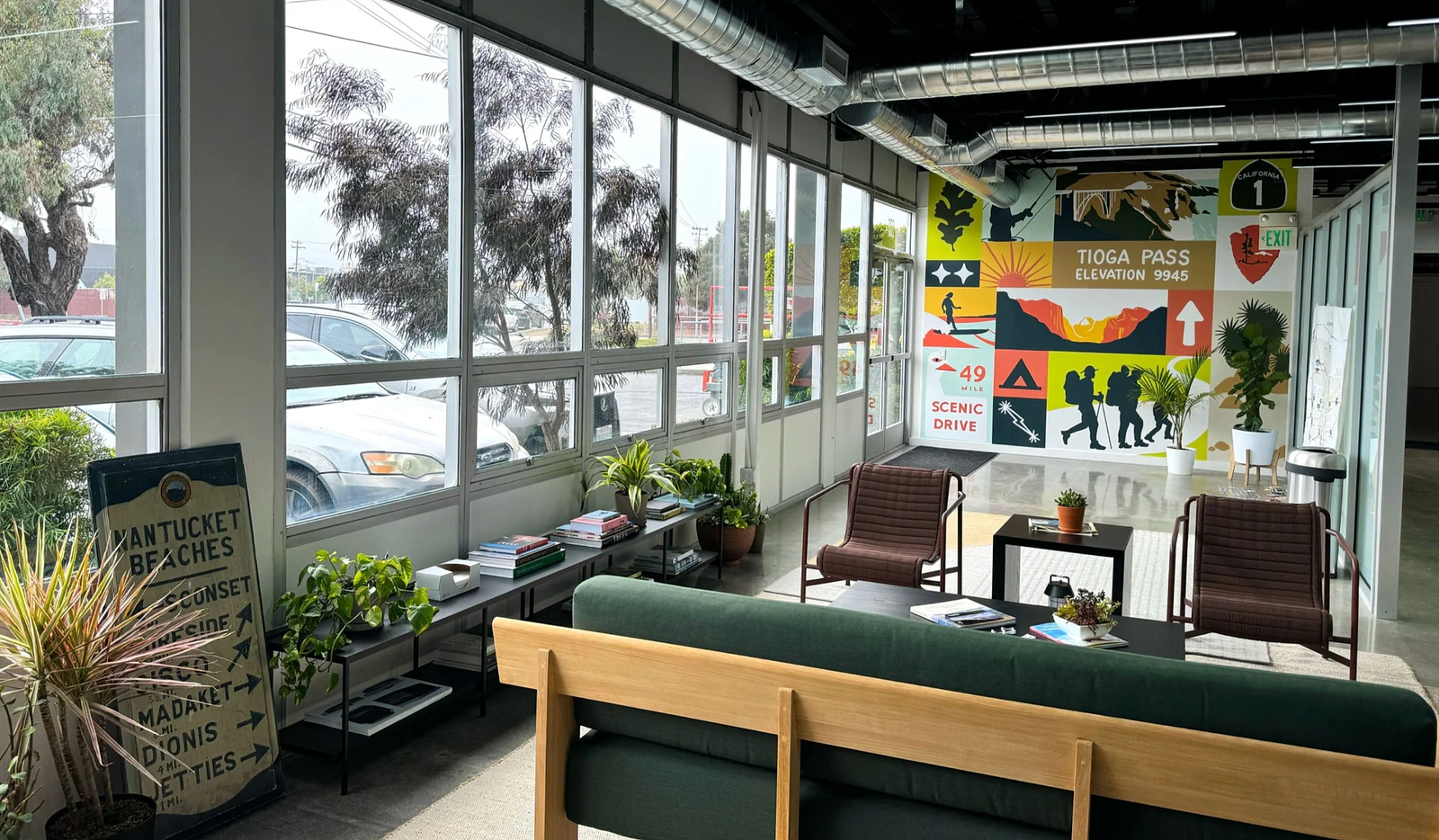
We brought the travel story into the workplace and showroom through shared spaces, material displays, a road-trip mural and framed company values. These were everyday places where the team could see the same ambition it was bringing to the product.
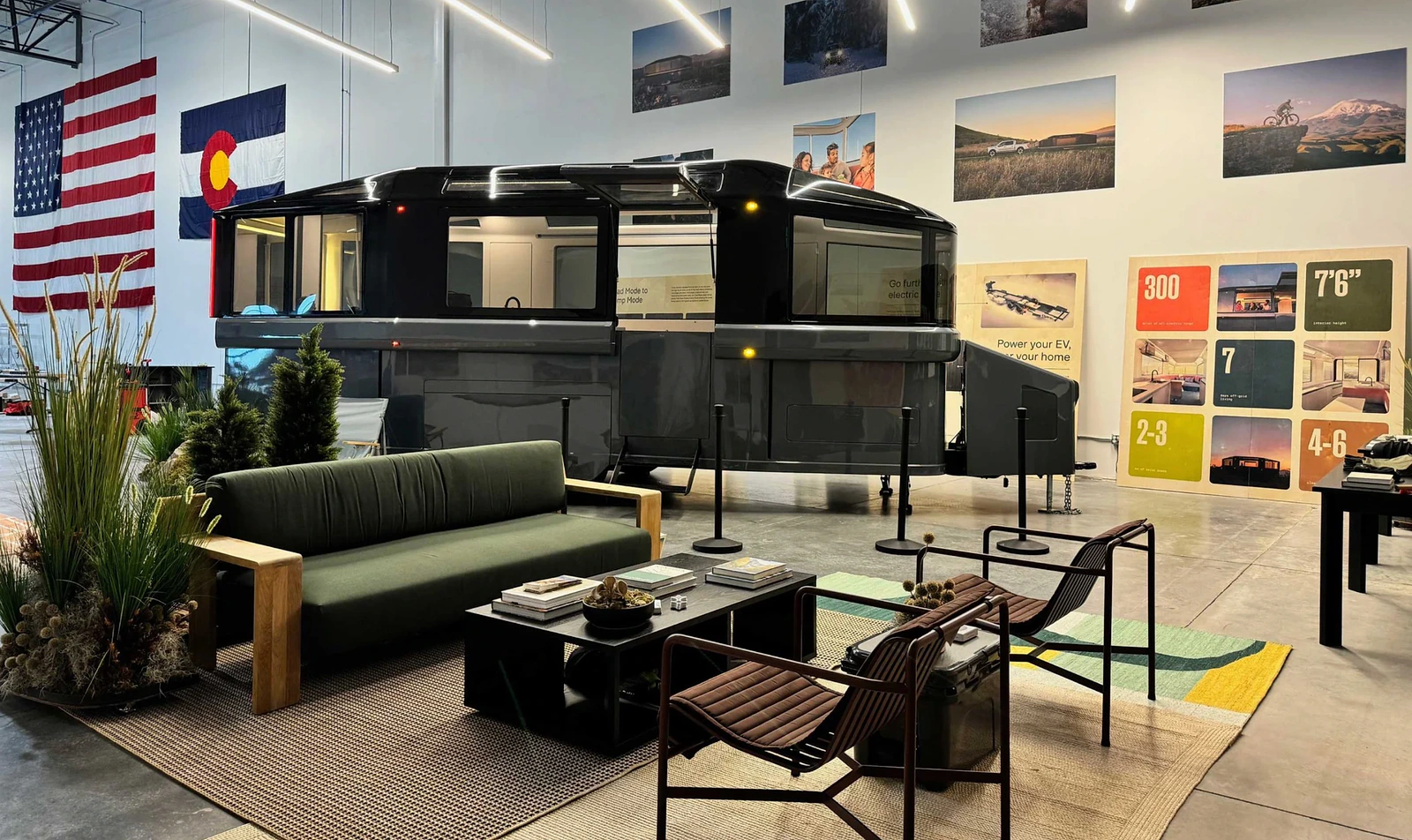
Lightship showroom interior with the trailer displayed inside a furnished brand environment.
Lightship office lounge space with plants, seating and a colorful road-trip mural.
Display of sustainable interior materials and branded product storytelling inside the Lightship showroom.
Lightship office wall featuring a framed values system inside a shared workspace.
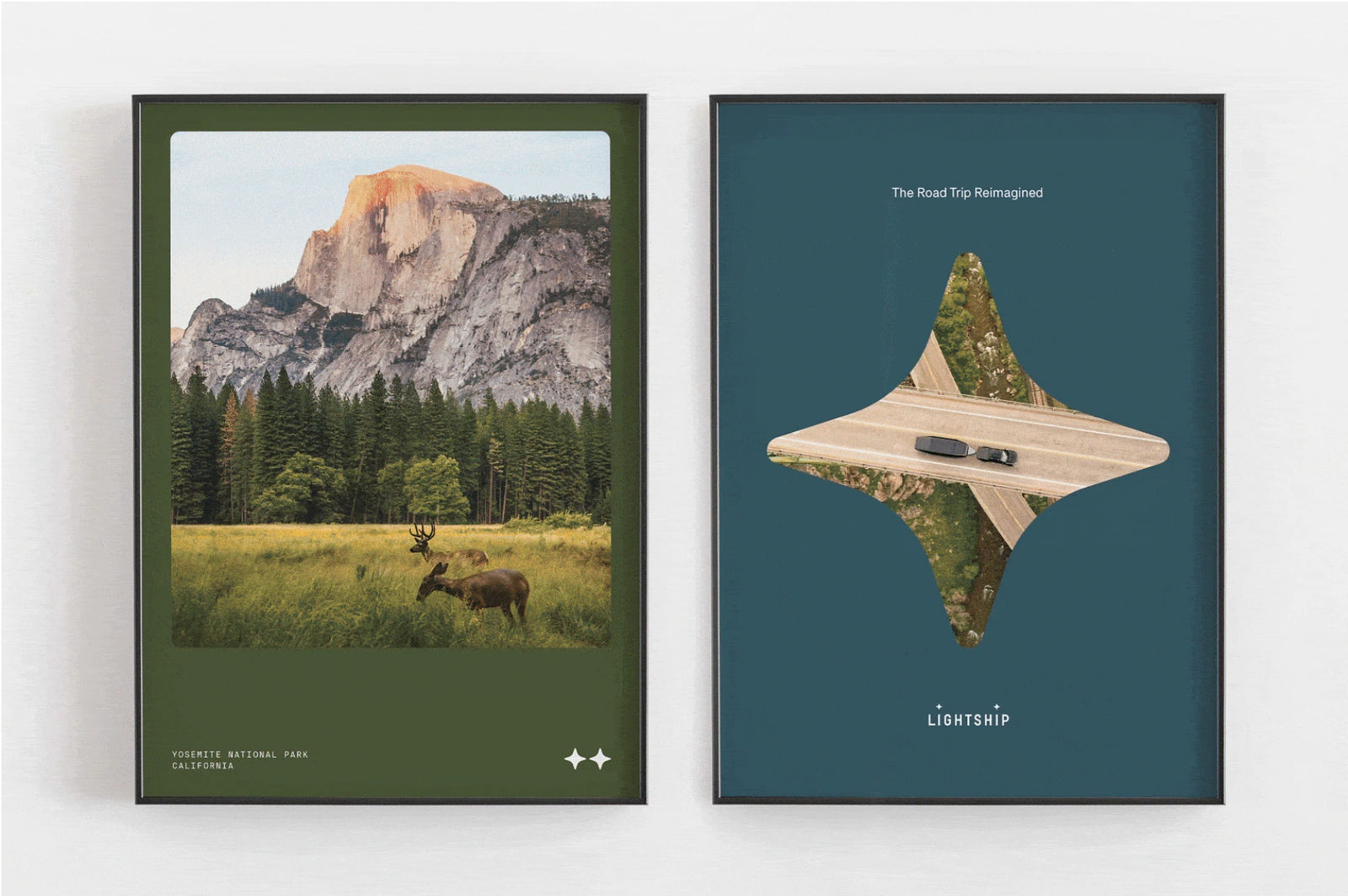
Pair of framed Lightship posters exploring road-trip imagery and brand storytelling.

Company milestones

$100M+Total company funding
2025AE.1 entered production

Colorado.

76,000 ft²Planned Colorado manufacturing footprint

These milestones reflect the work of the full Lightship team. I led creative work across product direction, brand, launch and ownership. The production vehicle reflects continuing design and engineering development.

Creative direction and leadership / Rob Williams, Chief Creative Officer, with Lightship’s teams and collaborators. L.O.S.T. creative direction with the design team.

Lightship / My role

From product direction to public life.

As Chief Creative Officer, I worked with Lightship’s teams and partners across early product direction, brand strategy and identity, photography, film, launch environments and the owner experience.

The design work brought together the demands of the road and life at camp. The brand work connected the electric technology to the reasons people travel. The launch gave the company a public setting, while L.O.S.T. extended the story into ownership.

I led the creative development of Go Further with two agency partners. I also led Lightship’s Wildsam partnership across the client relationship and art direction, including a five-day Southwest shoot and work across film, print, digital guides and editorial.

The work shown includes early L1 studies and later expressions of the company. The AE.1 production vehicle reflects continuing development by Lightship’s design and engineering teams. Company milestones belong to the full team.

Lightship / The story

Life inside

The interior direction brought panoramic views, a place to gather and adaptable furniture into the same footprint. The early lounge-and-bed studies explored the transition from living to sleeping, including a concept in which bedding could stay with the bed.

Lightship / Brand strategy & identity

A name with a light to follow.

The founder chose the name Lightship from a class of vessels that served as floating lighthouses, helping people find their way through dangerous waters.

We carried that reference into the identity. Two compass-like stars sit above the I’s in the wordmark, recalling the illuminated masts. Together, they also form a secondary symbol.

That reference connected the name to exploration. The wider brand idea, “Turning your miles into memories,” connected the product to the people travelling in it. Photography, film and applications brought the landscape and life on the road into view, giving the technology a setting people could recognize.

Lightship / Design direction

The road and the room.

On the road, the trailer had to move through the air. At camp, it had to make room for people. Road Mode and Camp Mode allowed the architecture to respond to both.

The early L1 studies explored the lowered canopy, shaped front storage volume and tapered rear as parts of the aerodynamic concept. Glass, body surfaces, the rear hatch and lighting were developed in relation to the whole exterior.

Inside, the questions changed. Where would people gather? How would the space move from day to night? Layouts, furniture studies and full-scale prototypes explored how much living could fit within the footprint.

With the team, I helped bring references from automotive design, architecture, yachts, furniture and digital experiences into a shared direction. Precision outside and warmth inside gave us a basis for considering both the exterior form and the room within it.

These are early L1 studies, not a complete account of later AE.1 production development.

Lightship / Product experience

From the wide view to the everyday.

The product imagery followed the trip from the road into the cabin. Wide views showed the trailer in the landscape. Closer scenes showed what it was like to spend time inside: daylight over a table, a meal prepared together, a quiet place to read.

The changing architecture gave that story its sequence. The trailer travelled low, then opened at camp. Panoramic glazing kept the surrounding landscape in view, while the interior direction brought warmth and comfort into a compact space.

Film and photography let the product be introduced at both scales: as an unfamiliar object on the road and as a recognizable place to spend the day.

Lightship / Ownership & community

A field guide to belonging.

L.O.S.T., the Lightship Owners Society of Travel, gave the owner community a name and a visual identity of its own.

Working with the design team as Creative Director, I helped shape a system drawn from vintage field guides and classic road travel. Editorial typography, illustration, badges and travel ephemera gave it a practical, collected character.

The system extended from community pages and editorial to welcome materials and merchandise. It was designed to give owners something to use, keep and carry into the next trip.

Lightship / Launch environments

A public introduction, at full scale.

At SXSW in 2023, the prototype needed a setting that could introduce the company as well as the vehicle. A modular white grid organized the temporary environment, with light, film and living material bringing the travel story around it.

That approach later extended to CES and subsequent product-launch environments. The scale and setting could change while the product, imagery and spatial language remained recognizable.

Lightship / Workplace & culture

The view from inside the company.

The workplace and showroom brought the brand into the places where Lightship was being built. Material displays put the product close to the team. A road-trip mural and framed values kept the larger travel story in view.

Alongside the shared spaces and graphic storytelling, these elements carried the identity into ordinary working life. They were part of how the company presented itself to its own people as well as to visitors.